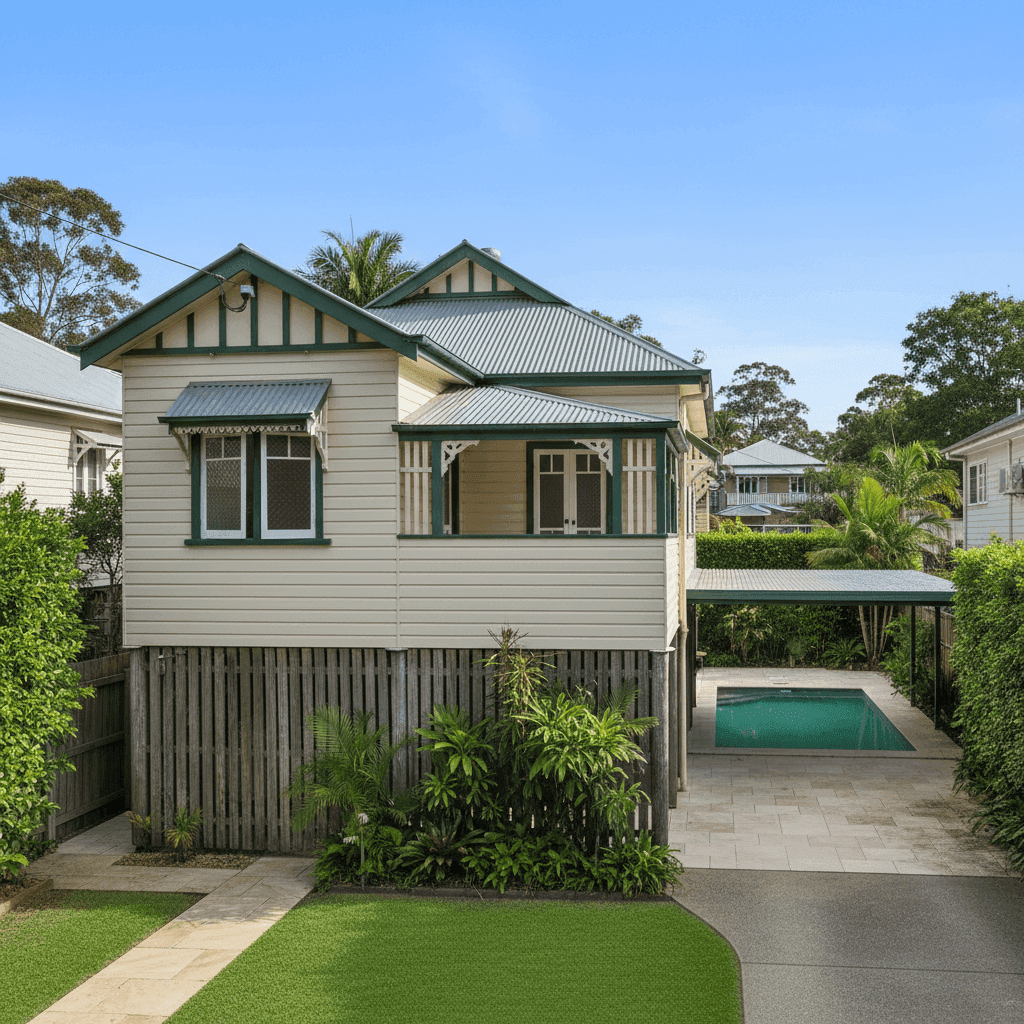
Graceville is one of Brisbane's most sought-after inner-western suburbs — a leafy, character-filled pocket of Queensland where federation-era weatherboard homes line quiet, tree-canopied streets. If you own a free standing home here, you'll know that protecting it is no small matter. This article breaks down a recent building insurance quote for a five-bedroom home in Graceville (QLD 4075), examines whether the premium stacks up against local and national benchmarks, and offers practical guidance for homeowners looking to get the best value cover.
---
Is This Quote Fair?
The quote in question sits at $8,346 per year (or approximately $800/month) for building-only cover, with a sum insured of $1,157,000 and a building excess of $5,000.
Our price rating for this quote is EXPENSIVE — above average for the area.
To put that in context: the suburb median premium in Graceville is $4,449/year, meaning this quote is roughly 87% above the midpoint of what other homeowners in the postcode are paying. It also sits above the 75th percentile of $7,139/year, placing it in the more expensive quarter of all quotes sampled in the suburb.
That said, it's worth noting that the suburb average premium is a striking $39,646/year — heavily skewed by a small number of very high-cost policies, likely reflecting older, high-value homes with complex risk profiles. With only 42 quotes in the sample, a handful of outliers can dramatically pull that average upward. The median is almost always the more reliable benchmark, and against that figure, this quote is notably elevated.
Compared to the Queensland state average of $9,129/year, this quote is actually just below — a modest silver lining. Against the national average of $5,347/year, however, it remains well above the mark. The bottom line: while this isn't the most expensive quote we've seen in Queensland, it's on the higher end for Graceville and warrants scrutiny.
---
How Graceville Compares
Understanding where your premium sits relative to broader markets helps frame whether you're getting a fair deal. Here's a snapshot:
| Benchmark | Premium |
|---|---|
| This quote | $8,346/yr |
| Graceville suburb median | $4,449/yr |
| Graceville 75th percentile | $7,139/yr |
| Brisbane LGA average | $16,277/yr |
| QLD state average | $9,129/yr |
| National average | $5,347/yr |
| National median | $2,764/yr |
A few things stand out. First, the Brisbane LGA average of $16,277/year is extraordinarily high — again, this reflects the diversity of properties across the greater Brisbane area, from flood-prone low-lying suburbs to premium riverside estates. Graceville's own median of $4,449 suggests that many homeowners here are securing reasonably competitive cover.
Second, the gap between Queensland's state average ($9,129) and the national average ($5,347) is a reminder that insuring property in Queensland carries a structural premium. Extreme weather events — storms, flooding, and hail — are more frequent in the Sunshine State, and insurers price that risk accordingly.
For detailed suburb-level data, visit the Graceville insurance stats page.
---
Property Features That Affect Your Premium
Several characteristics of this property are likely contributing to its above-average premium. Understanding these factors can help you have a more informed conversation with your insurer.
Age and Construction (Built 1922)
A home built over a century ago carries inherent complexity. Older weatherboard homes often feature non-standard materials, ageing electrical wiring, and structural elements that are more expensive to repair or replace to modern building standards. Insurers typically apply a loading to pre-war homes, and a 1922 construction date is a significant rating factor.
Weatherboard Timber Walls
Weatherboard external walls are beloved for their character but are considered a higher-risk construction type by insurers compared to brick veneer or full brick. Timber is more susceptible to fire, termite damage, and moisture ingress — all of which increase the cost of claims and, therefore, premiums.
Stump Foundation
Homes on stumps (also known as high-set homes) are common in Queensland and offer excellent ventilation — but they also present unique risks. The stumps themselves can deteriorate over time, and the elevated structure can be more vulnerable to wind events. Some insurers load premiums for stump foundations, particularly in older homes.
High Sum Insured ($1,157,000)
A sum insured of over $1.1 million for a 334 sqm home reflects both the above-average fittings quality and the high cost of rebuilding a period home in inner Brisbane. Specialist trades, heritage-appropriate materials, and modern compliance requirements all drive up rebuild costs. The premium is, in part, simply a function of what it would cost to reconstruct this property from scratch.
Swimming Pool
A pool adds value but also adds liability and maintenance considerations that some insurers factor into their pricing — particularly for building cover that may include structural elements of the pool itself.
Ducted Climate Control
Ducted systems are a significant fixed asset within the building and contribute to the overall sum insured, which in turn influences the premium.
---
Tips for Homeowners in Graceville
If you're looking to manage your home insurance costs without compromising on protection, here are four practical steps worth considering:
- Review your sum insured regularly. Building costs fluctuate, and being over-insured is just as costly as being under-insured. Use a qualified quantity surveyor or your insurer's rebuild calculator to ensure your sum insured reflects current construction costs — not an inflated estimate.
- Consider a higher excess to reduce your premium. This quote already carries a $5,000 building excess, which is on the higher end. If you're comfortable self-funding smaller claims, some insurers will offer further reductions for voluntary excess increases — but make sure the trade-off makes financial sense over time.
- Maintain your home proactively. Insurers reward properties that are well-maintained. Addressing ageing stumps, ensuring the roof is in good condition, and keeping gutters clear can reduce the likelihood of claims and may support a better renewal price. For a weatherboard home of this age, a regular building inspection is money well spent.
- Shop around at renewal time. Loyalty doesn't always pay in insurance. Premiums can vary significantly between providers for the same property and level of cover. Comparing quotes annually — especially for a high-value, character home like this — is one of the simplest ways to avoid overpaying.
---
Compare Your Options with CoverClub
Whether you're reviewing an existing policy or shopping for cover for the first time, CoverClub makes it easy to see how your quote stacks up. Our platform aggregates real insurance data so Queensland homeowners can make genuinely informed decisions — not just take the first price they're offered.
Get a building insurance quote today and find out if you could be paying less for the same level of protection.