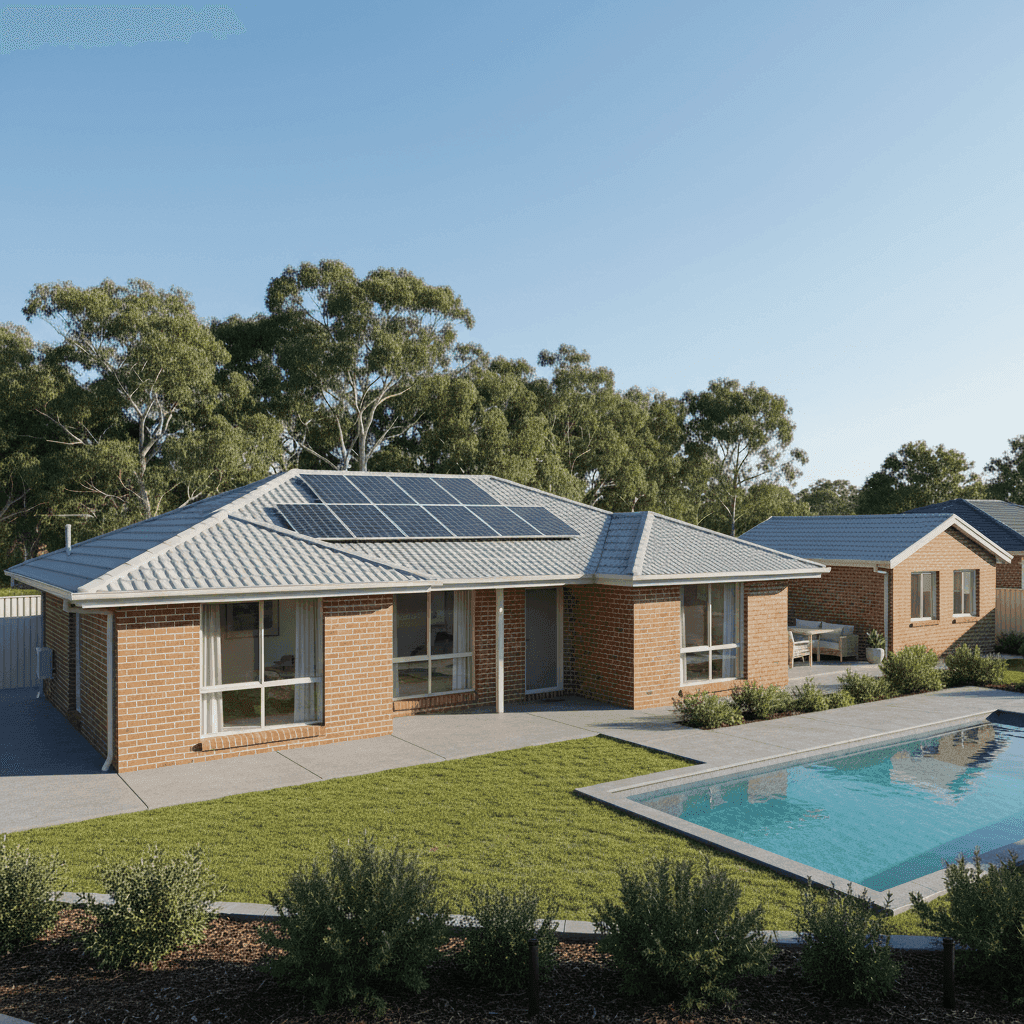
If you own a free standing home in Grafton, NSW 2460, you've probably noticed that home insurance doesn't come cheap. This article breaks down a real building insurance quote for a four-bedroom, three-bathroom property in the area — and puts it in context against local, state, and national benchmarks so you can make a more informed decision.
---
Is This Quote Fair?
The quote in question comes in at $19,113 per year (or $1,825/month) for building-only cover, with a building excess of $5,000. Our price rating for this quote is EXPENSIVE — above average for the area.
To put that in perspective: the median home insurance premium across Grafton (postcode 2460) sits at $10,762 per year, meaning this quote is nearly 78% higher than what the typical homeowner in the suburb pays. Even against the suburb's 75th percentile of $12,682 per year, this quote sits well above the pack.
That said, it's worth remembering that "expensive" doesn't automatically mean "wrong." A number of property-specific factors — which we'll explore below — can legitimately push a premium higher. The key question is whether those factors justify the gap, and whether shopping around could bring the cost down.
---
How Grafton Compares
Understanding where Grafton sits in the broader insurance landscape is essential context. Here's how the numbers stack up:
| Benchmark | Average Premium | Median Premium |
|---|---|---|
| Grafton (2460) | $109,093/yr | $10,762/yr |
| NSW | $9,528/yr | $3,770/yr |
| National | $5,347/yr | $2,764/yr |
| Richmond Valley LGA | $41,437/yr | — |
A few things stand out immediately. The suburb average of $109,093 is extraordinarily high — almost certainly skewed upward by a small number of very high-value or high-risk properties in the dataset (the sample size is 43 quotes). The median of $10,762 is a far more reliable indicator of what most Grafton homeowners actually pay, and it's still meaningfully higher than both the NSW median ($3,770) and the national median ($2,764).
This tells us that insuring a home in Grafton is genuinely more costly than in many other parts of Australia — a pattern reflected across the broader Richmond Valley LGA, where the average premium of $41,437 per year signals elevated risk across the region.
You can explore more local data on the Grafton (2460) insurance stats page, compare it against all NSW suburbs, or see how the region stacks up on the national stats page.
---
Property Features That Affect Your Premium
Several characteristics of this particular property help explain why the quote lands where it does.
Sum Insured: $987,000
At just under $1 million, the building sum insured is substantial. Building-only cover at this level means the insurer is on the hook for a significant rebuild cost, which naturally drives the base premium up. It's worth having a qualified quantity surveyor or using an online calculator to verify that your sum insured accurately reflects your home's rebuild value — over-insuring can cost you unnecessarily.
Granny Flat
The presence of a granny flat adds both value and complexity to the property. Insurers typically treat a granny flat as an additional structure requiring separate coverage consideration. This can increase the overall sum insured and, in turn, the premium.
Swimming Pool
A pool adds to the rebuild cost and also introduces liability considerations. Insurers factor in the cost of pool fencing compliance, filtration systems, and the pool structure itself when calculating premiums.
Solar Panels
Solar panel systems are now a standard feature on many Australian homes, but they do add to the insured value of the property. Panels are generally covered under building insurance and their replacement cost — which can run into the tens of thousands — is reflected in the premium.
Ducted Climate Control
Ducted air conditioning is a significant fixed asset, and its inclusion in the building sum insured adds to the overall replacement cost calculation.
Construction: Brick Veneer on Slab with Tiled Roof
Brick veneer construction is generally viewed favourably by insurers due to its fire resistance and durability. A concrete slab foundation and tiled roof are similarly regarded as low-to-moderate risk. These features likely work in favour of the premium rather than against it.
Built in 1995
At roughly 30 years old, this home is in a period where most major structural components are still considered sound, though some insurers may begin to scrutinise older plumbing, electrical, and roofing elements. Regular maintenance records can help demonstrate the property's condition.
Above-Average Fittings
Higher-quality fixtures and fittings — think stone benchtops, premium appliances, and quality bathroom finishes — increase the cost to rebuild or restore the home to its original standard. Above-average fittings are a legitimate driver of higher premiums.
---
Tips for Homeowners in Grafton
1. Review your sum insured carefully With a sum insured of $987,000, it's worth verifying this figure against a current building cost estimate. Both under-insuring and over-insuring carry risks — the former leaves you exposed in a total loss, while the latter means you're paying more than necessary each year.
2. Shop around — seriously The spread between Grafton's 25th percentile ($8,273/yr) and this quote ($19,113/yr) is enormous. Comparing multiple insurers can uncover meaningfully cheaper options for equivalent cover. Get a quote through CoverClub to see what other providers are offering for your specific property.
3. Consider your excess strategically This quote carries a $5,000 building excess. Opting for a higher excess is one of the most reliable ways to reduce your annual premium — but make sure you can comfortably cover that amount out of pocket if you need to make a claim.
4. Ask about discounts for security and maintenance Some insurers offer discounts for homes with monitored alarm systems, deadbolts, or documented maintenance histories. Given the above-average fittings and the age of the property, demonstrating that the home is well-maintained could work in your favour at renewal time.
---
Ready to Find a Better Rate?
Whether this quote feels right or you're convinced you can do better, the smartest move is to compare. CoverClub makes it easy to benchmark your premium against real quotes from across the market — so you're never paying more than you need to. Start your comparison at CoverClub and see what's available for your Grafton home today.