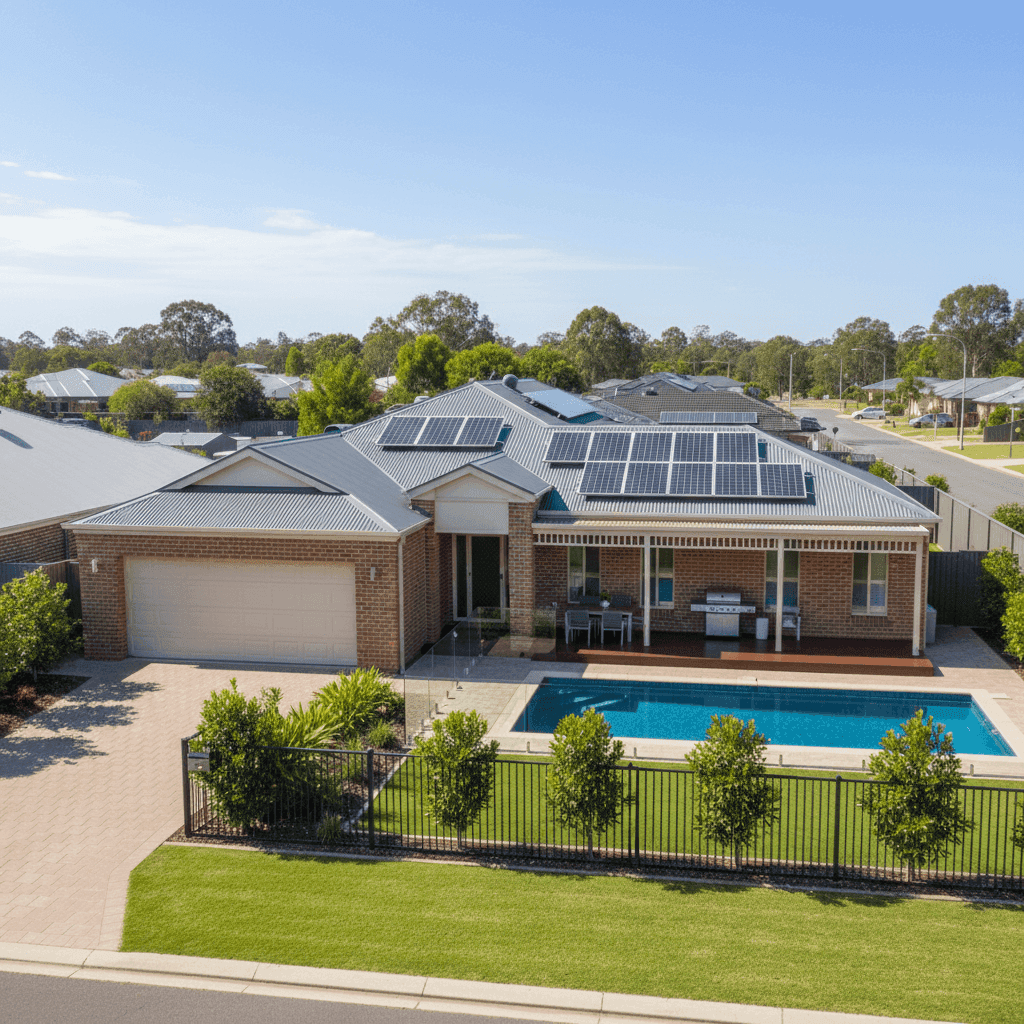
If you own a free standing home in Granville, QLD 4650, you're probably wondering whether what you're paying for home insurance is fair — or whether there's a better deal waiting to be found. Granville is a residential suburb within the Gympie Local Government Area in Queensland's Wide Bay region, and like many regional Queensland communities, insurance costs here can vary significantly depending on your property's characteristics and the level of cover you choose. In this article, we break down a real home and contents insurance quote for a 3-bedroom, 2-bathroom property in Granville to help you understand what's driving the price and how it stacks up against local, state, and national benchmarks.
---
Is This Quote Fair?
The quote in question comes in at $3,776 per year (or $362/month) for combined home and contents cover, with a building sum insured of $421,000 and contents valued at $17,000. Both the building and contents excess are set at $1,000.
Based on CoverClub's pricing data, this quote is rated CHEAP — below average for this type of property and location. That's genuinely good news for the homeowner. A below-average premium doesn't necessarily mean below-average cover; it simply means this particular quote is priced competitively relative to what others are paying for similar properties in the region.
It's worth noting that the Queensland insurance market has been under significant pressure in recent years, with premiums rising sharply off the back of flood events, cyclone seasons, and broader climate-related claims. Finding a below-average rate in this environment is a meaningful outcome.
---
How Granville Compares
To put this quote in proper context, here's how it measures up against available benchmarks:
| Benchmark | Annual Premium |
|---|---|
| This Quote | $3,776 |
| Gympie LGA Average | $5,581 |
| QLD State Median | $3,903 |
| QLD State Average | $9,129 |
| National Average | $5,347 |
| National Median | $2,764 |
A few things stand out from this table. First, the QLD state average of $9,129 is extraordinarily high — nearly 2.5 times this quote — which reflects the outsized impact of high-risk postcodes (think flood-prone or cyclone-affected areas) pulling the average upward across the state. The QLD median of $3,903 is a more representative figure for typical Queensland homeowners, and this quote sits just below it.
Compared to the Gympie LGA average of $5,581, this quote is around 32% cheaper — a substantial saving. Against the national average of $5,347, it's again well below par.
The one benchmark this quote exceeds is the national median of $2,764, which is expected given Queensland's elevated risk profile relative to lower-risk states like Victoria or South Australia.
For a deeper look at pricing trends in your area, visit the Granville suburb insurance stats page, or explore the broader Queensland insurance data and national comparisons.
---
Property Features That Affect Your Premium
Every home is different, and insurers price policies based on a detailed assessment of your property's specific characteristics. Here's how the features of this Granville home are likely influencing the premium:
Brick Veneer Walls & Colorbond Roof
Brick veneer is generally viewed favourably by insurers — it's durable, fire-resistant, and widely used across Australian suburbs. Combined with a steel/Colorbond roof, this property has a robust external envelope that tends to attract lower rebuild risk assessments. Colorbond roofing in particular is well-regarded for its resilience in harsh weather conditions.
Slab Foundation
A concrete slab foundation is considered one of the more stable and lower-risk foundation types. Unlike older homes on timber stumps or piers, slab homes are less susceptible to subsidence, pest damage, and moisture ingress — all factors that can push premiums higher.
Timber & Laminate Flooring
While timber and laminate flooring adds aesthetic value, it can be more costly to repair or replace than tiles in the event of water damage. Insurers factor in internal fit-out quality when calculating contents and building replacement costs.
Pool
Having a swimming pool increases the insured value of the property and can add liability considerations. It's a feature that typically adds a modest amount to your premium, though the impact varies by insurer.
Solar Panels
Solar panels are now a standard fixture on many Australian homes, but they do represent an additional asset to insure. Most policies cover solar panels as part of the building sum insured, provided they're permanently fixed to the roof. It's worth confirming this with your insurer to avoid any gaps in cover.
1980 Construction
Homes built in 1980 are now over 40 years old. Older properties can attract higher premiums due to ageing electrical wiring, plumbing, and building materials that may not meet current standards. However, brick veneer construction from this era is generally solid, and a well-maintained home can still achieve competitive rates.
Standard Fittings Quality
With standard-grade fittings, the rebuild cost estimate of $421,000 for a 169 sqm home is reasonable and reflects a realistic replacement value — not over-insured with luxury finishes, which helps keep the premium grounded.
---
Tips for Homeowners in Granville
Whether you're renewing your policy or shopping around for the first time, here are four practical steps to help you get the most out of your home insurance:
- Review your sum insured annually. Building costs in regional Queensland have risen considerably. Make sure your $421,000 building sum insured still reflects what it would actually cost to rebuild your home today — not what it cost a few years ago. Underinsurance is one of the most common and costly mistakes homeowners make.
- Check what's covered for your pool and solar panels. Not all policies treat these features the same way. Ask your insurer specifically whether your solar system is covered for accidental damage, storm damage, and power surge — and confirm your pool is included in the building sum insured.
- Consider bundling home and contents. This quote already combines home and contents cover, which is often the most cost-effective approach. If you're currently holding separate policies, bundling them with a single insurer can yield meaningful discounts.
- Maintain your property proactively. Insurers can reduce or deny claims if damage is attributed to a lack of maintenance. Keeping your roof, gutters, and drainage in good condition — particularly heading into storm season — not only protects your home but also keeps your claims history clean, which can influence future premiums.
---
Compare Quotes at CoverClub
Whether this quote represents your current policy or one you're considering, it's always worth knowing your options. CoverClub makes it easy to compare home and contents insurance quotes from a range of Australian insurers — so you can see at a glance whether you're getting a competitive rate for your Granville property. Start comparing quotes today and make sure you're not paying more than you need to.