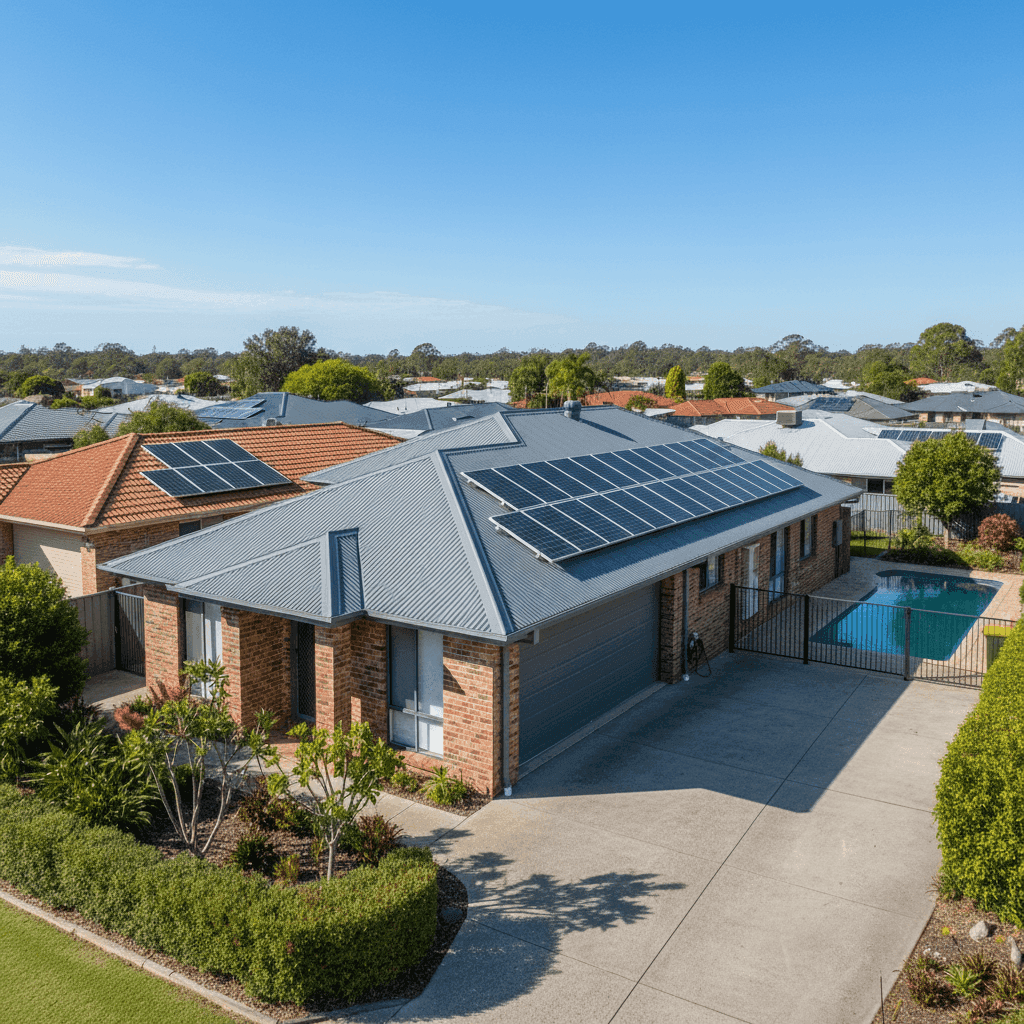
Granville is a quiet residential suburb sitting within the Gympie region of Queensland, and like much of regional QLD, home insurance here can vary enormously depending on your property's characteristics and the insurer you choose. This article breaks down a real home and contents insurance quote for a three-bedroom free standing home in Granville (postcode 4650), helping you understand whether the price stacks up — and what's driving it.
---
Is This Quote Fair?
The quote in question comes in at $3,672 per year (or $345 per month) for combined home and contents cover, with a building sum insured of $552,000 and contents valued at $50,000. Both the building and contents excess are set at $1,000.
Our independent price rating for this quote is CHEAP — below average for the area. That's genuinely good news for the homeowner. In a state where insurance premiums have been climbing steadily due to extreme weather events, flooding, and broader inflationary pressures, landing below the average benchmark is a meaningful outcome.
To put it in perspective: the Queensland state average premium sits at a hefty $9,129 per year, and even the state median — which strips out the influence of very high-cost properties — is $3,903 per year. This quote comes in below both figures, which is a strong result by any measure.
Nationally, the picture is a little different. The national average premium is $5,347 per year, with a national median of $2,764. So while this quote beats Queensland benchmarks comfortably, it sits modestly above the national median. That's entirely consistent with what we'd expect from a regional Queensland property, where insurers price in a degree of climate and weather risk that's less prevalent in, say, southern states.
---
How Granville Compares
Breaking down the numbers side by side gives a clearer picture:
| Benchmark | Annual Premium |
|---|---|
| This Quote | $3,672 |
| LGA (Gympie) Average | $5,581 |
| QLD State Median | $3,903 |
| QLD State Average | $9,129 |
| National Median | $2,764 |
| National Average | $5,347 |
The LGA-level data is particularly telling. Across the broader Gympie local government area, homeowners are paying an average of $5,581 per year — more than $1,900 above this quote. That gap suggests this property has some favourable characteristics that are keeping the premium down relative to its neighbours.
It's worth noting that suburb-level data for Granville specifically isn't yet available in our database, but you can keep an eye on the Granville suburb stats page as more data comes through. In the meantime, the Gympie LGA average serves as a solid local reference point.
---
Property Features That Affect Your Premium
Several characteristics of this property work together to produce a competitive premium. Here's how each one factors in:
Double Brick Walls
Double brick construction is one of the most favourable wall types from an insurance perspective. It offers strong resistance to fire, wind, and general structural damage, and insurers typically reward it with lower premiums compared to timber or clad construction. For a regional Queensland home, this is a meaningful advantage.
Steel / Colorbond Roof
Colorbond steel roofing is highly regarded by insurers for its durability and resistance to weather events. It holds up well in high winds and doesn't deteriorate the way older tile or fibrous cement roofs can. This is especially relevant in Queensland, where storm activity can be intense.
Slab Foundation
A concrete slab foundation is generally considered low-risk from an insurance standpoint. It provides a stable base and is less susceptible to movement or pest damage compared to raised timber stumps — another tick in the "lower risk" column.
Construction Year: 1993
Homes built in the early 1990s sit in a reasonable middle ground — old enough to have some character, but built after many of the stricter building codes of that era were introduced. At 30-plus years of age, some wear and tear is expected, but this property's solid construction materials help offset any age-related concerns.
Pool and Solar Panels
The presence of a swimming pool adds a modest amount to the premium, as it represents an additional liability and asset to insure. Solar panels similarly add replacement value to the building sum insured. Neither is a major driver of cost, but both are worth declaring accurately to ensure you're fully covered.
No Cyclone Risk
Granville falls outside designated cyclone risk zones, which is a significant factor in keeping this premium competitive. Properties in cyclone-prone parts of Queensland — particularly far north QLD — can attract dramatically higher premiums. Being outside that zone is a genuine financial advantage.
Building Size: 139 sqm
At 139 square metres, this is a modest but comfortable family home. The building sum insured of $552,000 reflects current construction costs rather than market value, and at this size, that figure appears reasonable given today's elevated building material and labour costs.
---
Tips for Homeowners in Granville
Whether you're renewing your policy or shopping around for the first time, here are four practical steps to make sure you're getting the best outcome:
- Review your sum insured annually. Construction costs in Queensland have risen sharply in recent years. If your building sum insured hasn't been updated, you could be underinsured — meaning a total loss payout might not cover a full rebuild. Use a building cost calculator or speak to a local builder to sense-check your figure.
- Don't over-insure your contents. A $50,000 contents value is relatively modest, which is appropriate if it accurately reflects what you own. Over-estimating contents value means paying higher premiums unnecessarily; under-estimating means you're exposed at claim time. Do a room-by-room audit every couple of years.
- Ask about discounts for security and safety features. If your home has deadbolts, an alarm system, or smoke detectors, let your insurer know. Many providers offer discounts for properties with improved security, and it's easy to overlook these when filling in a quote form.
- Compare quotes before you renew. Loyalty doesn't always pay in insurance. Premiums can shift significantly between providers for the same property, and the difference can run into hundreds — or even thousands — of dollars. Get a fresh quote at CoverClub to see what the market looks like before your renewal date arrives.
---
Compare Your Own Quote
If you own a home in Granville or anywhere else in Queensland, it pays to know where your premium sits relative to the market. CoverClub makes it easy to compare home and contents insurance quotes side by side, so you can see exactly what you're getting and what you're paying for. Start your free comparison at CoverClub — it takes just a few minutes and could save you a significant amount at renewal time.