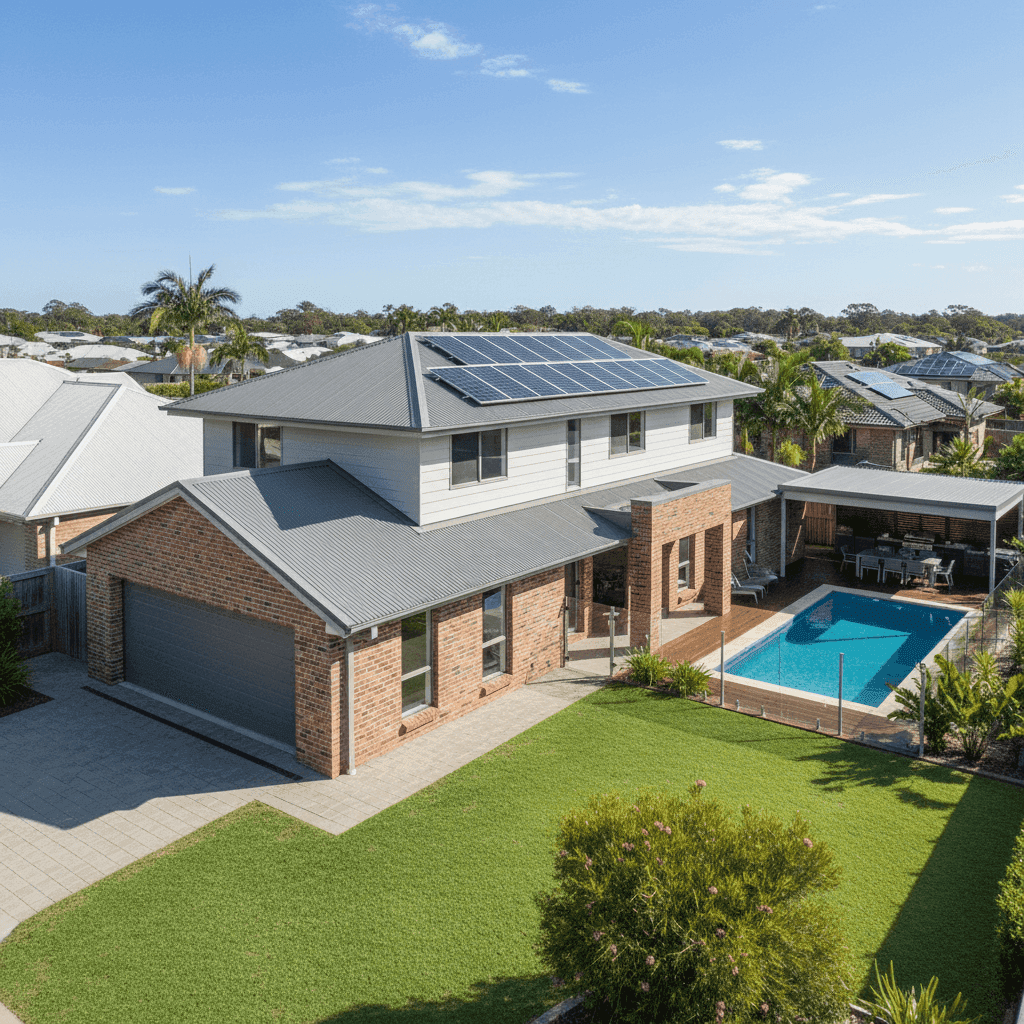
If you own a free standing home in Granville, QLD 4650, understanding what you should be paying for home and contents insurance can feel like a guessing game. Premiums vary enormously depending on your property's construction, location, and the features that make your home uniquely yours. To cut through the noise, we've analysed a real insurance quote for a three-bedroom, one-bathroom home in Granville — and the results are worth a closer look.
---
Is This Quote Fair?
The annual premium for this property came in at $3,988 per year (or $375 per month), covering both building (sum insured: $680,000) and contents ($50,000). Our price rating for this quote is CHEAP — below average — which is genuinely good news for the homeowner.
To put that in perspective: Queensland homeowners are paying some of the highest insurance premiums in the country, largely driven by extreme weather events, flooding, and cyclone exposure across much of the state. Against that backdrop, a sub-$4,000 annual premium for a combined home and contents policy is a solid outcome.
The building excess sits at $2,000 and the contents excess at $500 — both fairly standard for Australian home insurance policies. A higher building excess like this can be one reason premiums come in lower, so it's worth factoring that into your overall value assessment.
---
How Granville Compares
Let's look at the numbers in context. Here's how this quote stacks up against local, state, and national benchmarks:
| Benchmark | Annual Premium |
|---|---|
| This Quote | $3,988 |
| Gympie LGA Average | $5,581 |
| QLD State Median | $3,903 |
| QLD State Average | $9,129 |
| National Median | $2,764 |
| National Average | $5,347 |
A few things stand out here. The Queensland state average of $9,129 is extraordinarily high — a figure heavily skewed upward by properties in high-risk cyclone and flood zones across the state. The state median of $3,903 is a more realistic yardstick for many Queensland homeowners, and this quote sits just above it at $3,988.
Compared to the Gympie LGA average of $5,581, this quote is meaningfully cheaper — roughly 29% below what the average homeowner in the same local government area is paying. That's a significant saving.
Against national benchmarks, the picture is slightly different. The national average of $5,347 means this quote is well below what Australians pay on average, though it does sit above the national median of $2,764. That's not unusual — Queensland properties tend to carry higher base risk than many southern states, so even a competitive QLD premium will often exceed the national median.
You can explore more local data on the Granville QLD 4650 insurance stats page, compare it against all QLD premiums, or see how it measures up on the national stats page.
---
Property Features That Affect Your Premium
Every home is different, and insurers price risk based on the specific characteristics of your property. Here's how the features of this Granville home likely influenced the quote:
Double Brick Walls
Double brick construction is generally viewed favourably by insurers. It's durable, fire-resistant, and holds up well in storms compared to timber or clad alternatives. This is likely contributing to a more competitive premium.
Steel/Colorbond Roof
Colorbond roofing is another tick in the box. It's lightweight, resistant to corrosion, and performs well in high winds — a key consideration in Queensland. Older or heavier roofing materials can attract higher premiums, so this modern roof type works in the homeowner's favour.
Slab Foundation
A concrete slab foundation is standard across Queensland and doesn't typically add risk from an underwriting perspective. It offers stability and reduces the likelihood of subsidence or pest-related structural damage.
Swimming Pool
A pool adds to the replacement value of the property and can slightly increase premiums. It's important to ensure your sum insured accounts for pool infrastructure — including fencing, pumps, and filtration systems — to avoid being underinsured.
Solar Panels
Solar panels represent a meaningful asset and are increasingly common across Queensland. Some policies include panels as part of the building sum insured; others treat them separately. It's worth confirming with your insurer that your $680,000 building sum insured adequately covers the panels.
Ducted Climate Control
Ducted air conditioning is a higher-value fixture that contributes to the overall replacement cost of the home. At 139 sqm, this property is a modest size, but ducted systems can add tens of thousands to rebuild costs — making accurate sum insured calculations essential.
No Cyclone Risk
Granville falls outside designated cyclone risk zones — a meaningful factor in Queensland, where cyclone-prone areas can see premiums spike dramatically. This classification is likely one of the biggest reasons this quote comes in well below the state average.
Built in 1993
Homes built in the early 1990s are generally well-regarded by insurers — past the era of substandard materials but old enough that some components (roofing, plumbing, electrical) may be approaching end-of-life. Regular maintenance is key to keeping claims — and future premiums — in check.
---
Tips for Homeowners in Granville
Whether you're renewing your policy or shopping around for the first time, here are four practical steps to make sure you're getting the best value:
- Review your sum insured annually. Building costs have risen sharply across Queensland in recent years. At $680,000, your building sum insured should reflect the current cost to fully rebuild — not just the market value of the property. Use a building cost calculator or speak to a local builder to sense-check the figure.
- Confirm your solar panels are covered. Ask your insurer explicitly whether your solar system is included under the building sum insured or whether it requires a separate endorsement. Given the investment involved, you don't want to discover a gap at claim time.
- Check your pool is adequately insured. Pool infrastructure — fencing, heating, pumps, surrounds — can cost significantly more to replace than most homeowners expect. Make sure these are factored into your building sum insured.
- Compare at renewal, not just at purchase. The insurance market shifts constantly. Even if your current premium is competitive, it pays to run a comparison at each renewal cycle. A quote that's cheap today may not be the best deal next year.
---
Compare Home Insurance Quotes in Granville
This quote demonstrates that competitive home and contents insurance is available for Granville homeowners — but the best way to know you're getting a fair deal is to compare. At CoverClub, we make it easy to see multiple quotes side by side so you can make a confident, informed decision. Get a home insurance quote today and find out where your premium sits relative to your neighbours.