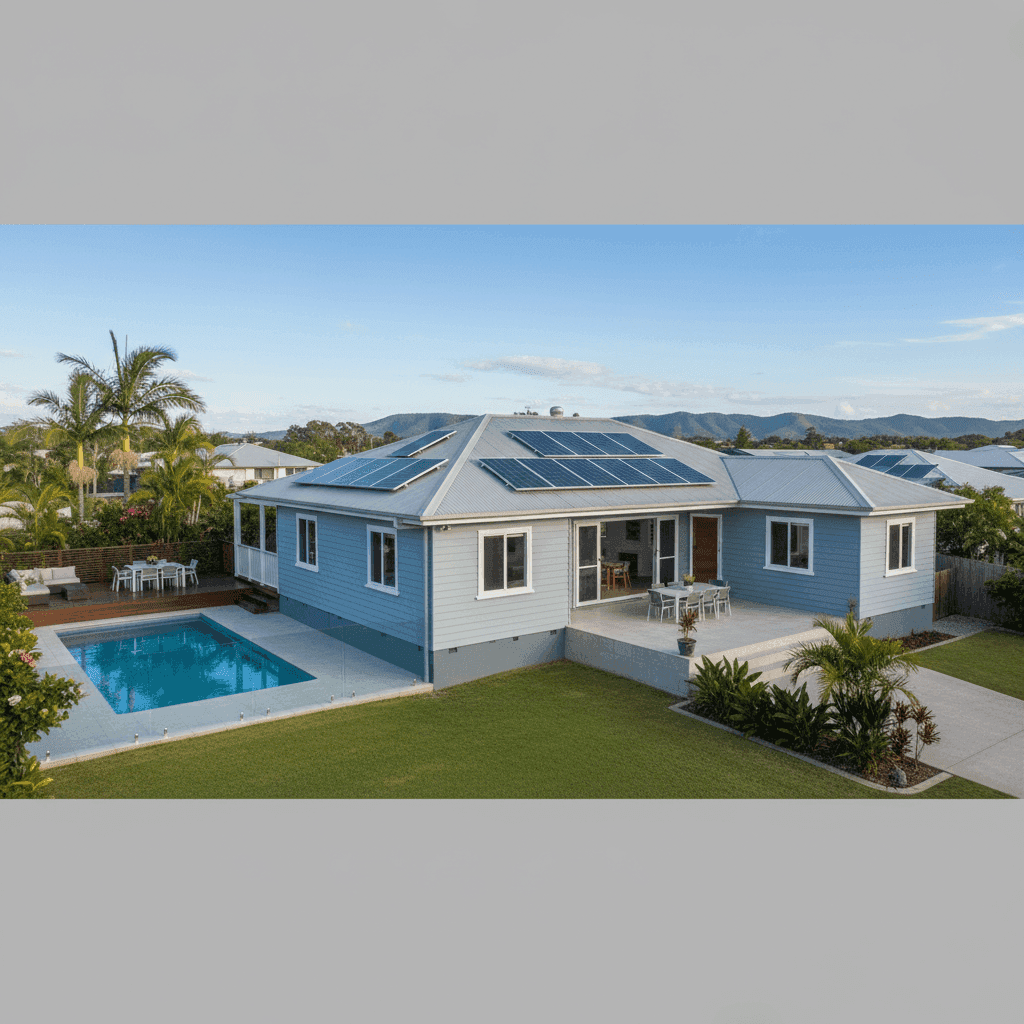
If you own a free standing home in Grasstree Beach, QLD 4740, you already know this coastal suburb on the Mackay coastline offers a relaxed lifestyle — but like any Queensland property, it comes with its own set of insurance considerations. We recently analysed a home and contents insurance quote for a three-bedroom, two-bathroom weatherboard home in the area, and the results offer a useful snapshot of what local homeowners can expect to pay.
---
Is This Quote Fair?
The quote in question came in at $5,725 per year (or $549 per month) for combined home and contents cover, with a building sum insured of $550,000 and contents valued at $50,000. The building excess is set at $2,000, with a separate $500 excess applying to contents claims.
Our price rating for this quote is FAIR — Around Average, and the data backs that up. Based on 30 quotes collected for the Grasstree Beach area, the suburb average sits at $5,184 per year, meaning this quote lands just above the local average — roughly 10% higher. That's not a red flag by any means, particularly given the property's features (more on those below), but it does suggest there may be room to shop around.
The suburb's 75th percentile is $5,956 per year, so this quote is well within the upper-middle range of what locals are paying — not the cheapest option available, but far from the most expensive either.
---
How Grasstree Beach Compares
To put this quote in proper context, it helps to look beyond the suburb and compare it against broader benchmarks.
| Benchmark | Average Premium | Median Premium |
|---|---|---|
| Grasstree Beach (4740) | $5,184/yr | $3,600/yr |
| Mackay LGA | $8,458/yr | — |
| Queensland | $9,129/yr | $3,903/yr |
| National | $5,347/yr | $2,764/yr |
A few things stand out here. First, the Queensland state average of $9,129 per year is strikingly high — one of the most expensive in the country, largely driven by cyclone-prone coastal and northern regions where premiums can be extreme. Grasstree Beach, while coastal, is not classified as a cyclone risk area for this property, which is a meaningful factor keeping costs more manageable.
Second, the Mackay LGA average of $8,458 per year is considerably higher than this particular quote, suggesting that properties within the broader Mackay region can attract significantly steeper premiums depending on their specific risk profile. This homeowner appears to be in a relatively favourable position within their local government area.
Compared to the national average of $5,347 per year, this quote is only modestly higher — a reasonable outcome for a Queensland coastal property. You can explore Queensland-wide insurance data and national benchmarks to dig deeper into how your own situation compares.
---
Property Features That Affect Your Premium
Several characteristics of this property have a direct bearing on what insurers charge. Understanding them helps you make sense of your quote — and potentially negotiate a better one.
Weatherboard timber walls are one of the most significant factors. Timber-framed homes, particularly older ones, are generally considered higher risk by insurers due to their susceptibility to fire, rot, and pest damage compared to brick or rendered construction. This property, built in 1978, falls into that older-build category, which can push premiums upward.
Steel/Colorbond roofing is actually a positive from an insurer's perspective. Colorbond is durable, low-maintenance, and performs well in Australian weather conditions — including heavy rain and hail. It's a much more favourable roofing material than, say, terracotta tiles or ageing asbestos sheeting.
The concrete slab foundation is another reassuring feature for insurers, as slabs are generally stable and less prone to subsidence or movement compared to older timber stump foundations common in Queensland homes of this era.
The swimming pool adds a small but real cost to the premium — pools represent an additional liability and are an insurable asset in their own right, particularly when it comes to accidental damage cover.
Solar panels are increasingly common on Queensland homes, and while they add value to the property, they also increase the sum insured and can be a source of claims (storm damage, for instance). Ensuring your building sum insured adequately accounts for the replacement cost of your solar system is important.
Finally, the standard fittings quality and tile flooring throughout are relatively neutral factors — neither inflating nor significantly reducing the premium compared to high-end or bespoke finishes.
---
Tips for Homeowners in Grasstree Beach
1. Review your building sum insured regularly. With a sum insured of $550,000, it's worth checking whether this accurately reflects the current cost to rebuild your home from scratch — not its market value. Construction costs have risen significantly in recent years, and being underinsured can leave you seriously out of pocket after a major claim.
2. Confirm your cyclone risk classification. This property is not rated as a cyclone risk area, but it's always worth verifying this with your insurer directly — especially given Grasstree Beach's coastal location in the Mackay region. If your classification changes, it could substantially affect your premium.
3. Consider your excess settings strategically. This policy carries a $2,000 building excess. Opting for a higher excess is one of the most effective ways to reduce your annual premium, provided you're comfortable covering that amount out of pocket in the event of a claim. Conversely, if cash flow is a concern, a lower excess (at a higher premium) might suit you better.
4. Shop the market at renewal time. A FAIR rating means you're not being gouged, but you're also not necessarily getting the best deal available. The gap between the suburb's 25th percentile ($2,784/yr) and 75th percentile ($5,956/yr) is substantial, which tells us that premiums in Grasstree Beach vary widely. Comparing multiple quotes at renewal could yield meaningful savings without sacrificing cover quality.
---
Compare Your Home Insurance Quote Today
Whether you're reviewing an existing policy or shopping for cover on a new property, comparing quotes is the single most effective way to ensure you're getting fair value. At CoverClub, we make it easy to benchmark your premium against real data from your suburb, LGA, and state. Get a quote now and see how your home insurance stacks up — you might be surprised by what you find.