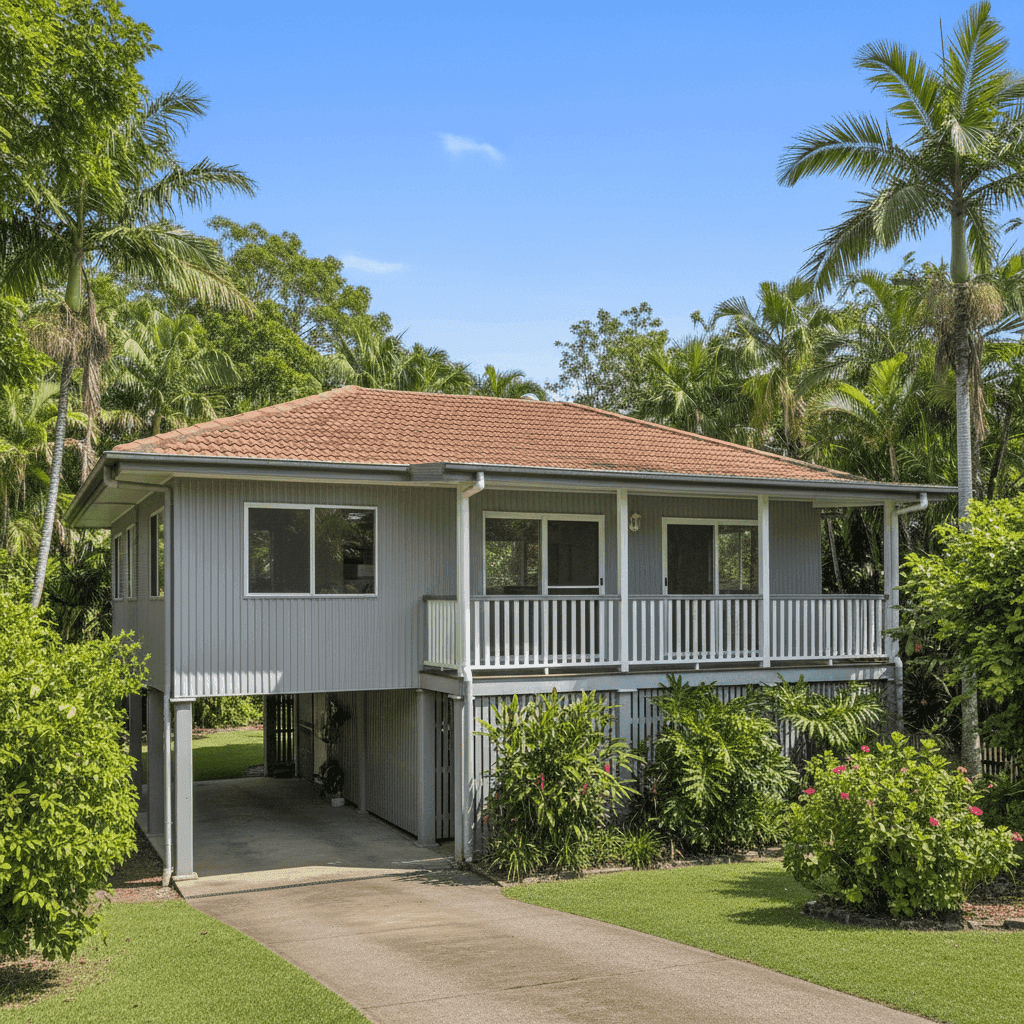
If you own a free standing home in Gray, NT 0830, you already know that insuring a property in the Northern Territory comes with its own set of considerations — cyclone season, tropical humidity, and a building landscape that differs significantly from southern states. This article breaks down a real home and contents insurance quote for a four-bedroom, two-bathroom home in Gray, examines whether it represents fair value, and offers practical guidance for local homeowners looking to get the most out of their cover.
---
Is This Quote Fair?
The quote in question sits at $3,715 per year (or $349 per month) for combined home and contents cover, with a $808,000 building sum insured and $61,000 in contents. Our price rating for this quote is Expensive — above average for the suburb.
To put that in context: based on 30 quotes collected for Gray NT 0830, the suburb average premium is $3,104/yr and the median sits at $3,130/yr. This quote lands above the 75th percentile threshold of $3,393/yr, meaning it is pricier than at least three-quarters of comparable quotes in the area.
That said, "expensive" doesn't automatically mean "wrong." A higher-than-average premium can reflect a legitimate combination of factors: a larger-than-typical building sum insured, specific property characteristics, or simply the insurer's own risk appetite for this postcode. The key question is whether the cover on offer justifies the cost — and whether shopping around could yield a better deal for the same protection.
---
How Gray Compares to the Rest of NT and Australia
Understanding where Gray sits within the broader insurance landscape helps frame what you should reasonably expect to pay.
| Benchmark | Premium |
|---|---|
| This Quote | $3,715/yr |
| Gray suburb average | $3,104/yr |
| Gray suburb median | $3,130/yr |
| NT state average | $3,709/yr |
| NT state median | $3,580/yr |
| National average | $2,965/yr |
| National median | $2,716/yr |
| Litchfield LGA average | $3,734/yr |
A few things stand out here. First, the NT state average of $3,709/yr is actually very close to this specific quote, suggesting that while the premium is above the Gray suburb average, it is broadly in line with what Territorians are paying across the board. The Northern Territory consistently commands higher premiums than most other states, largely due to cyclone exposure and the associated reinsurance costs insurers pass on to policyholders.
Second, when you compare to the national average of $2,965/yr, it becomes clear just how much of a premium NT homeowners pay relative to the rest of the country — roughly $750 more per year on average. This gap reflects the elevated natural hazard risk profile of the Top End, not any particular failing on the part of individual homeowners.
The Litchfield LGA average of $3,734/yr also closely mirrors this quote, reinforcing that the pricing is consistent with the broader regional market, even if it sits above the Gray suburb median specifically.
---
Property Features That Affect Your Premium
Several characteristics of this particular property have a meaningful influence on what insurers charge. Understanding these can help you anticipate costs and, in some cases, take steps to manage them.
Cyclone Risk Zone
This is arguably the single biggest factor. Gray falls within a designated cyclone risk area, which significantly increases the cost of building insurance across the board. Insurers factor in the likelihood of cyclone damage, the cost of repairs in a remote or semi-remote market, and the availability of tradespeople post-event. Cyclone-related loadings are standard across the Top End and are largely non-negotiable.
Elevated Foundation
The home is elevated by at least one metre, which is a common and sensible design feature in tropical climates. Elevation helps protect against flooding and improves airflow, both of which are relevant in the Darwin region. Some insurers view elevation favourably from a flood-risk perspective, though it can also introduce concerns around underfloor structural integrity in storm events.
Aluminium External Walls
Aluminium cladding is a practical choice for the Territory's climate — it's resistant to rust and handles heat well. However, insurers assess wall materials as part of their construction rating, and aluminium-clad homes may be assessed differently to brick veneer or full brick construction. It's worth confirming how your insurer classifies the construction type, as this can affect both premium and claims outcomes.
Tiled Roof
A tiled roof on a cyclone-rated property is worth noting. While tiles are durable under normal conditions, they can be more vulnerable to uplift in high-wind events compared to Colorbond or corrugated metal roofing. Some insurers apply specific conditions or loadings to tiled roofs in cyclone zones. Make sure your policy's cyclone cover terms are clearly understood.
Timber and Laminate Flooring
The timber and laminate flooring throughout the home adds to the contents and building replacement value. Timber floors can be costly to repair or replace following water ingress — a real risk in the wet season — so ensuring your sum insured accurately reflects reinstatement costs is important.
Building Size and Age
At 235 sqm and built in 1984, this is a reasonably sized older home. Properties from this era may have original electrical wiring, plumbing, and roofing materials that increase the likelihood of a claim. The $808,000 building sum insured is substantial and likely accounts for the cost of full reinstatement to current building standards, which can be considerably higher than the market value of an older home.
---
Tips for Homeowners in Gray
1. Get Multiple Quotes Before Renewing
With this quote sitting above the suburb median, it's well worth comparing alternatives before renewing. Use CoverClub's quote comparison tool to see what other insurers are offering for the same property and cover level. Even a modest saving of $300–$500 per year adds up significantly over time.
2. Review Your Building Sum Insured Carefully
At $808,000, the building sum insured is the primary driver of premium cost. Make sure this figure reflects a genuine reinstatement estimate — not the market value of the property, and not an inflated guess. Underinsurance is a serious risk, but overinsurance means you're paying more premium than necessary. Consider using a professional building estimator or your insurer's calculator to validate the figure.
3. Understand Your Cyclone Cover Terms
Not all policies treat cyclone damage the same way. Some apply a separate, higher cyclone excess; others may exclude certain types of damage unless specific conditions are met. Read your Product Disclosure Statement (PDS) carefully, and ask your insurer directly how cyclone claims are handled — particularly for tiled roofs and elevated structures.
4. Check for Available Discounts
Many insurers offer discounts for bundling home and contents cover (which this policy already does), paying annually rather than monthly, or having security features like deadbolts and alarm systems. It's also worth asking whether any loyalty discounts or introductory offers apply. Paying monthly at $349 rather than annually at $3,715 costs slightly more over the year, so if cash flow allows, the annual payment is the better financial choice.
---
Compare Your Options with CoverClub
Whether you're reviewing your current policy or shopping for cover for the first time, CoverClub makes it easy to see how your quote stacks up. Explore Gray suburb insurance statistics, browse NT-wide premium data, or get a new quote today to find out if you could be paying less for the same level of protection. In a high-risk area like the Top End, having the right cover matters — but so does making sure you're not overpaying for it.