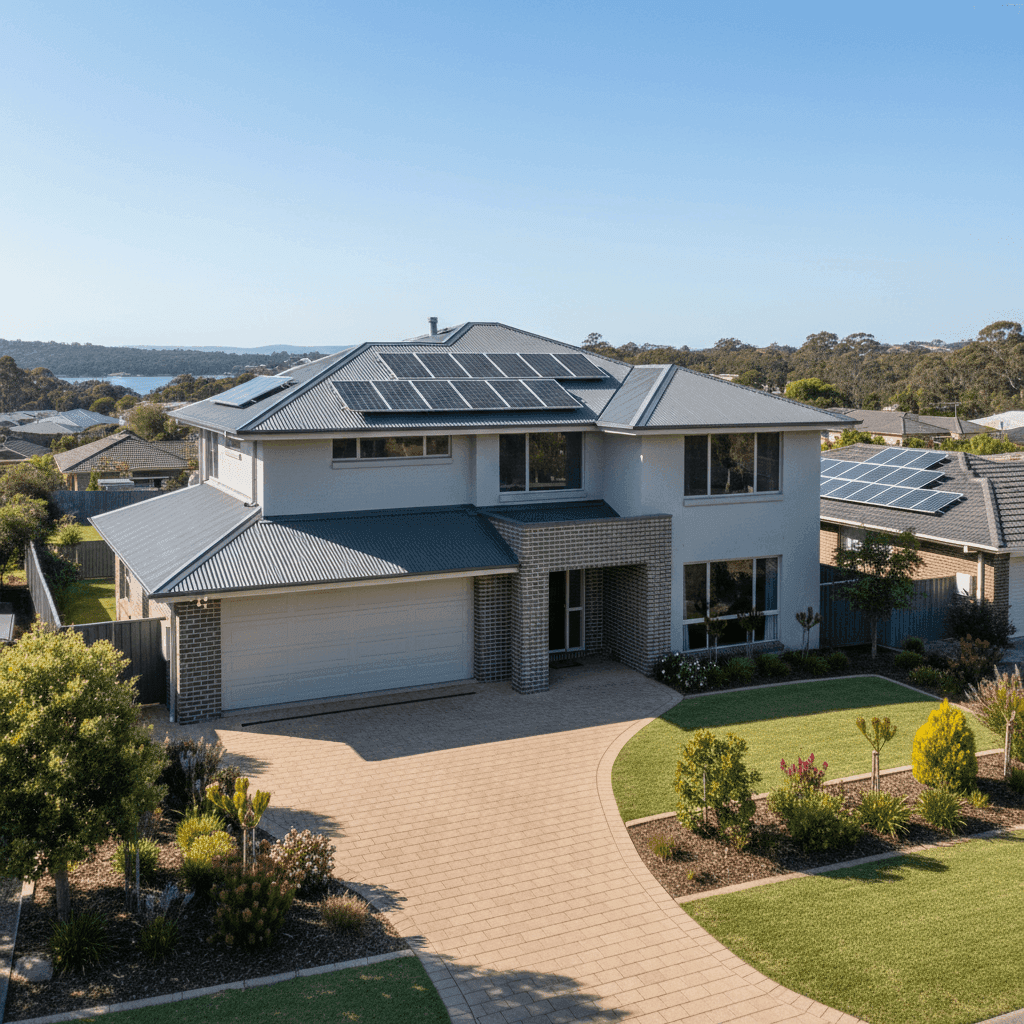
Grays Point is a leafy, waterside suburb tucked into the Sutherland Shire on Sydney's southern fringe — and it's exactly the kind of location where getting your home insurance right really matters. This analysis looks at a recent home and contents insurance quote for a four-bedroom, four-bathroom free standing home in the 2232 postcode, breaking down whether the premium represents fair value and what factors are likely driving the cost.
---
Is This Quote Fair?
The quote in question comes in at $7,275 per year (or $697 per month), covering a building sum insured of $1,900,000 and contents valued at $235,000, each with a $1,000 excess. Our pricing analysis rates this quote as Expensive — Above Average.
To put that in perspective, the suburb average for comparable Grays Point properties sits at around $5,196 per year, with a median of $5,267. This quote lands noticeably above the 75th percentile for the area ($5,617), meaning it's pricier than roughly three-quarters of quotes we've seen in the same postcode.
That said, "expensive" doesn't automatically mean "wrong." A high building sum insured of $1.9 million is a significant driver here — rebuilding a large, well-appointed home with above-average fittings in a sought-after Sydney suburb doesn't come cheap. Insurers price for replacement cost, not market value, and for a 268 sqm double brick home with premium finishes, that figure is entirely plausible.
---
How Grays Point Compares
Understanding where this quote sits relative to broader benchmarks gives a clearer picture of the insurance landscape. Here's a snapshot:
| Benchmark | Premium |
|---|---|
| This quote | $7,275/yr |
| Grays Point suburb average | $5,196/yr |
| Grays Point suburb median | $5,267/yr |
| NSW average | $9,528/yr |
| NSW median | $3,770/yr |
| National average | $5,347/yr |
| National median | $2,764/yr |
| Sutherland LGA average | $23,423/yr |
A few things stand out here. First, the NSW state average of $9,528 is actually higher than this quote — suggesting that, on a statewide basis, this premium isn't out of the ordinary. The wide gap between the NSW average and median ($3,770) reflects how significantly high-value properties skew the average upward.
Second, the Sutherland LGA average of $23,423 is extraordinarily high — likely pulled up by a small number of very high-value or high-risk properties in the area. Compared to that figure, this quote looks quite reasonable.
For a deeper look at how premiums vary across the postcode, visit the Grays Point suburb insurance stats page. You can also explore NSW-wide insurance data or the national insurance overview for broader context.
---
Property Features That Affect Your Premium
Several characteristics of this property will have a direct bearing on what insurers charge. Here's how they stack up:
Double Brick Construction Double brick is generally viewed favourably by insurers. It's more resistant to fire, wind, and structural damage than timber or clad alternatives, which can translate to lower risk in the insurer's eyes. However, it can also be more expensive to repair when damage does occur — so the effect on premiums is nuanced.
Steel / Colorbond Roof Colorbond roofing is a strong choice from an insurance perspective. It's durable, fire-resistant, and performs well in severe weather. Insurers tend to rate it more favourably than older tile or terracotta roofs, which can crack or dislodge in storms.
Slab Foundation A concrete slab foundation is considered low-risk by most insurers. It's less susceptible to subsidence, termite damage, and moisture-related issues than older pier-and-beam or timber-stump foundations.
Timber / Laminate Flooring While aesthetically desirable, timber and laminate flooring can be costly to repair or replace after water damage events — a factor some insurers weigh when calculating contents and building premiums.
Above-Average Fittings This is one of the more significant premium drivers. Above-average fittings — think stone benchtops, high-end appliances, custom joinery, and quality fixtures — increase the cost to rebuild or restore the home to its original standard. Insurers account for this when setting the sum insured and pricing the policy.
Solar Panels Solar panels are an increasingly common feature, but they do add complexity to a claim. Panels can be damaged in hailstorms or by falling debris, and their replacement cost needs to be factored into the building sum insured. Some policies cover them automatically; others require specific inclusion — worth checking with your insurer.
Ducted Climate Control Ducted air conditioning systems are expensive to install and repair. Their inclusion increases the replacement value of the home, contributing to a higher building sum insured and, in turn, a higher premium.
Construction Year: 2006 At roughly 18–19 years old, this home is relatively modern. Newer builds generally attract more competitive premiums than older properties, as they're more likely to meet current building codes and be constructed with materials that perform better in adverse conditions.
---
Tips for Homeowners in Grays Point
1. Review your sum insured regularly Building costs in Sydney have risen sharply in recent years. If your sum insured hasn't been updated to reflect current construction costs, you could be underinsured — or, conversely, paying for more cover than you need. Use a building cost calculator or speak to a quantity surveyor to get an accurate figure.
2. Check your solar panel cover With solar panels on the roof, confirm whether your policy explicitly covers them for damage — and at what value. Some standard policies include them within the building sum insured, while others treat them as a separate item. Gaps here can be costly.
3. Shop around at renewal time Insurance loyalty rarely pays off in Australia. Insurers often reserve their best rates for new customers, meaning long-standing policyholders can end up significantly overpaying. Use a comparison platform like CoverClub to benchmark your renewal quote before accepting it.
4. Consider your excess strategically Both the building and contents excess on this policy are set at $1,000. Opting for a higher excess — say, $2,000 — can meaningfully reduce your annual premium. If you're unlikely to make small claims (which can affect your no-claims history), a higher excess may be a smart trade-off.
---
Compare Your Options with CoverClub
Whether you're a Grays Point local reviewing your current policy or a new homeowner trying to understand the market, comparing quotes is the single most effective way to ensure you're not overpaying. Get a home insurance quote through CoverClub to see how your premium stacks up — and find cover that suits your home and your budget.