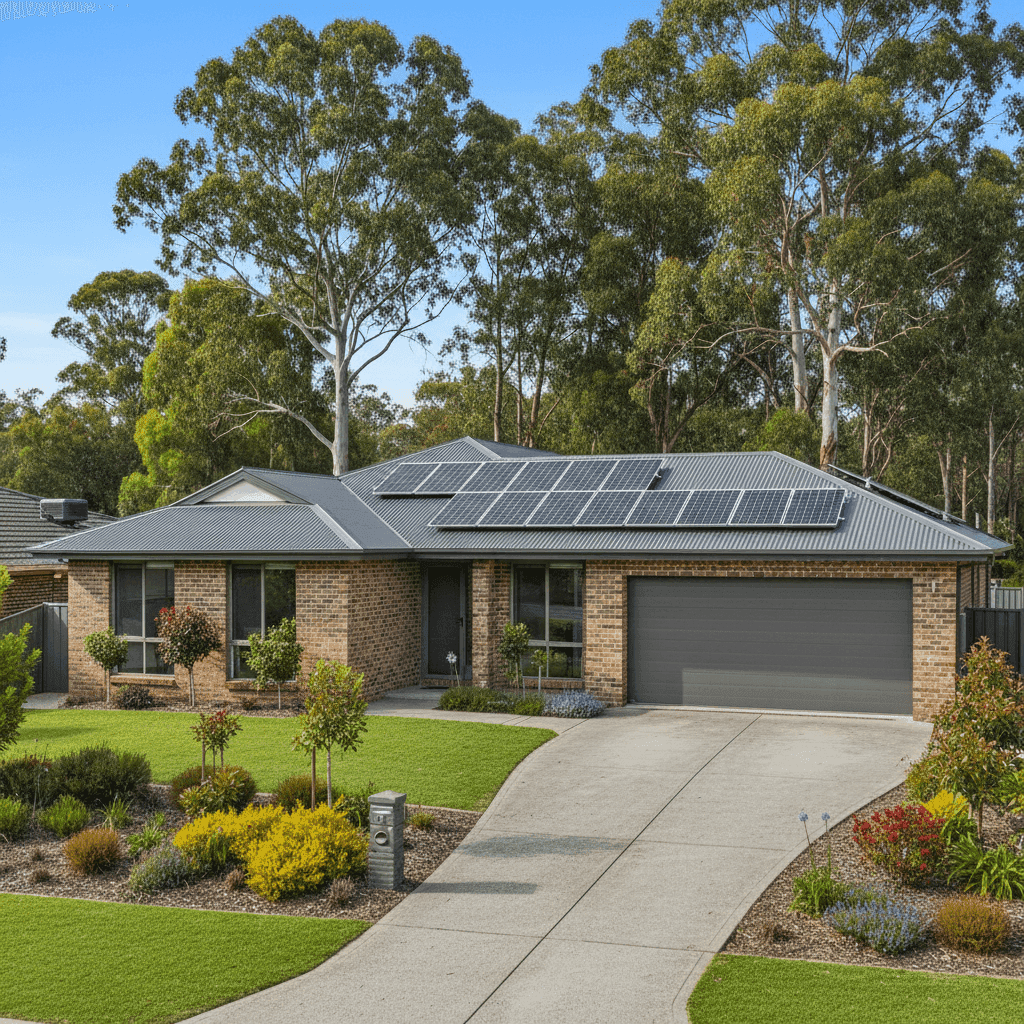
Green Point is a quiet, leafy suburb on the NSW Central Coast, sitting within the 2251 postcode and popular with families drawn to its bushland surrounds and proximity to Brisbane Water. For owners of a free standing, brick veneer home in this area, understanding what you should be paying for home and contents insurance — and why — can make a real difference to your household budget.
This article breaks down a recent home and contents insurance quote for a 3-bedroom, 3-bathroom free standing home in Green Point, comparing it against local, state, and national benchmarks to help you understand whether it represents fair value.
---
Is This Quote Fair?
The quote in question comes in at $2,678 per year (or $262/month), covering a building sum insured of $850,000 and contents valued at $50,000. Both the building and contents carry a $5,000 excess.
Our analysis rates this quote as FAIR — Around Average, and the numbers back that up. At $2,678/yr, this premium sits:
- Below the Green Point suburb average of $3,928/yr
- Below the suburb median of $3,472/yr
- Above the suburb's 25th percentile of $2,369/yr
In practical terms, this quote is better than what most Green Point homeowners are paying, but it's not at the very cheapest end of the market either. You're in the middle-to-lower range of the local pricing spectrum — a solid result, particularly given the $850,000 building sum insured, which is on the higher side and reflects the cost of rebuilding a quality home on the Central Coast.
It's also worth noting the $5,000 excess on both building and contents. Opting for a higher excess is one of the most common ways insurers reduce premiums, so while this quote looks competitive, make sure you're comfortable covering that out-of-pocket cost in the event of a claim.
---
How Green Point Compares
To put this quote in proper context, it helps to zoom out and look at the broader pricing landscape. You can explore the full data on the Green Point suburb stats page, the NSW state overview, and national insurance statistics.
| Benchmark | Premium |
|---|---|
| This quote | $2,678/yr |
| Green Point suburb average | $3,928/yr |
| Green Point suburb median | $3,472/yr |
| Central Coast LGA average | $8,387/yr |
| NSW state average | $9,528/yr |
| NSW state median | $3,770/yr |
| National average | $5,347/yr |
| National median | $2,764/yr |
A few things stand out here. The NSW state average of $9,528/yr is dramatically higher than both the state median ($3,770) and this quote — a gap that's largely driven by high-value properties and high-risk areas (think flood zones, bushfire-prone regions, and premium Sydney postcodes) pulling the average upward. The median is almost always a more reliable benchmark for typical homeowners.
Against the national median of $2,764/yr, this quote of $2,678 is very competitive. It's also well below the Central Coast LGA average of $8,387/yr, though again, LGA averages can be skewed by outliers. Based on 27 quotes sampled in the Green Point area, the local data paints a clear picture: this is a reasonable premium for the suburb.
---
Property Features That Affect Your Premium
Several characteristics of this property directly influence how insurers price the risk — for better and for worse.
Brick Veneer Walls & Colorbond Roof This combination is generally well-regarded by insurers. Brick veneer is durable and fire-resistant, while steel/Colorbond roofing is lightweight, long-lasting, and performs well in high-wind conditions. Compared to properties with timber cladding or tile roofs, this construction profile typically attracts more favourable premiums.
Slab Foundation A concrete slab foundation is considered low-risk from an insurer's perspective — there's no subfloor cavity to worry about, and it's resistant to movement in many soil types. This is a positive factor for pricing.
Timber/Laminate Flooring Flooring type can influence contents and internal fitout replacement costs. Timber and laminate floors are moderately priced to replace but can be susceptible to water damage, which is worth keeping in mind when assessing your contents cover limits.
Solar Panels The presence of solar panels adds a modest layer of complexity to a home insurance policy. Panels are typically covered under building insurance, but it's important to confirm this with your insurer and ensure the sum insured reflects their replacement value. A quality solar system can cost $8,000–$15,000 or more to replace, so it's worth checking your policy schedule.
Ducted Climate Control Ducted air conditioning systems are fixed to the structure and generally covered under building insurance. Like solar, they contribute to the overall rebuild cost — another reason why the $850,000 sum insured on this property is well-considered.
1982 Construction Homes built in the early 1980s can present mixed signals to insurers. On one hand, they're established and proven structures. On the other, older homes may have ageing plumbing, wiring, or roofing components that increase the likelihood of a claim. Keeping up with maintenance is key to both your safety and your insurability.
---
Tips for Homeowners in Green Point
1. Review your sum insured regularly Building costs on the Central Coast have risen significantly in recent years. The $850,000 sum insured on this property appears well-calibrated, but it's worth reassessing annually — particularly if you've renovated, added solar, or upgraded fixtures. Being underinsured at claim time is a costly mistake.
2. Confirm solar panels are covered Not all policies automatically include solar panel systems in their building cover, or they may apply sub-limits. Contact your insurer directly to confirm coverage and whether the current sum insured accounts for full panel replacement.
3. Consider the impact of your excess A $5,000 excess is on the higher end. While it helps reduce your annual premium, it means you'll be out of pocket significantly before your insurer contributes to a claim. If cash flow is a concern, it may be worth modelling the premium difference at a $2,500 or $1,000 excess.
4. Compare quotes at renewal — every year Insurance premiums rarely stay static. Insurers adjust their pricing models, risk appetites, and discount structures constantly. Even if your current quote is fair, running a comparison at renewal takes minutes and could save you hundreds. The CoverClub quote tool makes it easy to benchmark your premium against the market.
---
Get a Better Deal on Home Insurance
Whether you're renewing your current policy or shopping for the first time, comparing quotes is the single most effective way to ensure you're not overpaying. CoverClub aggregates real premium data from across Australia, so you can see exactly how your quote stacks up against your neighbours and the broader market.
Get a home insurance quote at CoverClub and find out if you're getting the best deal available for your Green Point property.