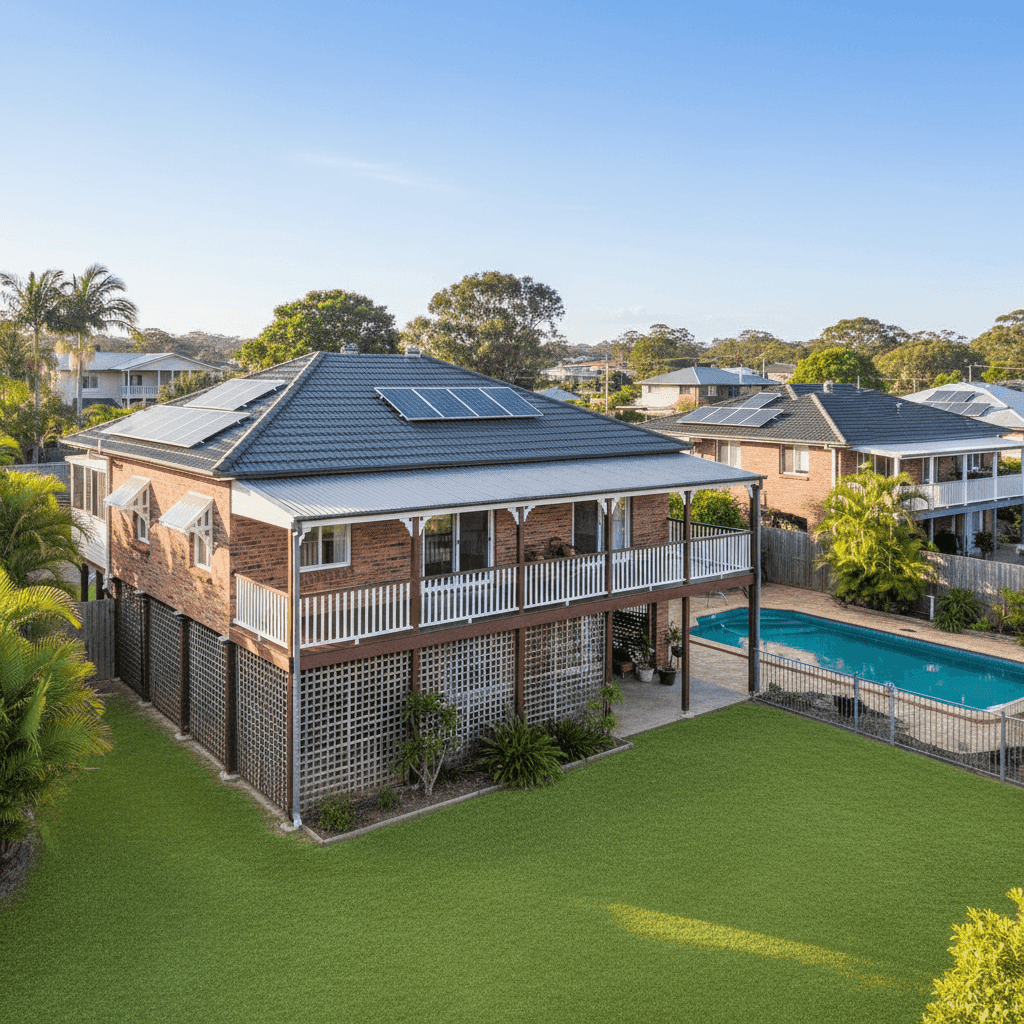
Green Point is a relaxed residential suburb on the NSW Central Coast, sitting within the Central Coast LGA roughly an hour north of Sydney. It attracts families drawn to its leafy streets, proximity to Brisbane Water, and a strong sense of community. For owners of a free standing home here, understanding what drives your insurance premium — and whether you're paying a fair price — is well worth the effort.
This article breaks down a real home and contents insurance quote for a four-bedroom, three-bathroom brick veneer home in Green Point, compares it against local, state, and national benchmarks, and offers practical tips to help you get the best value cover.
---
Is This Quote Fair?
The quoted annual premium for this property is $3,621 per year (or $340 per month), covering both building (sum insured: $820,000) and contents ($20,000), each with a $1,000 excess.
Our price rating for this quote is FAIR — Around Average, which means it sits comfortably in the middle of the market for this suburb. It's neither a standout bargain nor an overpriced outlier.
To put that in context:
- The suburb average for Green Point (postcode 2251) is $3,928/yr, meaning this quote comes in about $307 below average — a meaningful saving.
- The suburb median sits at $3,472/yr, so this quote is slightly above the midpoint, which is consistent with the "around average" rating.
- The 25th percentile for the suburb is $2,369/yr, and the 75th percentile is $5,192/yr — placing this quote solidly within the middle band of the local market.
In short, this is a reasonable premium for the property's characteristics. There may be room to improve, but there's no immediate cause for concern.
---
How Green Point Compares
One of the most useful things you can do as a homeowner is benchmark your premium against broader markets. Here's how Green Point stacks up:
| Benchmark | Average | Median |
|---|---|---|
| Green Point (2251) | $3,928/yr | $3,472/yr |
| NSW State | $9,528/yr | $3,770/yr |
| National | $5,347/yr | $2,764/yr |
| Central Coast LGA | $8,387/yr | — |
A few things stand out here. The NSW state average of $9,528/yr is dramatically higher than the Green Point average — but that figure is heavily skewed by high-risk and high-value properties across the state (flood zones, bushfire-prone areas, prestige suburbs). The NSW median of $3,770/yr is a far more representative comparison, and Green Point's median sits just below that.
Similarly, the national average of $5,347/yr looks high compared to Green Point, but the national median of $2,764/yr tells a different story — suggesting that nationally, many homes are insured for less, likely reflecting lower property values or simpler builds in regional areas.
The Central Coast LGA average of $8,387/yr appears elevated, likely due to the diversity of properties across the region — from waterfront homes with flood exposure to bushfire-affected hinterland properties. Green Point's suburb-level data paints a more accurate picture for this specific location.
You can explore more local data on the Green Point suburb stats page, or compare across all of NSW and nationally.
---
Property Features That Affect Your Premium
Every property is unique, and insurers weigh up a range of features when calculating your premium. Here's how the characteristics of this home come into play:
Brick Veneer Walls & Tiled Roof Brick veneer is one of the most common external wall types in Australia and is generally viewed favourably by insurers — it's durable, fire-resistant, and relatively straightforward to repair. Paired with a tiled roof, this combination typically attracts mid-range premiums. Tiles are long-lasting but can be susceptible to hail damage, which is worth noting in the Central Coast climate.
Elevated on Stumps The property sits elevated by at least one metre on stumps — a construction style that offers real advantages. Elevated homes are less susceptible to ground-level flooding and moisture ingress, which can reduce risk in the eyes of insurers. It also means underfloor access is easier for maintenance, potentially reducing long-term repair costs.
Above-Average Fittings Above-average fittings quality — think stone benchtops, quality appliances, and premium fixtures — increases the cost to rebuild or repair, which is reflected in the $820,000 building sum insured. Insurers factor in the quality of finishes when assessing replacement costs, so it's important your sum insured accurately reflects this.
Swimming Pool A pool adds both value and liability. From an insurance perspective, it increases the replacement cost of the property and may introduce some public liability considerations. Ensuring your policy covers pool-related structures (fencing, pumps, filtration systems) is important.
Solar Panels Solar panels are increasingly common on Australian rooftops, but they're not always automatically covered under standard building policies. It's worth confirming with your insurer that panels — and associated inverters and wiring — are explicitly included in your building cover.
Ducted Climate Control Ducted air conditioning systems are a significant fixed asset and are typically covered under building insurance. However, mechanical breakdown is usually excluded, so a separate appliance protection policy may be worth considering.
No Cyclone Risk Green Point falls outside designated cyclone risk zones, which removes one of the more significant premium loading factors that affect properties in northern Queensland and parts of WA. This is a genuine advantage for Central Coast homeowners.
---
Tips for Homeowners in Green Point
1. Review your building sum insured regularly With above-average fittings and a 268 sqm home, your rebuild cost can shift significantly with inflation and rising construction costs. Many homeowners are underinsured without realising it. Use a quantity surveyor estimate or your insurer's building calculator to make sure $820,000 still reflects reality — especially as material and labour costs have risen sharply in recent years.
2. Confirm solar panel coverage explicitly Don't assume your solar system is covered. Ask your insurer to confirm in writing that panels, inverters, and associated wiring are included under your building policy. Some policies treat them as an optional add-on or exclude damage caused by electrical faults.
3. Consider a higher excess to reduce your premium With both building and contents excesses currently set at $1,000, there may be an opportunity to increase one or both to reduce your annual premium. If you're financially comfortable absorbing a $2,000 excess in the event of a claim, the premium savings over several years can be significant.
4. Compare quotes at renewal time Even if your current premium feels reasonable, the home insurance market is competitive. Loyalty doesn't always pay — insurers often offer better rates to new customers. Set a reminder to compare quotes before your renewal date to make sure you're not paying more than you need to.
---
Find a Better Deal with CoverClub
Whether you're reviewing an existing policy or shopping for cover for the first time, CoverClub makes it easy to compare home and contents insurance quotes across Australia. Our tools are built for Australian homeowners — with real suburb-level data, transparent pricing comparisons, and no pressure to buy.
Get a quote today at CoverClub and see how your premium stacks up.