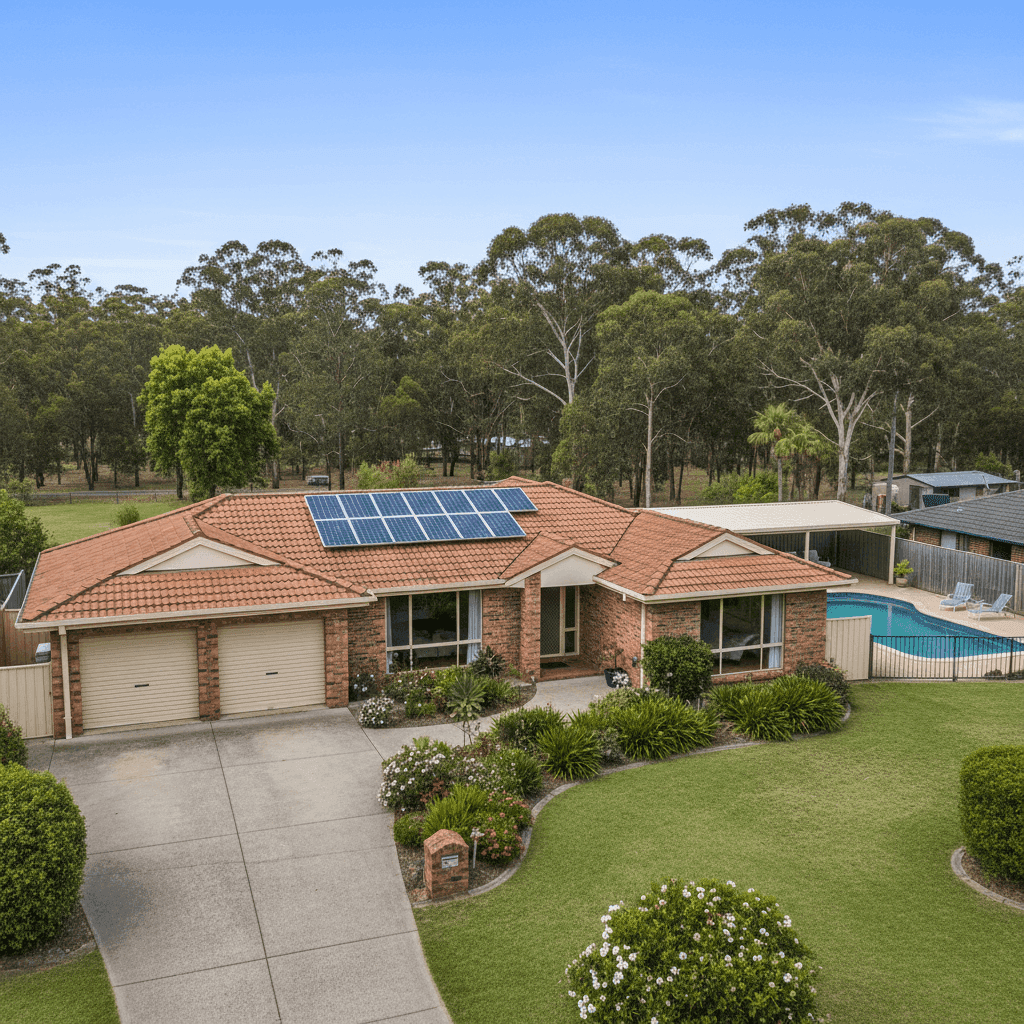
Green Point is a leafy residential suburb on the Central Coast of New South Wales, known for its quiet streets, established homes, and proximity to Brisbane Water National Park. For owners of a free standing home in this area, understanding what you should be paying for home and contents insurance is an important step in protecting one of your biggest assets. This article breaks down a real insurance quote for a five-bedroom, four-bathroom free standing home in Green Point (postcode 2251) and puts it in context against local, state, and national benchmarks.
---
Is This Quote Fair?
The quote in question comes in at $4,205 per year (or $411 per month) for combined home and contents cover, with a building sum insured of $816,000 and contents valued at $50,000. Both the building and contents excess are set at $1,000.
Our price rating for this quote is FAIR — Around Average, which means the premium sits in a reasonable range but isn't the cheapest available. To understand why, it helps to look at what other homeowners in Green Point are actually paying.
The suburb average premium is $3,928 per year, while the median sits lower at $3,472 per year. This quote of $4,205 is above both figures, placing it closer to the upper half of the local market. That said, it falls well below the suburb's 75th percentile of $5,192 per year — meaning roughly a quarter of homeowners in the area are paying even more. So while there may be room to shop around, this premium isn't out of line for a property of this size and specification.
It's also worth noting that the building sum insured of $816,000 is substantial, reflecting the size and quality of a 315 sqm home. Higher replacement cost coverage naturally pushes premiums upward, and a fair portion of this quote's cost is attributable to the level of cover being provided.
---
How Green Point Compares
Putting this quote into a broader context reveals some interesting patterns. You can explore the full data on the Green Point suburb stats page, the NSW state stats page, and the national stats page.
| Benchmark | Average Premium | Median Premium |
|---|---|---|
| Green Point (suburb) | $3,928/yr | $3,472/yr |
| NSW (state) | $9,528/yr | $3,770/yr |
| Australia (national) | $5,347/yr | $2,764/yr |
| Central Coast LGA | $8,387/yr | — |
A few things stand out here. The NSW state average of $9,528 per year looks alarming at first glance, but the NSW median of $3,770 tells a more grounded story. The large gap between average and median in NSW suggests that a relatively small number of very high-risk or high-value properties are pulling the average upward — likely properties in flood-prone, bushfire-affected, or coastal erosion zones. Green Point homeowners are, by comparison, in a relatively favourable position.
The Central Coast LGA average of $8,387 per year is similarly skewed, likely reflecting the diversity of property types and risk profiles across a large geographic council area. Green Point, as a suburb, appears to sit on the more affordable end of the LGA spectrum.
Nationally, the average of $5,347 per year means this Green Point quote is actually below the national average — a positive sign for local homeowners.
---
Property Features That Affect Your Premium
Several characteristics of this particular property have a meaningful influence on the premium being charged.
Size and sum insured: At 315 sqm with five bedrooms and four bathrooms, this is a large home. The $816,000 building sum insured reflects the genuine cost of rebuilding a property of this scale and quality. Larger homes cost more to insure simply because they cost more to rebuild.
Brick veneer construction and tiled roof: These are generally considered favourable building materials from an insurer's perspective. Brick veneer offers solid fire resistance and structural durability, while tiled roofs are durable and less susceptible to storm damage than some alternatives. These features can contribute to more competitive premiums compared to homes with timber cladding or metal roofing in certain contexts.
Slab foundation: A concrete slab is a stable and widely accepted foundation type that doesn't introduce the same risks as older stumped or pier-and-beam foundations, which can be more vulnerable to subsidence or pest damage.
Swimming pool: Pools add value to a property but also introduce liability considerations. Most insurers factor pool ownership into their risk assessment, particularly regarding public liability cover within a home policy.
Solar panels: Solar systems represent a significant asset that can be included under building cover. Insurers may assess the replacement cost of panels and inverters, which can add to the overall insured value and, in turn, the premium.
Ducted climate control: Ducted air conditioning systems are expensive to repair or replace and are typically covered under building insurance. Their presence can marginally influence the overall sum insured and premium calculation.
No cyclone risk: Green Point is not classified as a cyclone risk area, which is a meaningful premium advantage compared to properties in northern Queensland or parts of Western Australia where cyclone loading can dramatically increase costs.
Timber and laminate flooring: While these flooring types are stylish and add value, they can be more costly to repair or replace after water damage events compared to tiles. This is a minor factor but one that some insurers consider in their contents and building assessments.
---
Tips for Homeowners in Green Point
1. Review your building sum insured annually Construction costs have risen significantly in recent years across NSW. Make sure your $816,000 sum insured still reflects the true cost of rebuilding your home — not just its market value. Underinsurance is one of the most common and costly mistakes homeowners make.
2. Shop around at renewal time A "fair" rating means this quote is reasonable, but it's not necessarily the best available. Use a comparison service like CoverClub to see multiple quotes side by side before your policy renews. Loyalty doesn't always pay in the insurance market.
3. Consider your excess strategically Both excesses on this policy are set at $1,000. Opting for a higher excess — say $2,500 or $5,000 — can reduce your annual premium noticeably. If you have a solid emergency fund and are unlikely to make small claims, this can be a smart way to lower ongoing costs.
4. Ensure your pool and solar are correctly declared Some homeowners forget to explicitly declare their pool, solar panels, or other features when taking out a policy. Make sure these are properly listed in your policy documentation to avoid any disputes at claim time. Undisclosed features can lead to claim complications.
---
Compare Your Home Insurance Today
Whether you're reviewing an existing policy or shopping for the first time, it pays to compare. CoverClub makes it easy for Green Point homeowners to see real quotes from multiple insurers in one place. Get a quote today and find out if you're getting the best value for your home and contents cover.