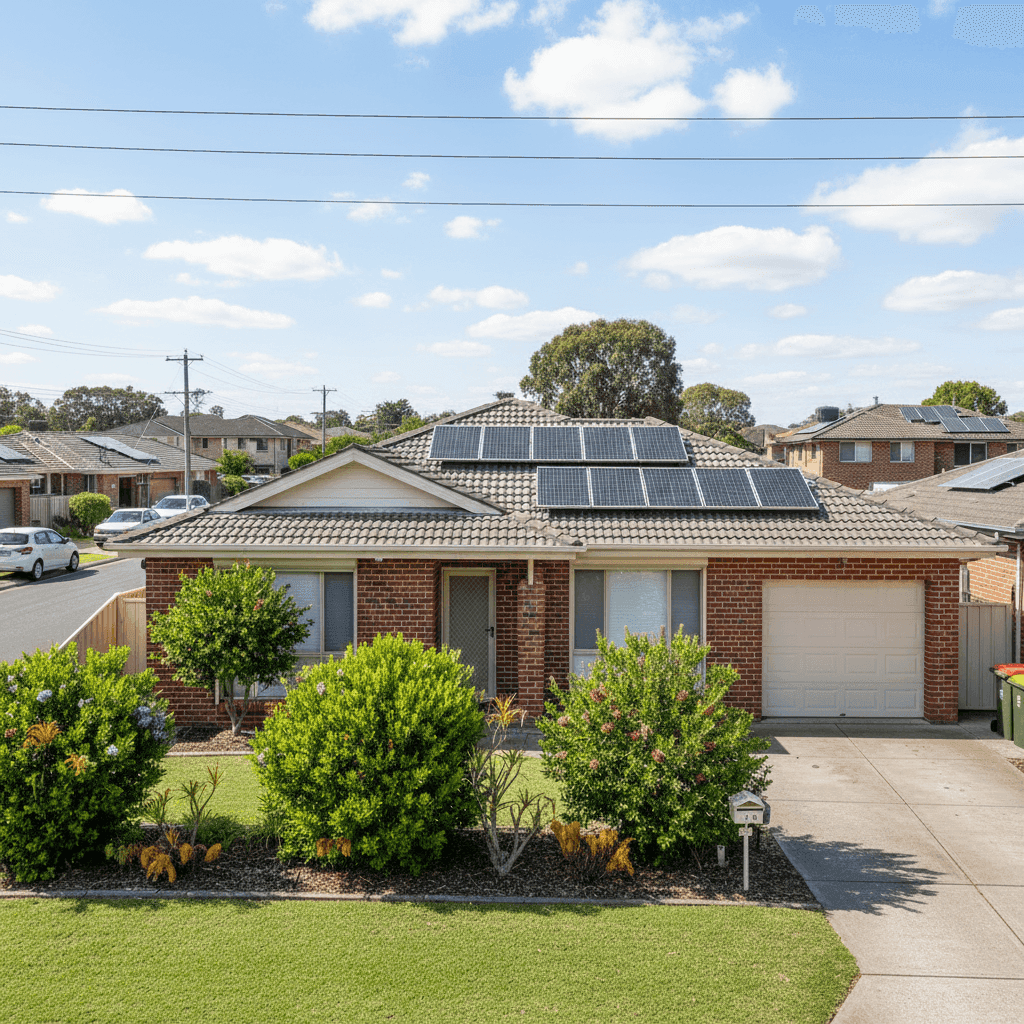
If you own a free standing home in Green Valley, NSW 2168, you're probably curious about whether you're paying a fair price for home and contents insurance — or leaving money on the table. This article breaks down a real quote for a four-bedroom brick veneer home in the suburb, compares it against local, state, and national benchmarks, and offers practical tips to help you get better value from your cover.
---
Is This Quote Fair?
The annual premium for this quote comes in at $1,729 per year (or $175/month), covering both building and contents. The building is insured for $790,000 and contents for $230,000, with a building excess of $3,000 and a contents excess of $1,000.
Our pricing analysis rates this quote as FAIR — around average for the area. That's a reasonable outcome, but it's worth unpacking what "average" actually means in context.
The suburb average for Green Valley sits at $2,182/year, with a median of $1,830/year. This quote comes in below both figures, which is a positive sign. It also sits between the 25th percentile ($1,432/yr) and the 75th percentile ($2,546/yr), placing it comfortably in the middle of the market — not a bargain, but certainly not overpriced either.
In short: this homeowner isn't getting gouged, but there's still room to potentially do better with the right insurer.
---
How Green Valley Compares
One of the most striking things about this quote is how it stacks up against broader benchmarks.
| Benchmark | Premium |
|---|---|
| This quote | $1,729/yr |
| Green Valley suburb average | $2,182/yr |
| Green Valley suburb median | $1,830/yr |
| Liverpool LGA average | $2,029/yr |
| NSW state average | $9,528/yr |
| NSW state median | $3,770/yr |
| National average | $5,347/yr |
| National median | $2,764/yr |
The NSW state average of $9,528/year is dramatically higher than what's on offer in Green Valley — though this figure is heavily influenced by high-value properties, flood-prone regions, and bushfire-risk areas across the state. The median of $3,770/year is a more useful comparison, and this quote is well under that mark.
Compared to the national average of $5,347/year, Green Valley homeowners are generally paying considerably less — a reflection of the suburb's relatively low natural hazard risk profile and its established, predominantly brick construction stock.
The Liverpool LGA average of $2,029/year also provides useful context: this quote sits $300 below that figure, suggesting the property's specific characteristics are working in the homeowner's favour.
With a sample of 34 quotes collected for the 2168 postcode, the data gives a reasonably reliable picture of what the local market looks like.
---
Property Features That Affect Your Premium
Several characteristics of this particular property have a meaningful influence on what insurers are willing to charge.
Brick veneer construction is generally viewed favourably by insurers. It offers solid fire resistance and structural durability compared to weatherboard or clad homes, which can translate to lower premiums. Combined with a concrete tile roof, the home presents a low-maintenance, resilient profile that most underwriters appreciate.
The slab foundation is another positive factor. Slab-on-ground homes in Western Sydney tend to be straightforward to assess for risk — there's no subfloor cavity to worry about, and the construction type is well understood by local builders and insurers alike.
Timber and laminate flooring can be a double-edged sword. While it adds to the aesthetic and replacement value of the home, it's more susceptible to water damage than tiles. This is worth keeping in mind when setting your contents sum insured, particularly if you have significant furniture or rugs.
The presence of solar panels is worth flagging. Most standard home insurance policies cover rooftop solar systems as part of the building, but coverage limits and conditions vary. It's important to confirm with your insurer that your panels are included in the $790,000 building sum insured and that accidental damage (including storm and hail) is covered.
With above-average fittings quality, the $790,000 building sum insured appears well-considered — quality kitchens, bathrooms, and finishes cost significantly more to replace, and underinsurance is a common and costly mistake.
Finally, no pool and no cyclone risk both simplify the risk profile. Green Valley is well outside any designated cyclone zone, and the absence of a pool removes a common source of liability and maintenance-related claims.
---
Tips for Homeowners in Green Valley
1. Review your building sum insured annually Construction costs have risen sharply in recent years across Greater Sydney. The cost to rebuild a four-bedroom brick home with above-average fittings can change significantly year on year. Make sure your $790,000 sum insured still reflects current rebuild costs — your insurer may offer an automatic indexation feature, but it's worth verifying.
2. Confirm solar panel coverage explicitly Ask your insurer directly whether your solar panels are covered, up to what limit, and under what circumstances (e.g., storm, accidental damage, power surge). Don't assume — get it in writing or confirmed in your Product Disclosure Statement (PDS).
3. Consider raising your contents excess to reduce your premium The current contents excess is $1,000. If you have a solid emergency fund and rarely make small claims, increasing this excess could meaningfully reduce your annual premium. Just ensure the saving justifies the higher out-of-pocket cost if you do need to claim.
4. Compare quotes at renewal time A "fair" rating means there's likely a better deal available somewhere in the market. Insurers reprice constantly, and loyalty doesn't always pay. Using a comparison tool at renewal — even if you're happy with your current insurer — is one of the simplest ways to keep your premiums in check.
---
Ready to Compare?
Whether you're reviewing an existing policy or shopping for the first time, CoverClub makes it easy to see how your quote stacks up. Get a home insurance quote today and find out if there's a better deal waiting for your Green Valley home. You can also explore detailed suburb-level insurance data for Green Valley to see exactly where your premium sits in the local market.