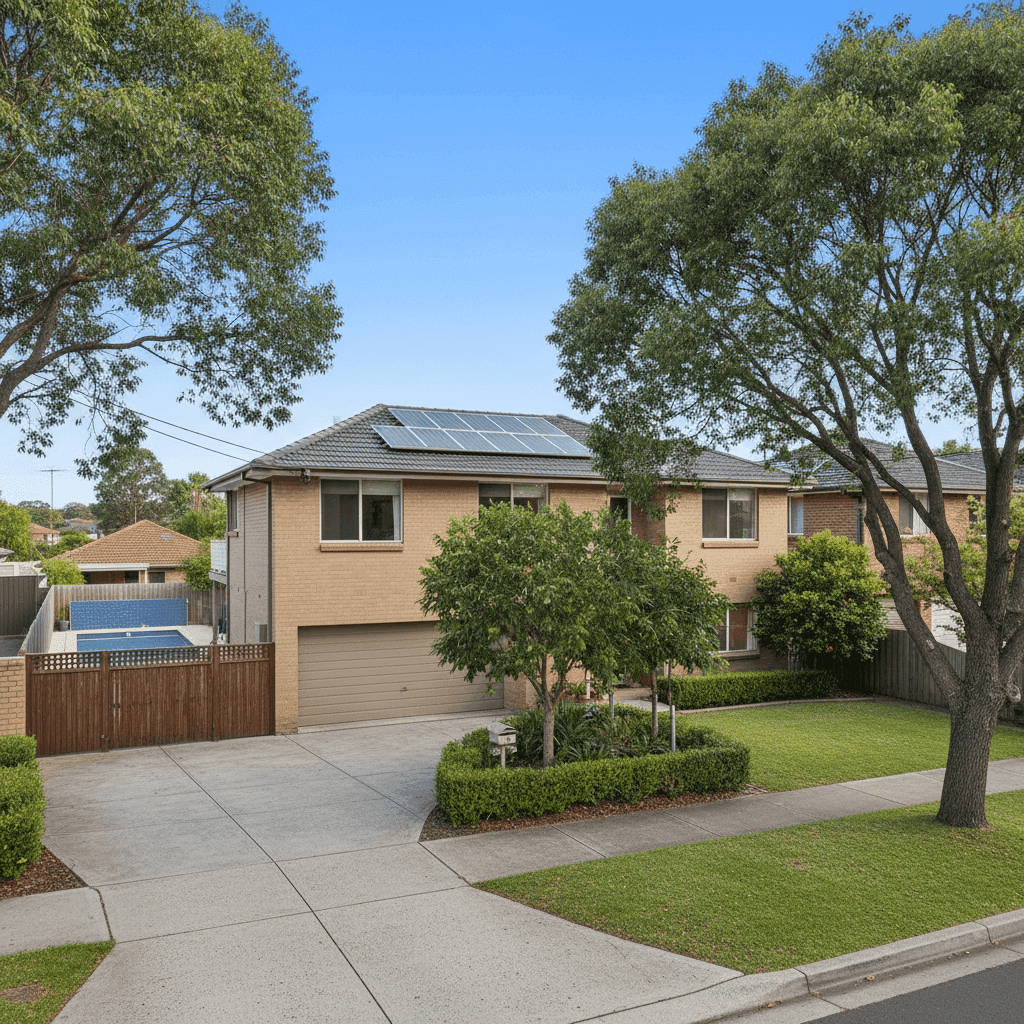
Greenacre is a well-established suburb in Sydney's inner-southwest, known for its mix of post-war housing stock and a strong sense of community. For owners of a free standing home in this area, securing the right home and contents insurance is an important financial decision — and understanding whether you're paying a fair price is just as important as having the cover itself. This article breaks down a real insurance quote for a 3-bedroom, 1-bathroom free standing home in Greenacre, and puts the numbers in context so you can make a more informed decision.
---
Is This Quote Fair?
The annual premium for this property comes in at $1,186 per year (or $112/month), covering both building (sum insured: $480,000) and contents ($50,000). Our analysis rates this quote as FAIR — Around Average.
That rating reflects where the premium sits relative to what other Greenacre homeowners are paying. At $1,186/yr, this quote lands between the suburb's 25th percentile ($882/yr) and the median ($1,267/yr), meaning it's more affordable than roughly half the quotes recorded in the area, but not in the cheapest quartile either.
Given the property's characteristics — a 1960-built double brick home with a tiled roof, slab foundation, a swimming pool, and solar panels — this pricing is broadly reasonable. Older homes can sometimes attract higher premiums due to the cost of sourcing period-appropriate materials or updating ageing infrastructure, but double brick construction is generally well-regarded by insurers for its durability and fire resistance, which can help keep costs in check.
The building excess of $4,000 is on the higher side, and it's worth noting that a higher excess typically reduces your premium. If that excess feels uncomfortable, it may be worth exploring whether a lower excess option is available and what the trade-off in premium would be. The contents excess of $1,000 is more standard.
---
How Greenacre Compares
To put this quote in proper perspective, it helps to look at the broader data. You can explore the full breakdown on the Greenacre suburb stats page.
| Benchmark | Premium |
|---|---|
| This Quote | $1,186/yr |
| Suburb 25th Percentile | $882/yr |
| Suburb Median | $1,267/yr |
| Suburb Average | $1,459/yr |
| Suburb 75th Percentile | $1,746/yr |
| LGA (Strathfield) Average | $1,418/yr |
| NSW Average | $9,528/yr |
| NSW Median | $3,770/yr |
| National Average | $5,347/yr |
| National Median | $2,764/yr |
A few things stand out here. First, this quote is comfortably below both the suburb average ($1,459/yr) and the Strathfield LGA average ($1,418/yr). Second — and perhaps most striking — is the dramatic difference between Greenacre's premiums and the broader NSW state averages. The NSW average of $9,528/yr is heavily skewed by high-risk areas such as flood-prone regional towns and cyclone-exposed coastal zones. Greenacre, by contrast, is a relatively low-risk metropolitan suburb, which explains why local premiums are so much more manageable.
Compared to national benchmarks, the picture is similar — Greenacre homeowners are generally paying well below the national average, reflecting Sydney's inner-southwest as a relatively benign insurance risk environment.
It's worth noting the suburb sample size of 17 quotes is modest, so averages can shift as more data comes in. Still, the directional story is clear: this quote is competitive within its local context.
---
Property Features That Affect Your Premium
Several characteristics of this property influence how insurers assess and price the risk:
Double Brick Construction Double brick is one of the most durable and fire-resistant wall types available in Australian residential construction. Insurers generally view it favourably, as it tends to perform well in extreme weather and is less susceptible to structural damage than lightweight alternatives. This can contribute to more competitive premiums.
Tiled Roof Concrete or terracotta tiles are a common and well-regarded roofing material. They offer solid protection against hail and wind, though they can be heavier and more expensive to repair if cracked. Overall, a tiled roof is considered a standard, low-to-moderate risk feature by most insurers.
1960s Construction The age of a property matters. Homes built in the 1960s may have older plumbing, wiring, or drainage systems that haven't been updated, which can increase the likelihood of certain types of claims (such as escape of liquid). Insurers factor this in, and it's one reason why maintaining and upgrading ageing systems can be worthwhile — both for safety and for your insurance profile.
Swimming Pool Pools add value to a property but also introduce additional liability considerations. Most home and contents policies include some level of liability cover, but it's worth confirming your policy explicitly covers pool-related incidents, particularly if you have young visitors to the property.
Solar Panels Solar panels are increasingly common on Australian homes, and most insurers now include them as part of the building sum insured. However, it's important to confirm this with your insurer and ensure the replacement value of your panels is factored into the $480,000 building sum insured — particularly given the cost of modern solar systems.
Slab Foundation & Carpet Flooring A slab foundation is standard for many Sydney homes and generally presents no unusual risk factors. Carpet, while common, is worth noting in the context of contents cover — water damage can render carpeted areas a total loss, so ensuring your contents sum insured accounts for floor coverings is sensible.
---
Tips for Homeowners in Greenacre
1. Review your building sum insured regularly Construction costs have risen significantly in recent years. A sum insured of $480,000 for 130 sqm may be appropriate today, but it's worth recalculating your rebuild cost annually — especially given the age of the home and the cost of double brick construction. Underinsurance is one of the most common and costly mistakes homeowners make.
2. Confirm solar panels and pool equipment are covered Ask your insurer specifically whether solar panels and pool equipment (pumps, filters, heating systems) are included under the building definition, and at what limit. These items can be expensive to replace and are sometimes subject to sub-limits or exclusions.
3. Consider the impact of your excess The $4,000 building excess is notably high. While it reduces your annual premium, it means you'd need to cover the first $4,000 of any building claim yourself. If a mid-range claim arose — say, storm damage to the roof — that excess could represent a significant out-of-pocket cost. Weigh this trade-off carefully.
4. Shop around at renewal time Insurance loyalty doesn't always pay. Premiums can shift significantly from year to year, and the market is competitive. Using a comparison platform like CoverClub at renewal time takes only a few minutes and can reveal meaningful savings — or at least give you the confidence that your current premium is genuinely competitive.
---
Compare Your Options with CoverClub
Whether you're reviewing an existing policy or shopping for the first time, CoverClub makes it easy to see how your home insurance quote stacks up. Get a quote today and compare options tailored to your property in Greenacre — so you can cover what matters, at a price that makes sense.