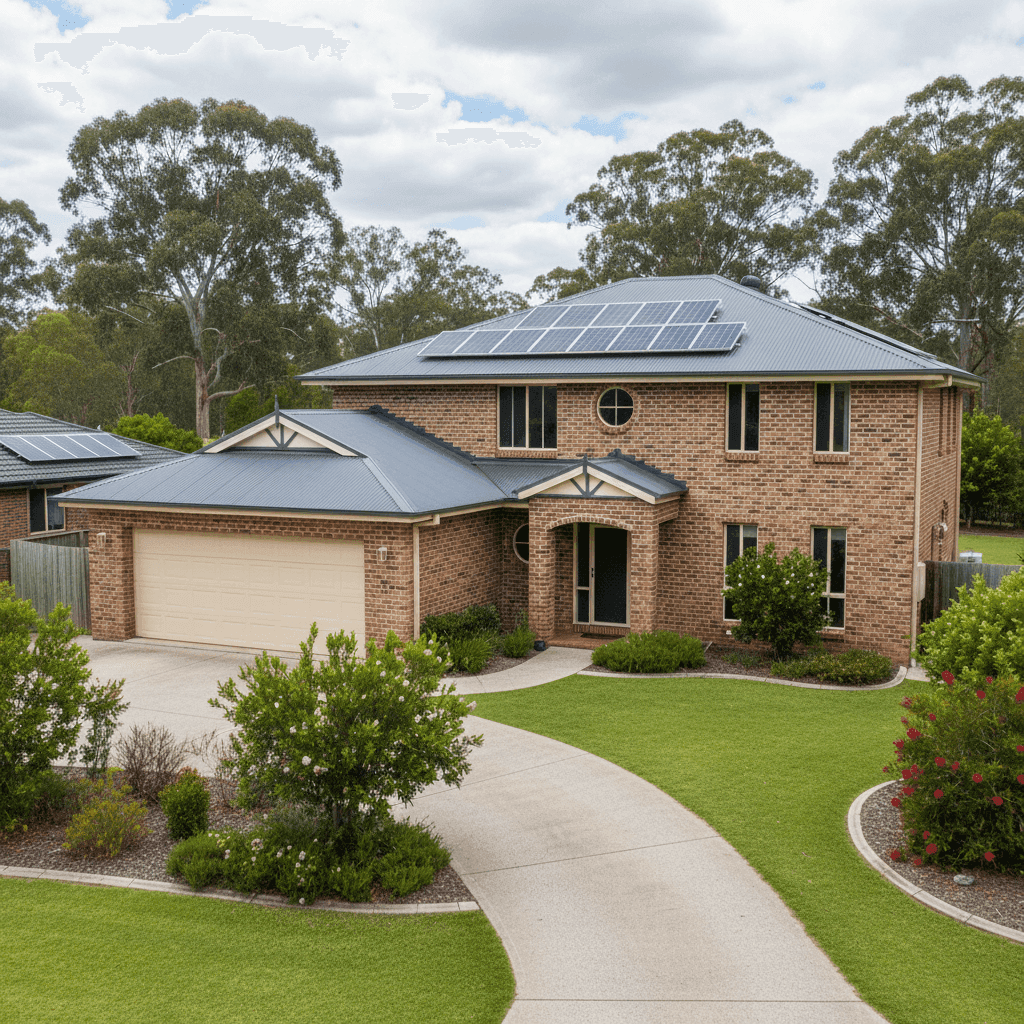
If you own a free standing home in Greenbank, QLD 4124, you've probably wondered whether you're paying a fair price for home insurance — or quietly overpaying while your insurer banks the difference. This article breaks down a real home and contents insurance quote for a six-bedroom property in Greenbank, benchmarks it against local, state, and national data, and offers practical tips to help you get better value.
---
Is This Quote Fair?
The quote in question comes in at $3,318 per year (or $311/month) for combined home and contents cover. It covers a building sum insured of $1,017,000 and contents valued at $130,000, with a $1,000 excess on both building and contents claims.
Our price rating for this quote is FAIR — Around Average.
That assessment holds up when you dig into the numbers. The suburb average for Greenbank sits at $2,877/year, which means this quote is roughly $441 above the local average — about 15% more expensive. However, it's worth noting that this is a large, six-bedroom home (345 sqm) with a high building sum insured of over $1 million, which naturally pushes the premium upward compared to smaller properties in the same postcode. The higher coverage level is a key driver here, and comparing dollar-for-dollar against smaller homes isn't entirely apples-to-apples.
Importantly, this quote sits comfortably within the middle range of the market — between the suburb's 25th percentile ($1,809/yr) and 75th percentile ($3,860/yr). It's not the cheapest option available, but it's well short of the top quartile. For a property of this size and value, landing in that middle band is a reasonable outcome.
---
How Greenbank Compares
To put this quote in proper context, here's how Greenbank stacks up against broader benchmarks — based on data from 140 quotes collected for this suburb:
| Benchmark | Average Premium | Median Premium |
|---|---|---|
| Greenbank (4124) | $2,877/yr | $2,588/yr |
| LGA – Ipswich | $3,034/yr | — |
| Queensland | $4,547/yr | $3,931/yr |
| National | $2,965/yr | $2,716/yr |
A few things stand out here. First, Greenbank is actually cheaper than the Queensland state average by a significant margin — QLD homeowners pay an average of $4,547/year, which is nearly $1,600 more than the Greenbank average. This reflects the outsized impact of cyclone-prone and flood-exposed regions in Queensland, which pull the state average upward considerably.
Second, Greenbank sits roughly in line with the national average of $2,965/year, which is somewhat unusual for a Queensland suburb — most QLD postcodes come in well above the national figure. You can explore Queensland-wide insurance trends and national benchmarks to see how other areas compare.
The Ipswich LGA average of $3,034/year is also a useful reference point — Greenbank sits slightly below that figure, suggesting it's one of the more affordably insured suburbs within the broader Ipswich region.
---
Property Features That Affect Your Premium
Every property has a unique combination of characteristics that insurers weigh when calculating risk. Here's how the features of this particular home influence its premium:
Brick Veneer Walls Brick veneer is generally viewed favourably by insurers. It offers solid fire resistance and structural durability compared to timber or weatherboard construction. This is likely a neutral-to-positive factor on the premium.
Steel / Colorbond Roof Colorbond roofing is another tick in the right column. It's lightweight, resistant to corrosion, and performs well in storms — all of which reduce the likelihood of a weather-related claim. Insurers typically price this material more favourably than older tile or fibro roofing.
Slab Foundation A concrete slab foundation is standard for homes of this era and construction type. It's generally considered low-risk from a structural standpoint, with no subfloor void that could harbour moisture or pests.
Vinyl Flooring Vinyl is relatively inexpensive to replace compared to hardwood timber floors or tiles, which can help keep contents and building replacement costs manageable.
Solar Panels This property has solar panels installed. While solar adds value to the home, it also adds replacement cost in the event of damage — particularly from hail or storm events. Some insurers include solar panels automatically under building cover; others may require them to be specifically listed. It's worth confirming with your insurer that your panels are fully covered under the building sum insured.
Construction Year: 2001 At around 24 years old, this home is neither brand new nor ageing to the point of concern. Homes from this era are generally well-regarded by insurers — modern enough to meet building codes introduced in the late 1990s, but without the unknowns of very old construction.
Building Size: 345 sqm At 345 square metres, this is a large home by Australian standards. The high building sum insured of $1,017,000 reflects the cost to fully rebuild a property of this size, and this is the single biggest driver of the premium being above the suburb average.
---
Tips for Homeowners in Greenbank
1. Double-check your sum insured regularly Building costs have risen sharply in recent years. If your sum insured hasn't been reviewed since you took out the policy, you may be underinsured — or conversely, over-insured. Use a building cost calculator to make sure your coverage reflects current rebuild costs for a home of your size and construction type.
2. Confirm solar panel coverage in writing With solar panels on the roof, it's essential to verify exactly how they're covered under your policy. Ask your insurer whether panels are included in the building sum insured, whether storm and hail damage is covered, and whether there's any exclusion for electrical or inverter faults.
3. Consider a higher excess to reduce your premium This quote carries a $1,000 excess on both building and contents. If you have the financial buffer to absorb a larger out-of-pocket cost in the event of a claim, increasing your excess to $2,000 or more can meaningfully reduce your annual premium.
4. Shop around at renewal time Loyalty doesn't always pay in insurance. Insurers frequently offer better rates to new customers than to existing ones. Even if you're happy with your current cover, getting a comparison quote before renewing takes only a few minutes and could save you hundreds of dollars.
---
Compare Your Options at CoverClub
Whether you're reviewing an existing policy or shopping for cover on a new property, it pays to see the full picture. At CoverClub, you can compare home and contents insurance quotes for your Greenbank address, see how your premium stacks up against your neighbours, and make a more informed decision at renewal. It's free, fast, and built specifically for Australian homeowners.