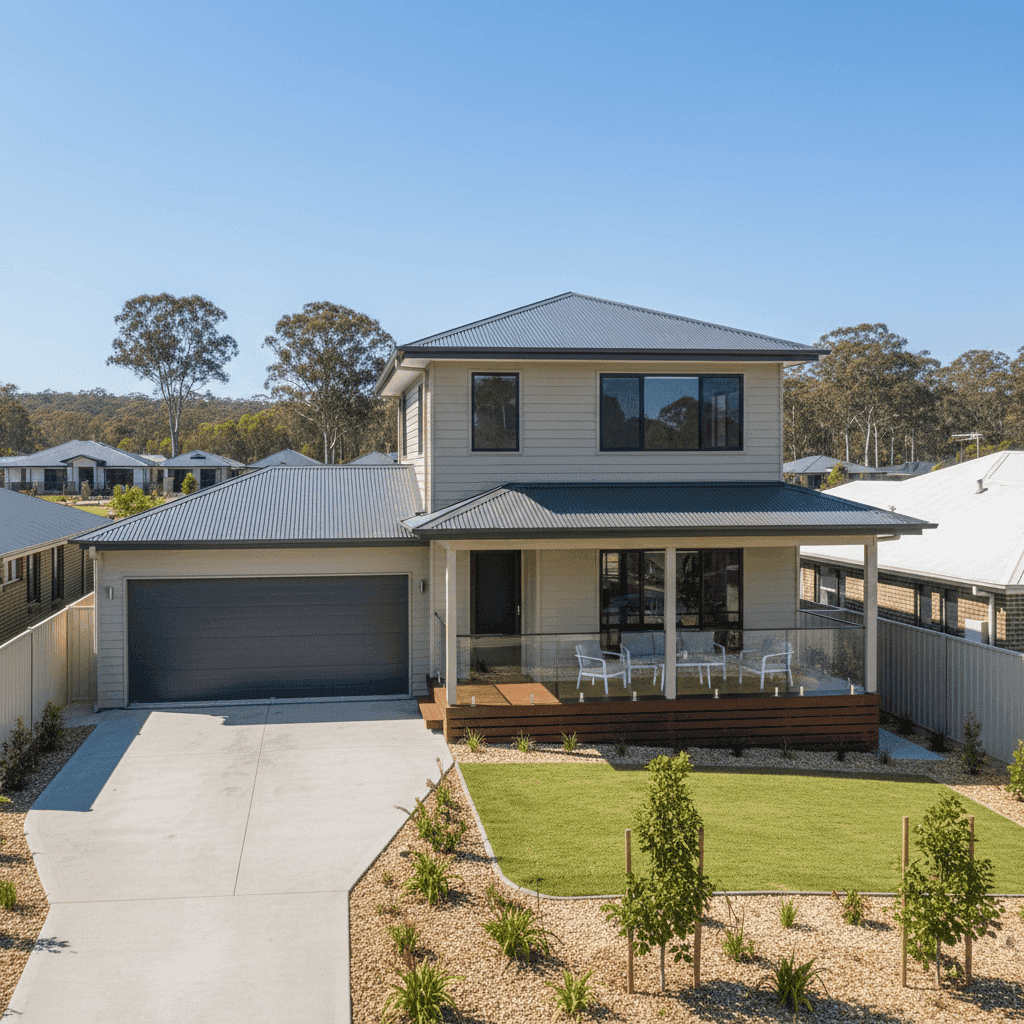
If you own a free standing home in Greenbank, QLD 4124, you're probably wondering whether you're getting a fair deal on your home insurance — or quietly overpaying. This article breaks down a real home and contents insurance quote for a four-bedroom, two-bathroom weatherboard home in this south-east Queensland suburb, and puts it in context against local, state, and national benchmarks.
---
Is This Quote Fair?
The annual premium on this quote comes in at $2,011 per year (or around $197 per month), covering both building and contents. The building is insured for $500,000, with contents covered for $10,000, and both the building and contents excesses are set at $2,000.
Our pricing engine rates this quote as CHEAP — below average for the area. That's genuinely good news for the homeowner. Based on a sample of 105 quotes collected for the Greenbank postcode, the suburb average sits at $3,393 per year, and the median is $2,819 per year. This quote falls well beneath both figures, and even comes in just under the 25th percentile of $2,053 — meaning it's cheaper than roughly 75% of comparable quotes in the suburb.
In practical terms, this homeowner is saving over $800 per year compared to the typical Greenbank policyholder, and more than $1,000 per year compared to the suburb average. That's a meaningful saving that's well worth locking in.
---
How Greenbank Compares
To put this quote in broader context, it helps to look beyond the suburb. You can explore the full data breakdown on the Greenbank suburb stats page, the Queensland state overview, and the national insurance statistics hub.
Here's how the numbers stack up:
| Benchmark | Annual Premium |
|---|---|
| This quote | $2,011 |
| Greenbank suburb average | $3,393 |
| Greenbank suburb median | $2,819 |
| Greenbank 25th percentile | $2,053 |
| Ipswich LGA average | $8,901 |
| Queensland average | $9,129 |
| Queensland median | $3,903 |
| National average | $5,347 |
| National median | $2,764 |
A few things stand out here. First, Queensland's average premium is extraordinarily high — nearly $9,129 per year — driven largely by cyclone-prone regions in north and far-north Queensland where insurers price in significant catastrophe risk. The state median of $3,903 is a more useful yardstick for south-east Queensland homeowners, and this quote still beats it comfortably.
The Ipswich LGA average of $8,901 also reflects the influence of flood-affected areas within the broader local government region. Greenbank itself, sitting in the Logan area on the southern fringe of Greater Brisbane, tends to attract more moderate premiums than many flood-prone Ipswich suburbs — which helps explain why this quote looks so competitive in that context.
Nationally, the median premium is $2,764, which is actually slightly higher than this quote. So not only is this a good deal locally — it's competitive by any measure across Australia.
---
Property Features That Affect Your Premium
Several characteristics of this property work in the homeowner's favour when it comes to pricing.
Construction year (2023): A brand-new home built to modern Australian Standards is one of the strongest premium-reducing factors an insurer considers. Newer builds comply with current building codes, use contemporary materials, and are far less likely to have ageing electrical systems, plumbing issues, or structural vulnerabilities. Insurers reward this with lower risk pricing.
Steel/Colorbond roof: Colorbond is a popular and well-regarded roofing material in Australia. It's durable, fire-resistant, and performs well in high winds. From an underwriting perspective, it's considered lower risk than older materials like tiles (which can crack or dislodge) or fibrous cement sheeting.
Slab foundation: Concrete slab foundations are standard in modern Queensland construction and are generally viewed favourably by insurers. They offer good resistance to moisture ingress and pest damage compared to older raised timber stumps.
Weatherboard timber walls: Timber weatherboard is a classic Australian construction material, but it does carry slightly higher fire risk than brick or rendered masonry. That said, a newly built weatherboard home using treated, compliant materials is unlikely to attract a significant loading — and the 2023 build date helps offset any concern here.
No pool, no solar panels: Both pools and solar panel systems can add to a premium — pools due to liability risk, and solar due to replacement cost and roof penetration concerns. The absence of both keeps this quote lean.
Ducted climate control: A ducted air conditioning system is included in the building sum insured and contributes to the overall replacement cost. At $500,000, the building cover appears well-calibrated for a 130 sqm home with quality fittings in this area.
No cyclone risk: Greenbank is not classified as a cyclone risk area, which is a significant advantage over homes in northern Queensland. Cyclone cover can dramatically inflate premiums in affected regions.
---
Tips for Homeowners in Greenbank
1. Review your sum insured regularly. Construction costs have risen sharply across south-east Queensland in recent years. Even for a brand-new home, it's worth reassessing your building sum insured annually to ensure it reflects current rebuild costs — not just the original construction price. Underinsurance is one of the most common and costly mistakes homeowners make.
2. Don't overlook your contents cover. A contents value of $10,000 is on the lower end for a four-bedroom home. Take stock of your furniture, appliances, electronics, clothing, and valuables. Many homeowners are surprised to find their contents are worth significantly more than their initial estimate — and being underinsured at claim time is a painful lesson.
3. Consider your excess carefully. Both excesses on this policy are set at $2,000. A higher excess typically reduces your premium, but make sure you can comfortably cover that amount out of pocket if something goes wrong. If $2,000 would be a financial stretch, it may be worth adjusting your excess and accepting a slightly higher premium for greater peace of mind.
4. Compare at renewal — every year. Insurance markets shift constantly. The fact that this quote is priced below the suburb average today doesn't mean the same insurer will remain competitive at renewal. Set a reminder to compare quotes at CoverClub before your policy renews each year. Even a 10–15 minute comparison exercise can save hundreds of dollars.
---
Ready to Compare Your Own Quote?
Whether you're a Greenbank local or a homeowner anywhere in Australia, CoverClub makes it easy to see how your current premium stacks up — and find better value if it's out there. Get a home insurance quote today and compare your options in minutes. With suburb-level data and transparent pricing benchmarks, you'll always know exactly where you stand.