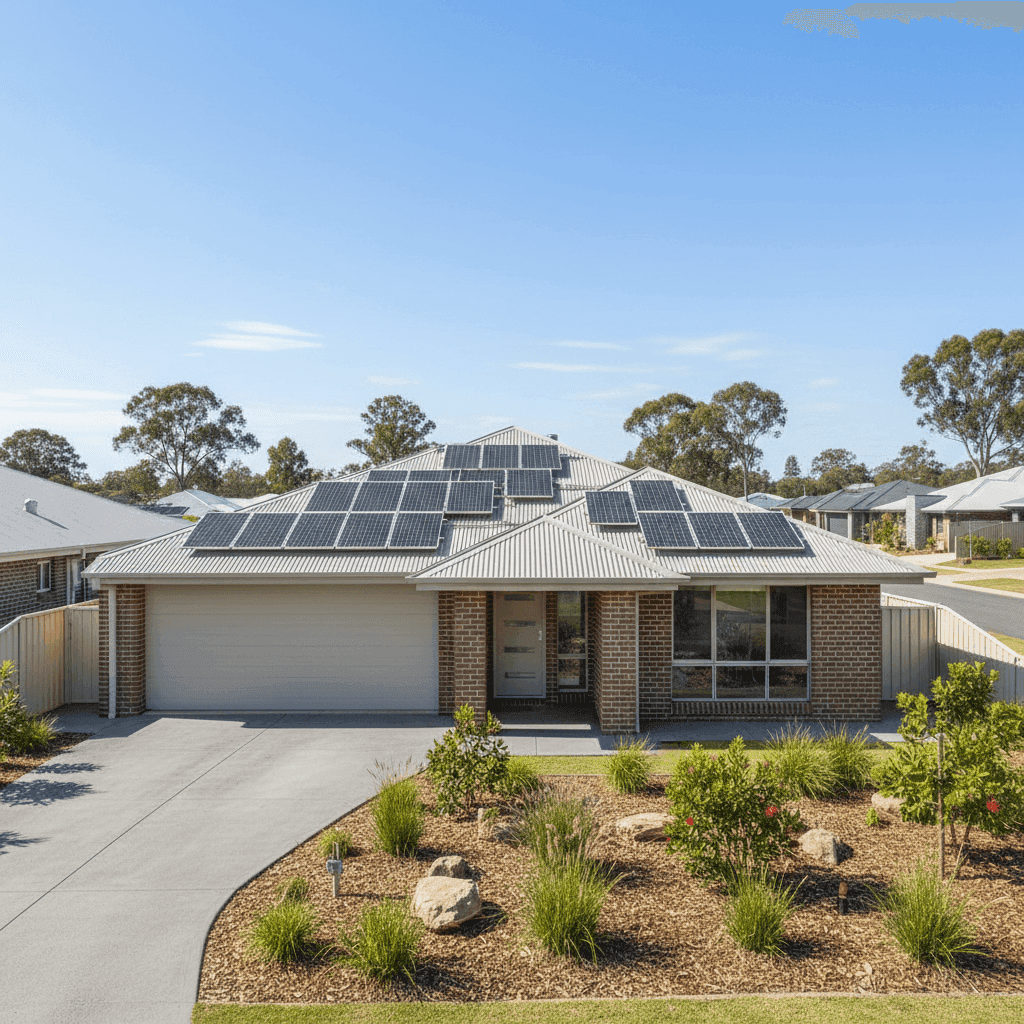
If you own a free standing home in Greenbank, QLD 4124, you've probably wondered whether you're paying the right amount for home and contents insurance — or whether you could be doing better. This article breaks down a real quote for a four-bedroom, two-bathroom brick veneer home in Greenbank, comparing it against local, state, and national benchmarks so you can make a more informed decision at renewal time.
---
Is This Quote Fair?
The annual premium for this property came in at $3,073 per year (or $288 per month), covering both building (sum insured: $705,000) and contents ($141,000), each with a $1,000 excess. Our pricing engine rates this quote as FAIR — around average for the area.
That rating holds up well under scrutiny. The quote sits comfortably above the suburb's 25th percentile ($2,053/yr) and below the 75th percentile ($3,908/yr), placing it squarely in the middle band of what Greenbank homeowners are paying. It's also slightly below the suburb average of $3,393/yr, which is a modest but meaningful saving compared to what many comparable properties are attracting.
In short, this isn't a bargain-basement price, but it's not an overpriced outlier either. For a well-built brick veneer home with solar panels and ducted climate control — features that can nudge premiums in either direction — landing near the midpoint of the local range is a reasonable outcome.
---
How Greenbank Compares
To put this quote in proper context, it helps to zoom out and look at the broader pricing landscape. Here's how Greenbank stacks up:
| Benchmark | Premium |
|---|---|
| This quote | $3,073/yr |
| Greenbank suburb average | $3,393/yr |
| Greenbank suburb median | $2,819/yr |
| QLD state average | $9,129/yr |
| QLD state median | $3,903/yr |
| National average | $5,347/yr |
| National median | $2,764/yr |
| Ipswich LGA average | $8,901/yr |
(Based on [105 quotes in Greenbank](https://coverclub.com.au/stats/QLD/4124/greenbank))
A few things stand out immediately. The QLD state average of $9,129/yr is dramatically higher than what Greenbank homeowners are typically paying — and that's largely because Queensland's insurance market is heavily skewed by extreme weather-exposed areas like Far North Queensland, coastal flood zones, and cyclone-prone regions. Greenbank, sitting in the outer south-western suburbs of Brisbane, doesn't carry that same level of natural disaster exposure, which keeps premiums considerably more moderate.
Similarly, the Ipswich LGA average of $8,901/yr is pulled upward by flood-affected postcodes within the council area. Greenbank itself benefits from being on higher ground, away from the Bremer River flood plain that affects parts of Ipswich proper.
Compared to the national average of $5,347/yr, this quote is notably more affordable — another indicator that Greenbank represents relatively lower risk in the eyes of insurers.
---
Property Features That Affect Your Premium
Several characteristics of this property influence how insurers assess and price the risk:
Brick Veneer Construction Brick veneer walls are generally viewed favourably by insurers. They offer solid fire resistance and durability compared to timber or lightweight cladding, and tend to attract more competitive premiums as a result.
Steel / Colorbond Roof Colorbond roofing is a popular choice in Queensland for good reason — it's lightweight, resistant to corrosion, and performs well in high-wind conditions. Insurers typically regard it positively, particularly in areas where severe storms are a seasonal concern.
Slab Foundation A concrete slab foundation is a standard and well-regarded construction method that presents minimal risk of subsidence or structural movement compared to older pier-and-beam setups.
Solar Panels The presence of solar panels adds replacement value to the property, which can have a small upward effect on the building sum insured. It's important to ensure your policy explicitly covers rooftop solar panels — not all standard policies do by default, so it's worth checking the Product Disclosure Statement carefully.
Ducted Climate Control Ducted air conditioning systems are a significant fixed asset and are generally covered under building insurance rather than contents. Ensuring your building sum insured accounts for the cost of replacing this system is important — it can easily run into the tens of thousands of dollars.
No Pool, No Cyclone Zone The absence of a swimming pool removes a common source of liability and maintenance claims. And while Queensland is synonymous with cyclone risk in many people's minds, Greenbank falls outside designated cyclone risk areas — a meaningful factor in keeping premiums lower than many other parts of the state.
1995 Construction A home built in 1995 is now around 30 years old. While it's past the age where new-build premiums apply, it's also not old enough to attract the kind of scrutiny that heritage or pre-1970s homes might. Routine maintenance and updates to electrical, plumbing, and roofing systems will help maintain both the property's condition and its insurability.
---
Tips for Homeowners in Greenbank
1. Review your building sum insured regularly Construction costs have risen sharply in recent years. The $705,000 sum insured on this property should reflect the full cost of rebuilding — not the market value of the land. Use a building replacement cost calculator annually, especially if you've made renovations or additions.
2. Confirm your solar panels are covered As noted above, solar panel coverage isn't always automatic. Contact your insurer to confirm whether your system is included under the building section and whether there are any sub-limits that apply. If you've recently upgraded to a larger system, update your insurer accordingly.
3. Consider your excess strategy Both the building and contents excess on this policy are set at $1,000 each. Opting for a higher excess can reduce your annual premium, but make sure it's an amount you could genuinely afford to pay out of pocket in the event of a claim. A $2,500 or $5,000 excess might look attractive on paper but can be a strain at the worst possible time.
4. Don't underinsure your contents The $141,000 contents value should cover everything from furniture and appliances to clothing, jewellery, and electronics. Many homeowners underestimate this figure. Walk through each room and take stock — you may find your contents are worth considerably more than you've insured them for.
---
Compare Your Options at CoverClub
Whether you're renewing soon or just curious about what else is on the market, it pays to compare. CoverClub makes it easy to see how your current premium stacks up and explore alternatives — all in one place. Get a home insurance quote today and find out if you could be paying less for the same level of cover. You can also explore detailed pricing data for Greenbank and the surrounding area to benchmark your own policy with confidence.