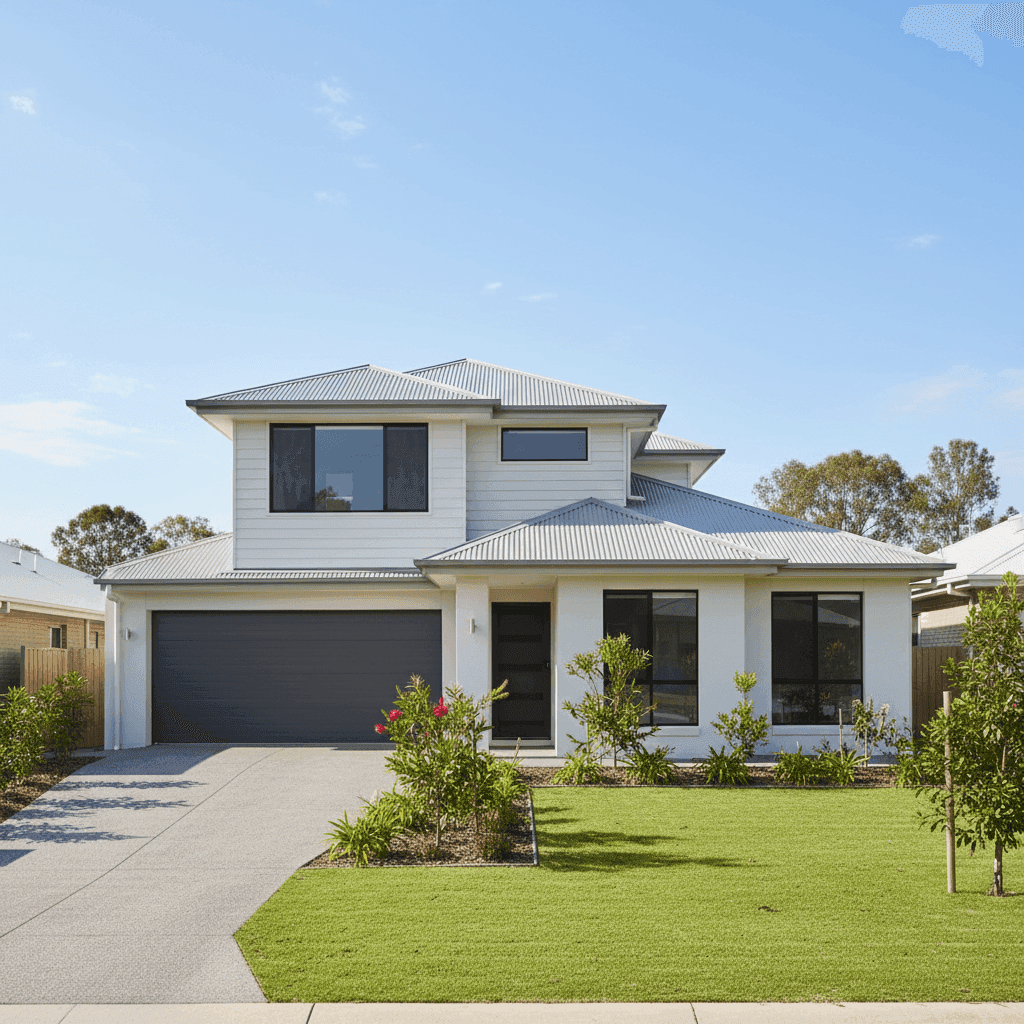
Greenbank, a quiet residential suburb in the City of Ipswich on Brisbane's south-western fringe, has been growing steadily as families seek affordable housing within commuting distance of the city. For owners of a free standing home in this area, understanding what you should be paying for home and contents insurance — and why — can make a real difference to your household budget. This article breaks down a recent quote for a 2-bedroom, 2-bathroom free standing home in Greenbank (postcode 4124), comparing it against local, state, and national benchmarks to help you make an informed decision.
---
Is This Quote Fair?
The quote in question comes in at $2,489 per year (or $232 per month) for combined home and contents cover, with a building sum insured of $550,000 and contents valued at $50,000. Both the building and contents excess are set at $1,000.
Our pricing engine rates this quote as Fair — Around Average, and the data backs that up. Based on 105 quotes collected for Greenbank (4124), the suburb's median premium sits at $2,819 per year, meaning this quote is actually tracking $330 below the local median — a modest but meaningful saving. It also falls comfortably within the suburb's interquartile range of $2,053 to $3,908, which is the band where most competitive quotes land.
In short: this isn't a bargain-basement price, but it's not an overpriced policy either. For a newly constructed home with a $550,000 building sum insured, paying below the suburb median is a reasonable outcome. Homeowners who have simply accepted a renewal notice without shopping around may well be paying significantly more than this.
---
How Greenbank Compares
To put this quote in broader context, it helps to zoom out and look at the bigger picture across Queensland and nationally.
| Benchmark | Average Premium | Median Premium |
|---|---|---|
| Greenbank (4124) | $3,393/yr | $2,819/yr |
| LGA (Ipswich) | $8,901/yr | — |
| Queensland | $9,129/yr | $3,903/yr |
| National | $5,347/yr | $2,764/yr |
A few things stand out here. The LGA (Ipswich) average of $8,901 and the Queensland state average of $9,129 are dramatically higher than what's being quoted for Greenbank. This is largely because Queensland's insurance averages are heavily skewed upward by high-risk coastal and flood-prone areas — think Cairns, Townsville, and parts of the Gold Coast hinterland — where premiums can be eye-watering.
Greenbank itself sits in a relatively benign risk environment by Queensland standards. It is not classified as a cyclone risk area, which is a significant factor in keeping premiums lower than much of regional and northern Queensland. The suburb average of $3,393 is well below both the state and LGA averages, reflecting this comparatively lower risk profile.
Interestingly, the national median of $2,764 is actually slightly below this quote, which underscores why the "Fair" rating is appropriate rather than "Great Value." There are cheaper options out there nationally, but for a Queensland property with a $550,000 building sum insured, this quote is competitive.
---
Property Features That Affect Your Premium
Several characteristics of this particular property influence how insurers price the risk.
Construction year (2025): A brand-new home is one of the most favourable risk signals an insurer can see. Modern builds must comply with current Australian building codes, which means better structural integrity, updated electrical and plumbing systems, and materials that are less prone to sudden failure. Expect this to be working in your favour on price.
Hardiplank/Hardiflex external walls: Fibre cement cladding such as Hardiplank is well regarded by insurers. It is non-combustible, resistant to moisture and rot, and holds up well in storms — all of which reduce the likelihood and severity of claims. This is a meaningful positive for your premium compared to older weatherboard or brick veneer homes.
Steel/Colorbond roof: Colorbond steel roofing is a staple of modern Australian construction and is viewed favourably by insurers. It's durable, lightweight, and performs well in high-wind events. Unlike terracotta or concrete tiles, it won't crack or dislodge as readily during storms, reducing the risk of water ingress claims.
Slab foundation: A concrete slab is a solid, low-maintenance foundation type that insurers generally treat as lower risk than timber stumps or older pier-and-beam configurations, which can be vulnerable to termite damage, subsidence, or moisture issues.
Ducted climate control: The presence of ducted air conditioning adds to the insured value of the home's fixtures and fittings, which can nudge premiums slightly upward. However, for a standard-quality fitout, this impact is modest.
Timber/laminate flooring: These flooring types are relatively straightforward to repair or replace after events like water damage, which keeps claim costs — and therefore premiums — more predictable for insurers.
No pool, no solar panels: Both pools and solar panel systems can add complexity and cost to insurance assessments. The absence of both here simplifies the risk profile and removes two potential sources of upward premium pressure.
---
Tips for Homeowners in Greenbank
1. Review your building sum insured regularly. With a new build, it's tempting to set the sum insured and forget it. But construction costs in South East Queensland have risen sharply in recent years. Make sure your $550,000 sum insured reflects current rebuild costs — not just the purchase price or original build cost. Underinsurance is one of the most common and costly mistakes homeowners make.
2. Don't overlook your contents value. A $50,000 contents figure is relatively modest for a furnished home. Take the time to do a proper room-by-room inventory of your belongings — furniture, appliances, clothing, electronics, and valuables. Many Australians discover they're significantly underinsured for contents only after making a claim.
3. Compare at renewal, every year. Insurance premiums can shift considerably from year to year, and loyalty rarely pays off with insurers. Use a comparison service like CoverClub to benchmark your renewal quote before you accept it. Given that the suburb's 75th percentile sits at $3,908, there's a real risk of drifting into overpriced territory if you don't stay on top of it.
4. Consider your excess settings carefully. Both excesses on this policy are set at $1,000. A higher excess typically lowers your annual premium, while a lower excess means less out-of-pocket cost when you do claim. Think about your financial buffer and how often you'd realistically need to make a claim before adjusting these settings.
---
Ready to Find a Better Deal?
Whether you're a new homeowner in Greenbank or simply due for a policy review, comparing quotes is the smartest first step. At CoverClub, you can quickly see how your current premium stacks up against real quotes from multiple insurers — all in one place. You can also explore detailed pricing data for Greenbank and postcode 4124, across Queensland, and nationally to understand exactly where you stand.