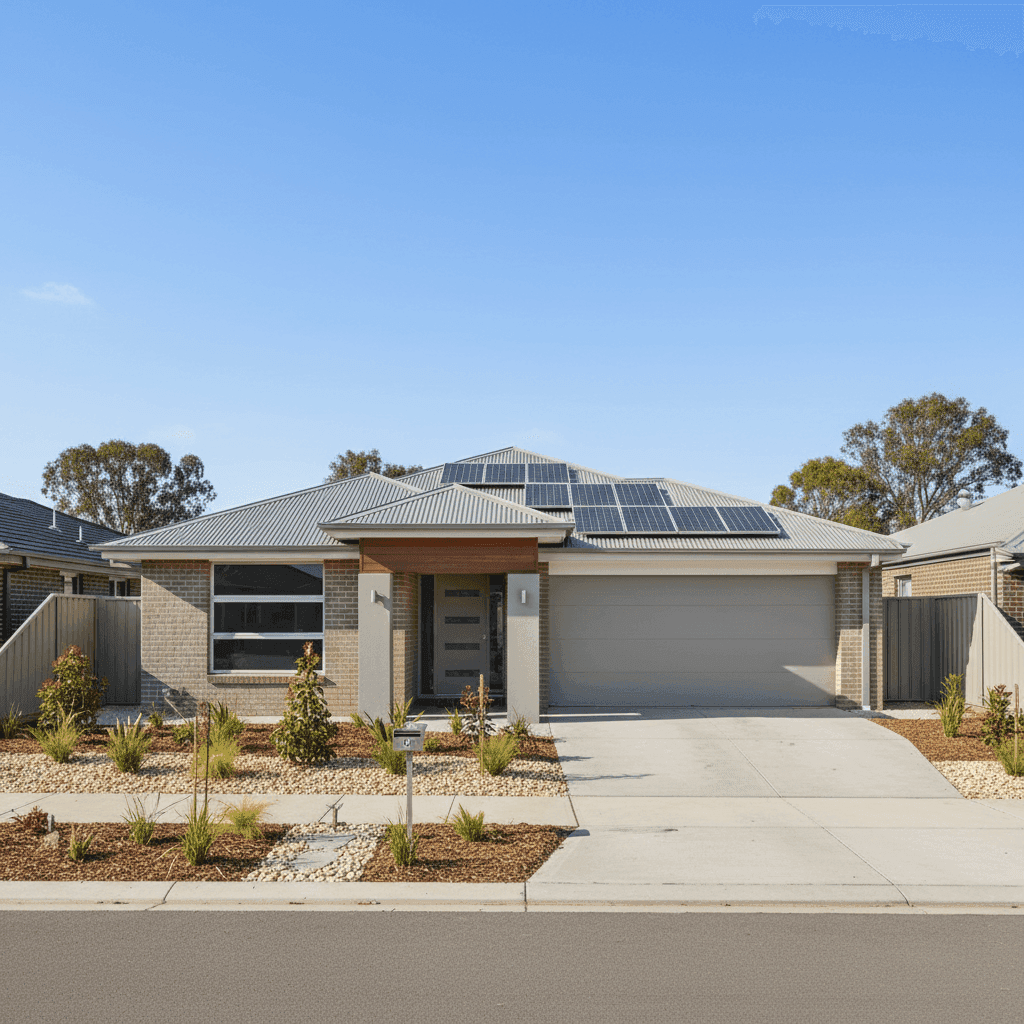
If you own a free standing home in Greenbank, QLD 4124, you've probably wondered whether you're paying too much — or too little — for home insurance. This article breaks down a real home and contents insurance quote for a four-bedroom property in the suburb, comparing it against local, state, and national benchmarks so you can make a more informed decision at renewal time.
---
Is This Quote Fair?
The quote in question comes to $3,122 per year (or $292/month) for combined home and contents cover, with a building sum insured of $750,000 and contents valued at $200,000. Both the building and contents excess are set at $2,000.
Our independent price rating for this quote is FAIR — Around Average.
That assessment holds up when you dig into the numbers. The suburb average premium for Greenbank sits at $3,393/year, meaning this quote comes in roughly $271 below the local average — a modest but meaningful saving. It does sit above the suburb median of $2,819/year, which tells us that while the quote isn't the cheapest available in the area, it's well within the normal range for comparable properties.
For a four-bedroom home with above-average fittings, solar panels, ducted climate control, and a $750,000 building sum insured, landing near the middle of the pack is a reasonable outcome. Higher-spec homes typically attract higher premiums, so this result is arguably better than it might first appear.
---
How Greenbank Compares
Context is everything when it comes to insurance pricing. Here's how this quote stacks up across different geographic benchmarks:
| Benchmark | Average Premium | Median Premium |
|---|---|---|
| Greenbank (4124) | $3,393/yr | $2,819/yr |
| Ipswich LGA | $8,901/yr | — |
| Queensland | $9,129/yr | $3,903/yr |
| National | $5,347/yr | $2,764/yr |
The figures above paint a striking picture. Greenbank's average premium of $3,393/year is dramatically lower than the broader Queensland average of $9,129/year — a difference driven largely by the state's exposure to extreme weather events, particularly in flood-prone and cyclone-affected regions further north and west. Greenbank itself is not classified as a cyclone risk area, which is a significant factor keeping premiums more manageable here.
Compared to the national average of $5,347/year, Greenbank homeowners are also faring considerably better. Even against the national median of $2,764/year, the suburb holds its own — suggesting that while Queensland as a whole carries elevated risk, Greenbank sits in a more favourable position within the state.
You can explore the full breakdown of local pricing trends on the Greenbank suburb stats page, or compare against Queensland-wide data and national figures to get the broader picture.
---
Property Features That Affect Your Premium
Every home is different, and insurers weigh up a range of property characteristics when calculating your premium. Here's how the features of this particular home influence what you pay:
Brick Veneer Walls & Colorbond Roof Brick veneer is generally viewed favourably by insurers — it's durable, fire-resistant, and widely used in Australian suburban construction. Paired with a steel Colorbond roof, this combination offers solid weather resistance and is less prone to damage from hail or high winds compared to older tile or timber constructions. These materials typically contribute to more competitive premiums.
Concrete Slab Foundation & Tiled Flooring A slab-on-ground foundation is the standard for modern Queensland homes and is considered low-risk from an insurance perspective. Tiled flooring is similarly practical — it's resistant to moisture and easier to repair or replace than carpet or timber in the event of water damage.
Construction Year: 2015 A relatively modern build means the home was constructed to contemporary building codes, which include improved cyclone and storm resilience standards. Newer homes generally attract lower premiums than older properties that may have ageing infrastructure or outdated electrical and plumbing systems.
Above-Average Fittings Higher-quality fixtures and finishes — think stone benchtops, premium appliances, and quality cabinetry — increase the cost to rebuild or repair, which is reflected in the $750,000 building sum insured. This is appropriate for a well-appointed home of this size and specification.
Solar Panels Solar panels add value to a property but also represent an additional risk for insurers, as they can be damaged by hail, storms, or falling debris. It's worth confirming with your insurer that your solar system is explicitly covered under your policy, as coverage can vary.
Ducted Climate Control Ducted air conditioning systems are a significant asset — and a costly one to repair or replace. Ensuring this is adequately reflected in your sum insured is important to avoid being underinsured in the event of a claim.
---
Tips for Homeowners in Greenbank
1. Review your sum insured regularly Building costs have risen sharply across Australia in recent years. A $750,000 sum insured may be appropriate today, but it's worth revisiting annually to ensure it reflects current construction costs in South East Queensland. Underinsurance is one of the most common — and costly — mistakes homeowners make.
2. Check your solar panel coverage Not all home insurance policies automatically cover rooftop solar systems as a standard inclusion. Review your Product Disclosure Statement (PDS) carefully to confirm your panels are covered for storm damage, hail, and accidental breakage — and that the sum insured accounts for their replacement value.
3. Consider your excess carefully Both the building and contents excess on this policy are set at $2,000. While a higher excess typically reduces your annual premium, it also means a larger out-of-pocket cost at claim time. Make sure the excess level is one you can comfortably cover if you need to make a claim.
4. Compare quotes at renewal The insurance market is competitive, and premiums can vary significantly between providers for the same property and level of cover. Even if your current insurer rates as "fair," it's worth comparing alternatives annually — you may find equivalent or better cover at a lower price.
---
Find a Better Deal with CoverClub
Whether you're renewing your policy or buying cover for the first time, comparing quotes is the single most effective way to ensure you're not overpaying. CoverClub makes it easy to see how your premium stacks up and find competitive options for your home in Greenbank.
Get a home insurance quote today and see how much you could save.