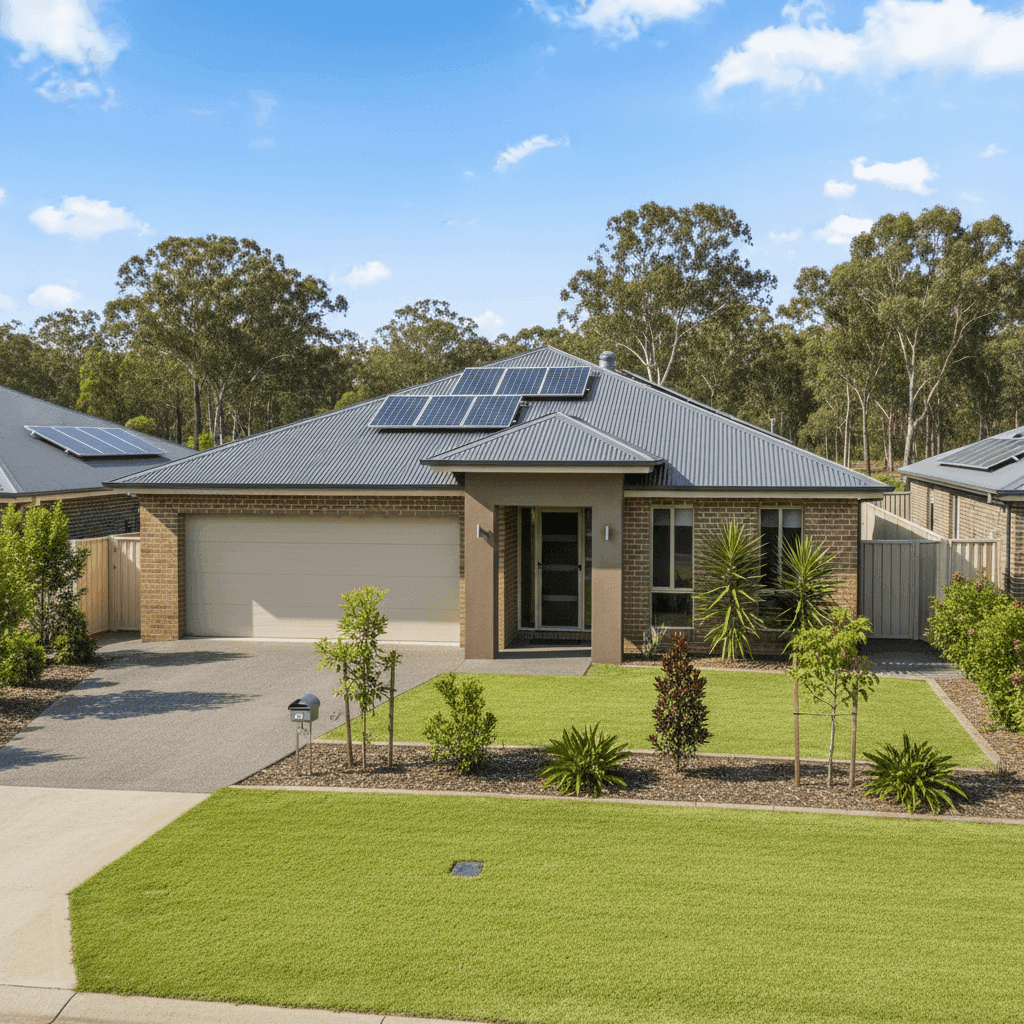
Greenbank is a quiet, family-friendly suburb in the City of Ipswich, sitting about 35 kilometres south of Brisbane's CBD. With a mix of established homes and newer estates, it's a popular choice for families looking for space without straying too far from the city. If you own a four-bedroom, free-standing home here, understanding what you should be paying for home and contents insurance — and why — can save you hundreds of dollars a year.
This article breaks down a real insurance quote for a four-bedroom brick veneer home in Greenbank, compares it against local, state and national benchmarks, and offers practical tips to help you get better value on your cover.
---
Is This Quote Fair?
The quote in question sits at $3,648 per year (or $343 per month) for combined home and contents insurance, covering a building sum insured of $998,000 and contents valued at $114,000. Both the building and contents excess are set at $1,000.
Our pricing engine rates this quote as Fair — Around Average, and the numbers back that up. At $3,648 annually, this premium lands comfortably within the middle range of what Greenbank homeowners are paying, sitting above the suburb median of $2,819 but well below the 75th percentile of $3,908. In other words, roughly a quarter of comparable properties in the area attract a higher premium than this.
For a property of this size — 214 square metres, built in 2004, with solar panels and ducted climate control — a "fair" rating is a reasonable outcome. It's not a bargain, but it's not an overcharge either. There may still be room to negotiate or shop around, particularly if you haven't reviewed your policy in the past 12 months.
---
How Greenbank Compares
To put this quote in proper context, it helps to look at the broader picture. You can explore the full data on the Greenbank suburb insurance stats page.
| Benchmark | Premium |
|---|---|
| This quote | $3,648/yr |
| Greenbank suburb average | $3,393/yr |
| Greenbank suburb median | $2,819/yr |
| Greenbank 25th percentile | $2,053/yr |
| Greenbank 75th percentile | $3,908/yr |
| QLD state average | $9,129/yr |
| QLD state median | $3,903/yr |
| National average | $5,347/yr |
| National median | $2,764/yr |
Based on 105 quotes collected for the Greenbank area.
A few things stand out here. First, the Queensland state average of $9,129 per year is extraordinarily high — a figure heavily skewed by cyclone-prone regions in Far North Queensland, where premiums can be eye-watering. The state median of $3,903 is a far more representative figure for south-east Queensland, and this quote comes in just below that mark. You can dig deeper into Queensland-wide insurance trends on the QLD insurance stats page.
Nationally, the picture is similarly distorted by high-risk coastal and flood-affected areas. The national average of $5,347 sits well above this quote, while the national median of $2,764 is somewhat lower — reflecting the large number of lower-risk properties across the country. Greenbank's position as a non-cyclone area in greater Brisbane puts it in a relatively favourable risk category compared to many parts of Australia.
The LGA average for Ipswich is $8,901 per year, which again reflects the diversity of risk profiles across the broader council area — including flood-affected suburbs that push the average up significantly. Greenbank itself tends to fare better.
---
Property Features That Affect Your Premium
Several characteristics of this property influence what insurers charge, and it's worth understanding which factors work in your favour and which ones add cost.
Brick veneer construction is generally viewed positively by insurers. It offers solid fire resistance and durability compared to timber-framed cladding, which can help keep premiums lower. Combined with a Colorbond steel roof, this home has a construction profile that most insurers consider low to moderate risk — steel roofing is resilient in high winds and doesn't carry the fire risk of older tile types.
The slab foundation is another tick in the right column. Homes on slabs tend to have fewer issues with subfloor moisture, pests and structural movement, all of which can contribute to claims.
Timber and laminate flooring is worth noting from a contents and building perspective. These materials can be more susceptible to water damage than tiles, which may factor into how some insurers assess internal risk — though for most standard policies, the impact is modest.
The presence of solar panels is increasingly common in Queensland and can add a small amount to your premium, as panels represent an additional insurable asset on the roof. However, they also reflect a well-maintained, modern home, which insurers generally view favourably.
Ducted climate control is another feature that adds replacement value to the building, which is partly why the building sum insured of $998,000 is set at a higher level. Ensuring your sum insured accurately reflects full rebuild costs — including systems like ducted air conditioning — is essential to avoid being underinsured.
At 214 square metres and built in 2004, this is a mid-sized, relatively modern home. Properties of this era tend to meet contemporary building codes, which can work in your favour when insurers assess structural risk.
---
Tips for Homeowners in Greenbank
1. Review your sum insured annually Building costs in south-east Queensland have risen sharply over the past few years. A sum insured of $998,000 may be appropriate today, but it's worth checking against current construction cost estimates each year at renewal. Underinsurance is one of the most common — and costly — mistakes homeowners make.
2. Bundle your building and contents cover This quote already combines home and contents, which is a smart move. Most insurers offer a discount for bundling, and managing a single policy is far simpler when it comes to making a claim.
3. Consider raising your excess to reduce your premium With both excesses currently set at $1,000, there may be scope to increase them slightly if you have a financial buffer. Moving to a $1,500 or $2,000 excess can sometimes reduce your annual premium meaningfully — just make sure the saving justifies the higher out-of-pocket cost if you do need to claim.
4. Shop around at renewal time A "fair" rating means this quote is reasonable, but it doesn't mean it's the best available. The spread between the 25th percentile ($2,053) and 75th percentile ($3,908) in Greenbank shows there's significant variation in what insurers charge for similar properties. Comparing at least two or three quotes before renewing can make a real difference.
---
Compare Your Options with CoverClub
Whether you're reviewing an existing policy or shopping for cover for the first time, CoverClub makes it easy to see how your premium stacks up against real data from your suburb and beyond. Get a home insurance quote today and find out if you're paying a fair price — or if there's a better deal waiting for you.