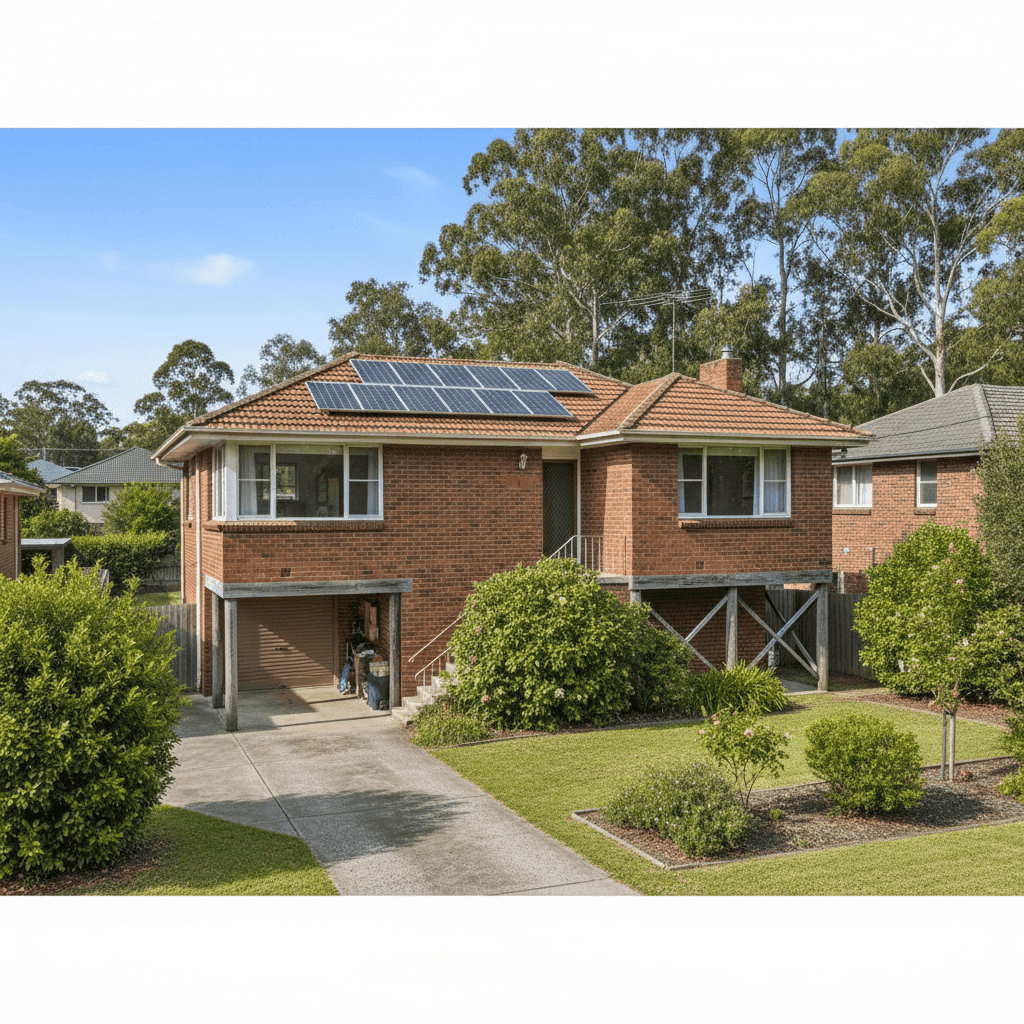
Greensborough is a well-established suburban pocket in Melbourne's north-east, sitting within the Nillumbik local government area. It's a popular choice for families drawn to its leafy streets, good schools, and proximity to the Plenty River corridor. For owners of free standing homes in the area, understanding what drives home insurance costs — and whether a given quote represents good value — is an important part of protecting one of your biggest assets.
This article breaks down a real home and contents insurance quote for a three-bedroom, two-bathroom free standing home in Greensborough (postcode 3088), compares it against local, state, and national benchmarks, and offers practical tips to help you get the most out of your cover.
---
Is This Quote Fair?
The annual premium for this property comes in at $1,655 per year (or approximately $159 per month), covering both building (sum insured: $562,000) and contents ($103,000), each with a $500 excess. Our pricing analysis rates this quote as Fair — Around Average.
That rating holds up well under scrutiny. The quote sits comfortably below the suburb average of $2,108/yr and also under the suburb median of $1,899/yr. In fact, it lands between the 25th percentile ($1,495/yr) and the median for Greensborough — meaning it's in the lower-to-mid range of what locals are typically paying. For a property with solar panels, ducted climate control, and an elevated foundation, this is a reasonable outcome.
It's worth noting that "fair" doesn't necessarily mean "the best available." There's still meaningful room to explore, with the cheapest quarter of Greensborough quotes coming in under $1,495/yr. If your circumstances are similar, shopping around could yield further savings.
---
How Greensborough Compares
Putting this quote into a broader geographic context reveals just how competitively priced Greensborough home insurance can be relative to the rest of Victoria and Australia.
| Benchmark | Average Premium | Median Premium |
|---|---|---|
| Greensborough (3088) | $2,108/yr | $1,899/yr |
| Victoria | $2,921/yr | $2,694/yr |
| National | $2,965/yr | $2,716/yr |
| Nillumbik LGA | $4,494/yr | — |
A few things stand out here. First, the Nillumbik LGA average of $4,494/yr is strikingly high — more than double the suburb average for Greensborough itself. This reflects the fact that Nillumbik encompasses many higher-risk, semi-rural and bushfire-prone areas (think Research, Hurstbridge, and Eltham North), which pull the LGA average up significantly. Greensborough, being a more densely settled urban suburb, generally attracts more moderate premiums within the same LGA.
Second, the Victorian state average of $2,921/yr and the national average of $2,965/yr are both considerably higher than what this Greensborough quote reflects. This suggests that homeowners in this suburb — particularly those in urban, lower-risk pockets — can often secure cover well below what their interstate counterparts pay.
The quote analysed here ($1,655/yr) is 44% below the Victorian average and 44% below the national average, which is a meaningful difference over the life of a policy.
---
Property Features That Affect Your Premium
Several characteristics of this property have a direct bearing on what insurers charge. Here's how each one plays into the pricing picture:
Brick Veneer Walls & Tiled Roof Brick veneer is one of the most common external wall types in suburban Melbourne, and insurers generally view it favourably. It offers solid fire resistance and structural durability. Combined with a tiled roof — another standard, well-regarded material — this property presents a relatively low-risk profile from a construction standpoint.
Elevated on Stumps The home sits elevated by at least one metre on a stump foundation — a common feature in older Melbourne homes, particularly those built in the 1970s. Elevation can be a double-edged sword: it may reduce flood risk in low-lying areas, but stumped homes can be more exposed to wind damage and may require periodic maintenance of the subfloor structure. Insurers factor in both the benefits and the vulnerabilities.
Built in 1976 At nearly 50 years old, this home is approaching a point where insurers may pay closer attention to the age of key systems — wiring, plumbing, and roofing materials. While the construction type is solid, older homes can carry higher risk of maintenance-related claims. Keeping up with repairs and having documentation of any upgrades can help manage this.
Solar Panels Solar panels add value to the property but also add complexity to insurance. They increase the sum insured and can be a source of claims (storm damage, for instance). Some policies cover rooftop solar as part of the building; others treat it separately. It's worth confirming exactly what your policy covers.
Ducted Climate Control Ducted systems are a significant fixed asset and contribute meaningfully to the building's replacement value. Their inclusion in the sum insured is appropriate and helps ensure you're not underinsured in the event of a total loss.
Timber/Laminate Flooring Timber and laminate floors are a popular feature but can be costly to replace following water damage or fire. Ensuring your contents and building cover adequately accounts for flooring replacement is important — particularly in a home of this size (153 sqm).
---
Tips for Homeowners in Greensborough
1. Review your sum insured annually Building costs in Melbourne have risen sharply in recent years. The $562,000 sum insured on this property should be reviewed each year to ensure it still reflects the true cost of rebuilding — not just the market value of the home. Underinsurance is one of the most common and costly mistakes homeowners make.
2. Understand your bushfire risk While Greensborough itself is largely urban, it borders areas with elevated bushfire risk. Check your property's Bushfire Attack Level (BAL) rating and confirm your policy covers bushfire damage. Given the broader Nillumbik LGA's exposure, this is not something to overlook.
3. Confirm solar panel coverage With solar panels on the roof, make sure your policy explicitly covers them — including damage from storms, hail, or falling debris. Ask your insurer whether they're covered under the building section and up to what value.
4. Consider a higher excess to reduce your premium The current excess is set at $500 for both building and contents. If you have a financial buffer and are unlikely to make small claims, raising the excess (say, to $1,000 or $1,500) can noticeably reduce your annual premium. Just ensure the saving makes sense relative to the increased out-of-pocket cost in a claim scenario.
---
Compare and Save with CoverClub
Whether you're reviewing an existing policy or shopping for new cover, comparing quotes is the single most effective way to ensure you're not overpaying. CoverClub makes it easy to see how your premium stacks up against others in your suburb and across Australia. Get a home insurance quote today and find out if there's a better deal waiting for you.