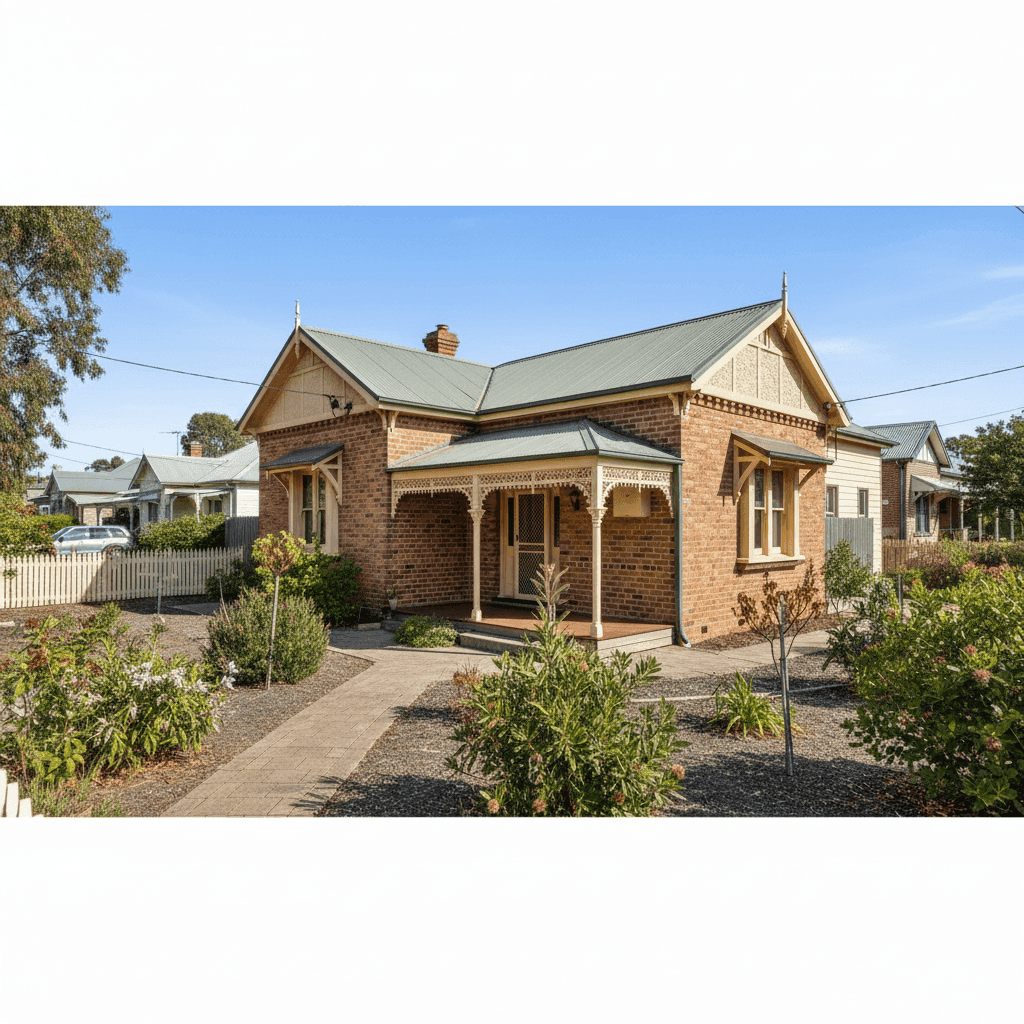
Grenfell is a quiet country town in the Central West of New South Wales, best known as the birthplace of Henry Lawson and its rich agricultural heritage. It's also home to some beautifully preserved period properties — and insuring them comes with its own set of considerations. This article takes a close look at a home and contents insurance quote for a four-bedroom, double brick free standing home in Grenfell (postcode 2810), built in 1902 and sitting under a Heritage Overlay. We'll unpack whether the quoted premium is reasonable, how it stacks up against local and national benchmarks, and what steps you can take to make sure you're getting value for money.
---
Is This Quote Fair?
The annual premium for this property came in at $3,665 per year (or $351/month), covering a building sum insured of $800,000 and contents valued at $50,000. Our price rating for this quote is Expensive — Above Average.
To put that in context: the average home and contents premium across Grenfell sits at around $2,033 per year, with a suburb median of $2,097. That means this quote is running roughly 80% above the local average — a significant gap that warrants a closer look.
That said, "expensive" doesn't automatically mean "wrong." Several characteristics of this property justify a higher-than-average premium, and we'll explore those in detail below. The key question is whether the insurer's pricing reflects genuine risk factors, or whether there's room to find a more competitive deal elsewhere.
---
How Grenfell Compares
Understanding where a quote sits relative to broader benchmarks is one of the most useful tools a homeowner has. Here's how Grenfell's pricing landscape looks:
| Benchmark | Premium |
|---|---|
| This Quote | $3,665/yr |
| Grenfell Suburb Average | $2,033/yr |
| Grenfell Suburb Median | $2,097/yr |
| Grenfell 25th Percentile | $1,134/yr |
| Grenfell 75th Percentile | $2,953/yr |
| LGA (Forbes) Average | $2,342/yr |
| NSW State Median | $3,770/yr |
| National Average | $5,347/yr |
| National Median | $2,764/yr |
A few things stand out here. While this quote is above the Grenfell suburb average, it actually sits below the NSW state median of $3,770 — which is a meaningful reference point. New South Wales as a whole carries elevated insurance costs relative to most other states, driven by a mix of flood risk, storm exposure, and high property values in metropolitan areas.
Compared to the national average of $5,347, this quote looks considerably more reasonable. The NSW state average of $9,528 is heavily skewed by high-value coastal and metro properties, so the median figure of $3,770 is a more useful comparison — and this quote comes in just under that mark.
It's also worth noting that the Grenfell suburb sample size is relatively small (9 quotes), which means local averages can shift meaningfully with just a few outliers. You can explore the full Grenfell suburb insurance data here.
---
Property Features That Affect Your Premium
Several characteristics of this property have a direct bearing on what insurers charge — and in this case, a number of them point towards higher risk or higher rebuild cost.
Heritage Listing
This is arguably the most significant premium driver. Properties under a Heritage Overlay are subject to strict council and state guidelines around materials, construction methods, and approved tradespeople. In the event of a claim, reinstating a heritage home to its original condition can cost substantially more than a standard modern rebuild. Insurers price this risk accordingly, and the $800,000 building sum insured reflects the elevated replacement cost.
Construction Year (1902)
At over 120 years old, this home predates modern building codes by several decades. Older homes can carry higher risk of electrical faults, plumbing issues, and structural wear — all of which factor into underwriting decisions. Insurers assess the age of a property carefully, particularly when it falls into the pre-war era.
Double Brick Walls
On the positive side, double brick construction is generally viewed favourably by insurers. It offers strong fire resistance, good structural integrity, and durability. This may help moderate the premium compared to lighter timber-framed construction.
Stump Foundation
Homes on stumps (also known as pier foundations) are common in regional NSW, particularly in older properties. While stumps can be inspected and replaced, they introduce some risk of movement or deterioration over time — particularly with timber stumps — which insurers may factor into their assessment.
Steel/Colorbond Roof
A Colorbond roof is a solid choice from an insurance perspective. It's durable, low-maintenance, and performs well in most weather conditions. This is unlikely to be a premium-increasing factor and may actually work in the homeowner's favour.
Ducted Climate Control
The presence of ducted climate control adds to the overall value of the home's fixtures and fittings, contributing to a higher sum insured and, by extension, a slightly higher premium.
Timber/Laminate Flooring
Timber flooring, particularly in an older home, can be costly to repair or replace — especially if matching heritage-appropriate materials is required. This is a subtle but real factor in contents and building valuation.
---
Tips for Homeowners in Grenfell
If you're looking to ensure your premium is as competitive as possible without compromising on cover, here are four practical steps worth considering.
1. Review your building sum insured carefully. At $800,000, the sum insured is significant — and appropriate given the heritage nature of the property. However, it's worth getting an independent building valuation to confirm this figure is accurate. Over-insuring can cost you unnecessarily, while under-insuring leaves you exposed at claim time.
2. Shop around — and do it annually. Loyalty doesn't always pay in the insurance market. Insurers regularly adjust their pricing models, and a quote that was competitive two years ago may no longer be. Comparing multiple quotes each renewal cycle is one of the most effective ways to keep costs in check.
3. Ask about heritage property specialists. Not all insurers are equally equipped to handle heritage homes. Some specialist insurers offer tailored policies that account for the unique reinstatement requirements of period properties — and may price the risk more accurately than a generalist insurer. More accurate pricing can sometimes mean a lower premium.
4. Consider your excess settings. This policy carries a $2,000 building excess and a $1,000 contents excess. Opting for a higher voluntary excess is one of the most straightforward ways to reduce your annual premium. Just make sure the excess remains an amount you could comfortably cover out of pocket if a claim arose.
---
Compare Your Options with CoverClub
Whether you're renewing your policy or buying cover for the first time, it pays to know what the market looks like. CoverClub makes it easy to see how your quote stacks up against real data from properties like yours — so you can make a confident, informed decision. Get a home insurance quote today and find out if you're paying a fair price for your home in Grenfell.