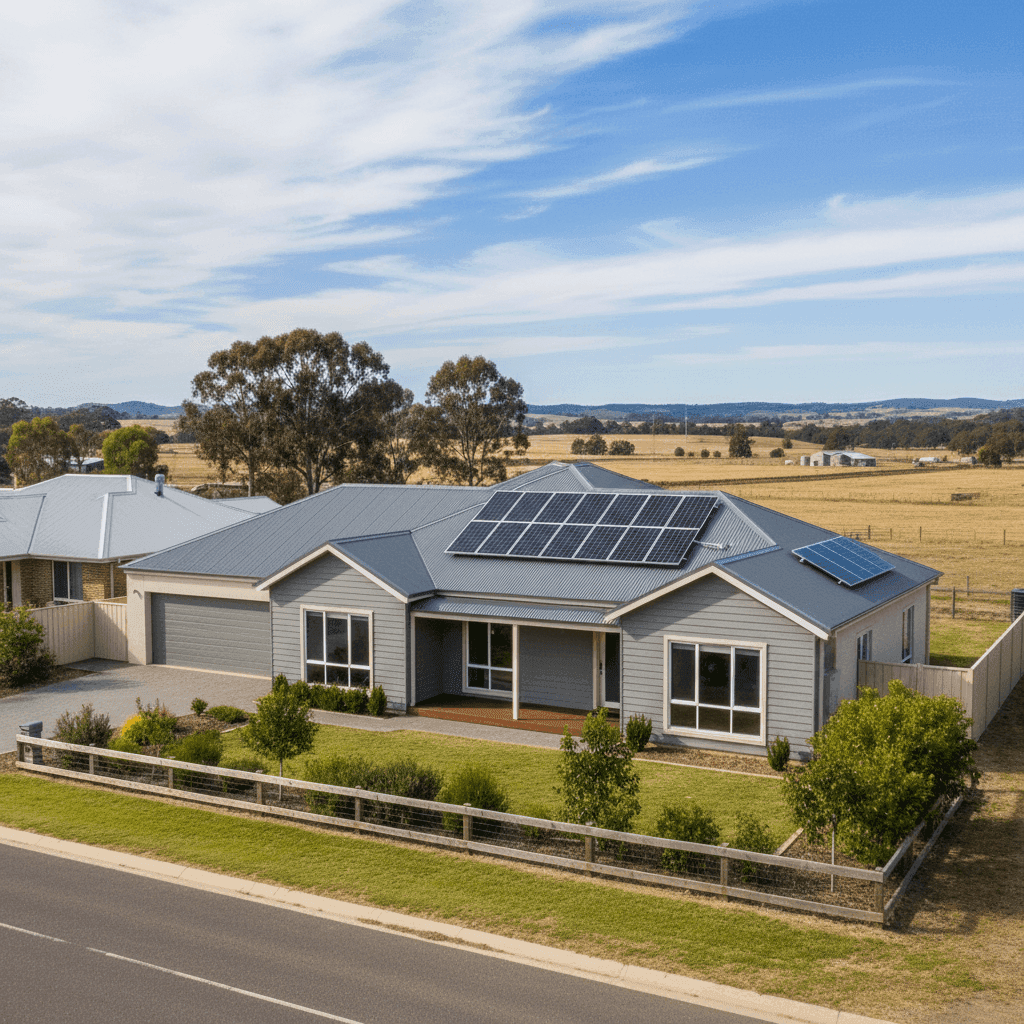
If you own a free standing home in Grenfell, NSW 2810, you're likely no stranger to the realities of insuring a regional property. Grenfell is a quiet country town in the Central West of New South Wales, known for its wide streets, heritage character, and the kind of close-knit community that makes rural living appealing. But when it comes to home insurance, regional properties come with their own set of considerations — from building costs to local risk profiles.
This article takes a close look at a recent home and contents insurance quote for a 2-bedroom free standing home in Grenfell, breaking down whether the price stacks up, how it compares to local and national benchmarks, and what homeowners in the area can do to keep premiums in check.
---
Is This Quote Fair?
The quote in question comes in at $3,678 per year (or $352 per month) for combined home and contents cover, with a building sum insured of $724,000 and contents valued at $75,000. The building excess sits at $2,000, with a $1,000 excess on contents.
Based on our pricing data, this quote is rated Expensive — above average for the Grenfell area. The suburb average for Grenfell sits at around $2,033 per year, with a median of $2,097. That means this quote is running roughly 80% above the local average — a significant gap worth investigating before you simply accept the price and move on.
That said, context matters. The building sum insured of $724,000 is a key driver here. Rebuild costs in regional NSW can be surprisingly high due to the logistics of sourcing materials and labour outside of major centres, and a higher insured value will naturally push the premium up. The contents cover of $75,000 is also a contributing factor, though relatively modest compared to many urban policies.
---
How Grenfell Compares
To properly assess this quote, it helps to zoom out and look at the broader picture. Here's how Grenfell stacks up against state and national figures:
| Benchmark | Average Premium | Median Premium |
|---|---|---|
| Grenfell (suburb) | $2,033/yr | $2,097/yr |
| LGA (Forbes) | $2,342/yr | — |
| NSW | $9,528/yr | $3,770/yr |
| National | $5,347/yr | $2,764/yr |
A few things stand out here. The NSW state average of $9,528 is dramatically high — largely skewed by expensive coastal and flood-prone properties across the state. The NSW median of $3,770 is a more representative figure, and our quote of $3,678 actually sits just below that mark.
Looking at national figures, the median premium of $2,764 gives a useful anchor. Grenfell's local median of $2,097 is well below the national median, suggesting that the area is generally considered a relatively low-risk location for insurers. The Forbes LGA average of $2,342 tells a similar story.
So while this quote is above average for Grenfell specifically, it's not dramatically out of step with broader NSW or national medians — particularly given the relatively high building sum insured.
> Note: The suburb sample size for Grenfell is 9 quotes, so local averages should be interpreted with some caution. A larger dataset would provide a more robust benchmark.
---
Property Features That Affect Your Premium
Several characteristics of this property are worth examining through an insurance lens:
- Steel/Colorbond roof: This is generally viewed favourably by insurers. Colorbond roofing is durable, fire-resistant, and less susceptible to storm damage than older roofing materials — which can translate to lower premiums in some cases.
- Stumps foundation: Homes on stumps (also known as pier or post foundations) can carry slightly higher risk assessments due to potential issues with subfloor access, moisture, and structural movement over time. Insurers may factor this into their pricing.
- Timber/laminate flooring: Timber floors add to the replacement value of a home and are more susceptible to water damage than tiles. This can influence both the sum insured calculation and the premium itself.
- Solar panels: The property includes solar panels, which adds to the replacement cost of the building. Solar systems are typically covered under building insurance, but it's worth confirming with your insurer that the panels are explicitly included in your policy — and that the sum insured accounts for their replacement value.
- Ducted climate control: Ducted air conditioning systems are a significant fixed asset and contribute meaningfully to building replacement costs. Ensuring these are factored into your sum insured is important to avoid being underinsured.
- Construction year (2007): A relatively modern build, which generally means the property meets contemporary building standards. This is typically viewed positively by insurers compared to older homes that may have outdated wiring, plumbing, or structural elements.
- Standard fittings quality: Mid-range fittings keep replacement costs — and therefore premiums — more predictable than high-end or custom finishes.
---
Tips for Homeowners in Grenfell
Whether you're reviewing an existing policy or shopping around for the first time, here are some practical steps to make sure you're getting the best value:
- Review your sum insured carefully. At $724,000, this building sum insured is substantial. Use a building cost calculator to verify whether this figure accurately reflects your home's rebuild cost — not its market value. Being overinsured means paying more than you need to; being underinsured can leave you seriously out of pocket after a claim.
- Shop around and compare multiple quotes. With only 9 quotes in our Grenfell dataset, there's meaningful variation between insurers. Premiums can differ by hundreds — or even thousands — of dollars for the same property. Compare quotes at CoverClub to see what's available for your address.
- Consider your excess settings. This policy carries a $2,000 building excess and $1,000 contents excess. Opting for a higher voluntary excess can reduce your annual premium, though you'll want to make sure you can comfortably cover the excess amount if you need to make a claim.
- Confirm solar panels are covered. With solar panels on the roof, double-check that your policy explicitly covers them — including damage from storms, hail, and fire. Some policies treat solar systems as a separate item, so it's worth reading the Product Disclosure Statement (PDS) carefully.
---
Ready to Find a Better Deal?
If this quote feels steep, you're not alone — and there are almost certainly other options worth exploring. CoverClub makes it easy to compare home and contents insurance quotes for properties across regional NSW, including Grenfell. Whether you're after a better price, broader cover, or simply peace of mind that you're not overpaying, get a quote at CoverClub and see how your current policy stacks up. You can also explore detailed insurance statistics for Grenfell to better understand what others in your area are paying.