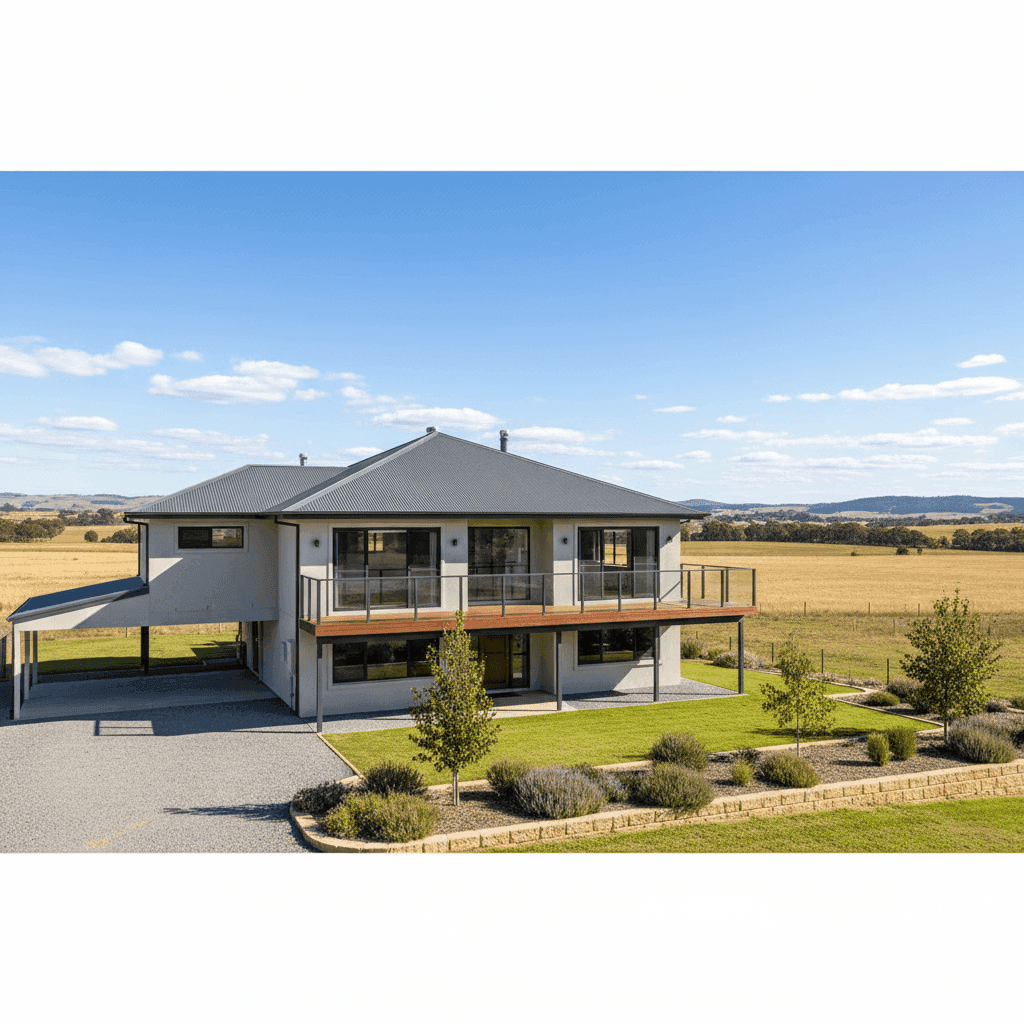
If you own a free standing home in Grenfell, NSW 2810, you might be wondering whether your home insurance premium is competitive — or whether you're quietly paying more than you should be. This article breaks down a real home and contents insurance quote for a two-bedroom property in Grenfell, comparing it against local, state-wide, and national benchmarks so you can make a more informed decision at renewal time.
---
Is This Quote Fair?
The short answer: yes — and then some. This quote comes in at $1,488 per year (or roughly $142 per month), which our pricing model rates as CHEAP — meaning it sits well below the average for the area.
To put that in perspective, the suburb average premium for Grenfell is $2,822 per year, and the median sits at $2,812. That means this quote is approximately $1,334 cheaper than the typical policy taken out in the same postcode. Even compared to the 25th percentile — the point at which 75% of quotes are more expensive — the suburb benchmark sits at $1,741/yr, which is still higher than this quote.
In other words, this policy is priced in genuinely competitive territory. For a home and contents policy covering $622,000 in building value and $170,000 in contents, that's a strong outcome.
---
How Grenfell Compares
Grenfell sits in the Forbes Local Government Area of central-western New South Wales — a region characterised by agricultural land, moderate weather patterns, and relatively low population density. These factors tend to work in homeowners' favour when it comes to insurance pricing.
Here's how the numbers stack up across different benchmarks:
| Benchmark | Annual Premium |
|---|---|
| This Quote | $1,488 |
| Grenfell Suburb Average | $2,822 |
| Grenfell Suburb Median | $2,812 |
| Forbes LGA Average | $2,035 |
| NSW State Average | $3,801 |
| NSW State Median | $3,410 |
| National Average | $2,965 |
| National Median | $2,716 |
The contrast with the NSW state average is particularly striking. At $3,801 per year, the average NSW homeowner is paying more than 2.5 times what this Grenfell policy costs. Much of that state-wide inflation is driven by coastal and flood-prone areas, bushfire zones, and densely populated metro markets like Sydney where rebuilding costs and theft risk push premiums up considerably.
Even compared to the national average of $2,965, this quote represents a saving of nearly $1,500 annually — enough to cover more than a full year's worth of premiums.
You can explore the full pricing data for this suburb at the Grenfell insurance stats page, or compare against all NSW postcodes and national benchmarks.
---
Property Features That Affect Your Premium
Several characteristics of this particular property likely contribute to its favourable pricing. Here's what stands out:
Relatively New Construction (2019)
Built in 2019, this home is only a few years old. Newer builds tend to attract lower premiums because they comply with modern building codes, use contemporary materials, and are less likely to suffer from age-related issues like deteriorating wiring, ageing plumbing, or structural wear. Insurers view newer homes as lower risk.
Steel/Colorbond Roof
A Colorbond steel roof is widely regarded as one of the most insurer-friendly roofing materials in Australia. It's durable, fire-resistant, and holds up well against hail and wind. Compared to terracotta or concrete tiles — which can crack or dislodge — Colorbond roofs are a practical choice that can positively influence your premium.
Stump Foundation
The home sits on stumps, which is a common and practical foundation type in rural NSW. Stump foundations allow for airflow beneath the home and can be easier to inspect and repair than slab foundations. Provided the stumps are in good condition, this foundation type is generally considered acceptable by insurers.
Above Average Fittings
The property features above average quality fittings, which is reflected in the building sum insured of $622,000 — a figure that's meaningful for a 105 sqm home. Higher-quality fixtures, finishes, and inclusions cost more to replace, so it's important that the sum insured accurately reflects the full rebuild cost, not just the market value of the land and structure.
No Pool, No Solar, No Cyclone Risk
The absence of a swimming pool removes a common liability exposure. No solar panels means one fewer system that can be damaged or cause electrical issues. And being outside a designated cyclone risk zone keeps the risk profile clean. Each of these factors contributes to a more straightforward underwriting assessment.
---
Tips for Homeowners in Grenfell
Whether you're reviewing your current policy or shopping for a new one, here are four practical steps worth taking:
- Check your sum insured annually. Building costs in regional NSW have risen sharply in recent years due to supply chain pressures and labour shortages. The $622,000 sum insured on this policy should be reviewed each year to ensure it still reflects the full cost of rebuilding — not just the purchase price or market value.
- Consider a higher excess to reduce your premium. This policy carries a $2,000 building excess and $1,000 contents excess. If you have a solid emergency fund and rarely make small claims, increasing your excess can be a straightforward way to bring the annual premium down even further.
- Keep records of your contents. With $170,000 in contents cover, it's worth maintaining an up-to-date home inventory — photos, receipts, and serial numbers stored securely in the cloud. This makes claims faster and reduces the risk of under-insuring valuable items.
- Compare at renewal, not just at purchase. Insurance loyalty rarely pays off in Australia. Premiums can shift significantly between years, and the market is competitive. Use a comparison tool like CoverClub to benchmark your renewal quote before you automatically accept it.
---
Find Out What You Should Be Paying
Whether you're a first-time buyer or a long-time Grenfell resident, it pays to know where your premium sits relative to the market. CoverClub makes it easy to compare home and contents insurance quotes in one place — so you can see whether your current insurer is giving you a fair deal, or whether there's a better option waiting.