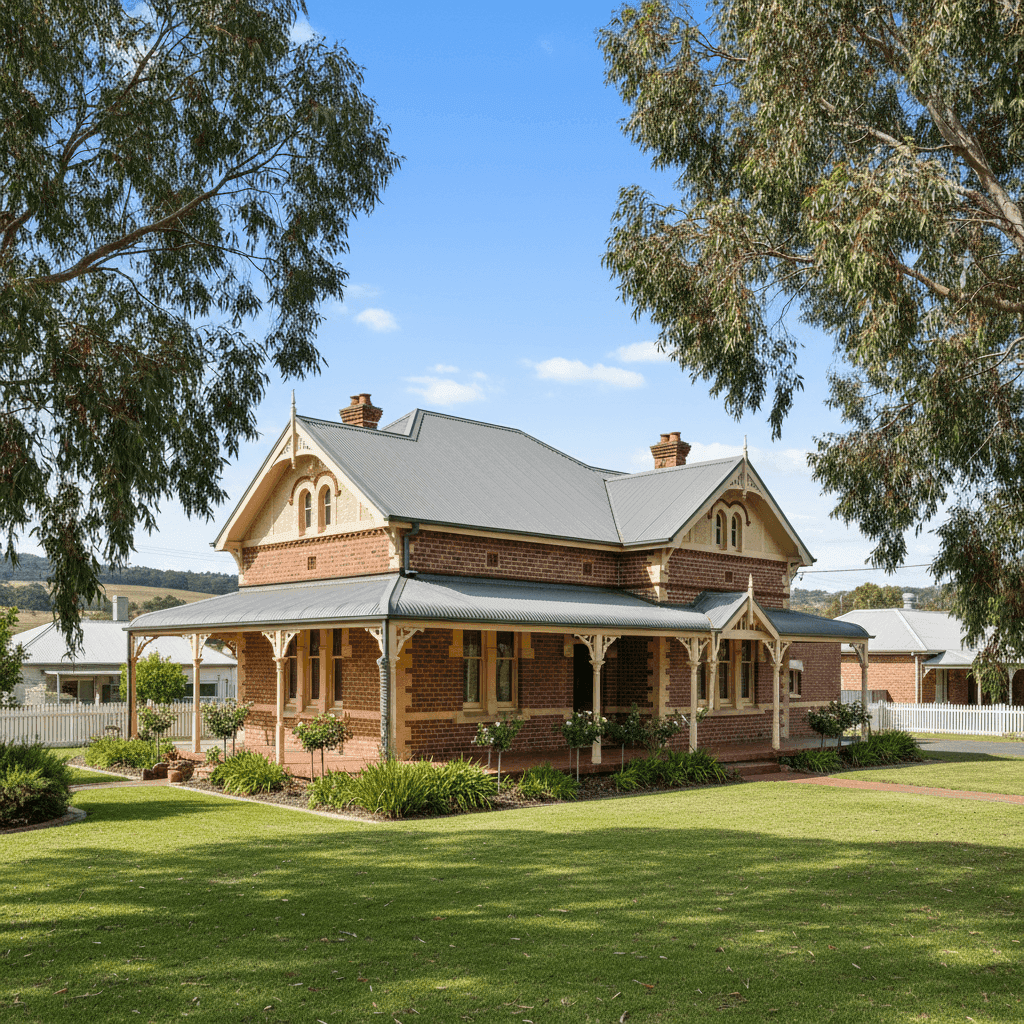
Grenfell is a quiet country town in the Central West of New South Wales, best known as the birthplace of poet Henry Lawson. It's also home to a rich stock of Federation-era and early-20th-century properties — the kind of character-filled, double brick homes that define regional NSW streetscapes. If you own one of these older free standing homes, understanding what drives your insurance premium is essential. This article breaks down a real home and contents insurance quote for a 4-bedroom property in Grenfell (postcode 2810) and puts it in context against suburb, state, and national benchmarks.
---
Is This Quote Fair?
The quote in question comes in at $4,319 per year (or $414/month) for combined home and contents cover, with a building sum insured of $1,024,000 and contents valued at $50,000. Both the building and contents excess are set at $2,000.
Our price rating for this quote is Expensive — above average for the Grenfell area.
To put that in perspective: the suburb average premium in Grenfell sits at just $2,033 per year, with a median of $2,097. This quote is more than double the local median — a significant gap that warrants closer examination.
That said, "expensive" doesn't necessarily mean "wrong." Several features of this particular property justify a higher-than-average premium, and we'll unpack those shortly. But it does mean this homeowner would be well-served by shopping around to ensure they're not overpaying for equivalent cover.
---
How Grenfell Compares
Understanding where Grenfell sits within the broader insurance landscape helps frame whether a premium is genuinely high or simply reflective of the market.
| Benchmark | Average Premium | Median Premium |
|---|---|---|
| Grenfell (2810) | $2,033/yr | $2,097/yr |
| LGA (Forbes) | $2,342/yr | — |
| NSW | $9,528/yr | $3,770/yr |
| National | $5,347/yr | $2,764/yr |
(Based on available quote data. [View NSW stats](https://coverclub.com.au/stats/NSW) or [national stats](https://coverclub.com.au/stats/national).)
A few things stand out here. First, Grenfell is genuinely affordable by NSW standards — the state average of $9,528 is skewed heavily by high-risk coastal and flood-prone areas. The state median of $3,770 is a more realistic comparison point, and on that measure, this quote of $4,319 is only moderately above the NSW midpoint.
Second, it's worth noting that the Grenfell suburb sample contains only 9 quotes, which means the local averages should be interpreted with some caution — a small sample can shift significantly with just one or two outliers.
Third, compared to the national median of $2,764, this quote is elevated — but the property characteristics here are far from typical, which explains much of the difference.
---
Property Features That Affect Your Premium
Several aspects of this property have a meaningful impact on the premium calculated by insurers. Here's what's at play:
Heritage Overlay
This is likely the single biggest premium driver. Properties listed under a Heritage Overlay are subject to strict council requirements around restoration and repair. If the home is damaged, insurers must account for the cost of sourcing period-appropriate materials, engaging specialist tradespeople, and complying with heritage guidelines — all of which can dramatically increase rebuild costs. A building sum insured of $1,024,000 for a 214 sqm home reflects these elevated per-square-metre rebuild costs, and the premium follows accordingly.
Age of Construction (1902)
At over 120 years old, this home predates modern building codes by several decades. Older homes carry higher risk of electrical faults, plumbing failures, and structural issues — all of which insurers factor into their pricing. The double brick construction is a positive (more on that below), but age alone adds risk.
Double Brick Walls
Double brick is generally viewed favourably by insurers. It's durable, fire-resistant, and offers good structural integrity. In a town like Grenfell — away from cyclone zones and with moderate weather risk — double brick is a genuine asset. It likely offsets some of the age-related risk premium.
Steel/Colorbond Roof
A Colorbond roof is another tick in the right column. Modern steel roofing is lightweight, durable, and highly resistant to fire and wind damage. Replacing an older or terracotta-tiled roof with Colorbond can sometimes reduce premiums, and its presence here is a positive signal.
Stump Foundation & Timber/Laminate Flooring
Homes on stumps (also called pier foundations) are common in older Australian properties and can be more susceptible to movement, moisture, and pest damage over time. Combined with timber flooring, this adds a layer of risk that insurers account for — particularly if the sub-floor space is poorly ventilated or maintained.
Ducted Climate Control
The presence of ducted climate control adds to the contents and building value, and increases the complexity of any repair or rebuild. It's a minor but real contributor to the overall premium.
---
Tips for Homeowners in Grenfell
If you're a homeowner in Grenfell — especially in an older or heritage-listed property — here are four practical steps to manage your insurance costs without compromising on protection.
- Review your sum insured carefully. A building sum insured of $1,024,000 may be entirely appropriate for a heritage home, but it's worth getting an independent building replacement cost estimate to confirm. Over-insuring pushes premiums up unnecessarily; under-insuring leaves you exposed. A quantity surveyor can provide a formal assessment.
- Shop around — every year. Insurers reprice their books regularly, and loyalty rarely pays in Australian home insurance. Use a comparison platform like CoverClub to run multiple quotes side by side and identify whether a better rate is available for equivalent cover.
- Ask about heritage-specific policies. Some insurers offer products specifically designed for older or heritage-listed homes. These policies may include agreed value cover, specialist tradesperson clauses, and other provisions that standard policies lack — and they're sometimes priced more competitively for this segment.
- Maintain the sub-floor and roof. Insurers reward well-maintained properties. Keeping your stumps in good condition, ensuring adequate sub-floor ventilation, and keeping the Colorbond roof free of debris and rust can help you avoid claims — and may support a better premium at renewal if your insurer considers maintenance history.
---
Ready to Compare?
Whether you think your current premium is fair or you suspect you're overpaying, the best way to know for sure is to compare. CoverClub makes it easy to get multiple home and contents insurance quotes for your Grenfell property in minutes — so you can see exactly where your current cover sits in the market.
Get a quote today at CoverClub →
You can also explore detailed pricing data for your area on the Grenfell suburb stats page or browse NSW home insurance benchmarks to see the bigger picture.