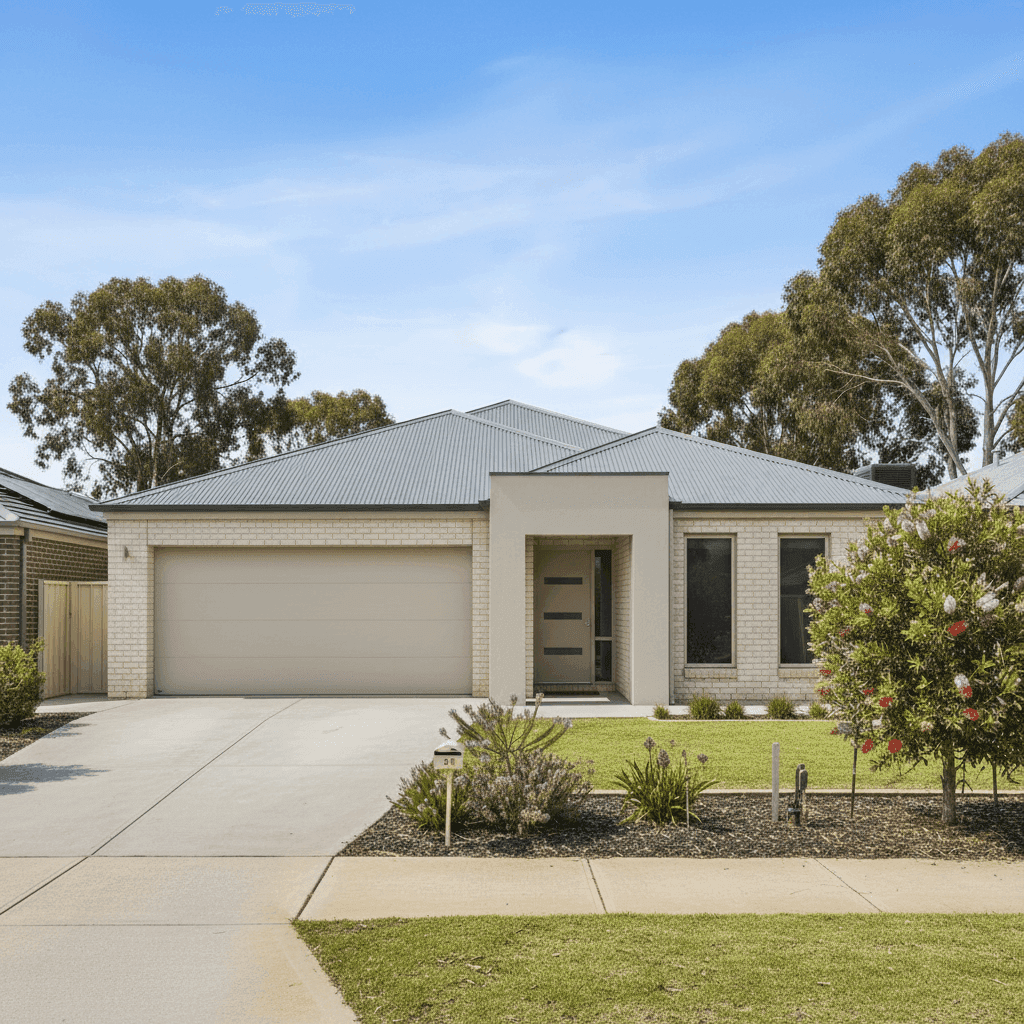
If you own a four-bedroom free standing home in Greta, NSW 2334, you're probably curious about whether you're paying a fair price for home and contents insurance. The Hunter Valley township of Greta sits within the City of Maitland local government area — a region that carries its own unique risk profile, particularly around flooding and storm events. In this article, we dig into a recent insurance quote for a property in this suburb and benchmark it against local, state, and national data to help you understand what's driving the cost.
---
Is This Quote Fair?
The quote in question comes in at $3,072 per year (or $288/month) for combined home and contents cover, with a building sum insured of $612,000 and contents valued at $50,000. Both the building and contents excess are set at $1,000.
Our price rating for this quote is EXPENSIVE — above average for the Greta area.
To put that in perspective, the suburb average premium sits at $2,480/yr and the median at $2,304/yr. That means this quote is approximately $592 above the suburb average and around $768 above the median. It also sits above the 75th percentile for the area ($2,910/yr), meaning it's more expensive than at least three-quarters of comparable quotes we've seen in Greta.
That said, "expensive" doesn't automatically mean "wrong." A higher sum insured, specific insurer loadings, or certain property features can all push a premium upward. The key is knowing whether the price is justified — or whether there's a better deal available for the same level of cover.
---
How Greta Compares
Understanding how Greta fits into the broader insurance landscape is useful context. Here's a snapshot:
| Benchmark | Average Premium | Median Premium |
|---|---|---|
| Greta (2334) | $2,480/yr | $2,304/yr |
| New South Wales | $9,528/yr | $3,770/yr |
| National | $5,347/yr | $2,764/yr |
| LGA (Maitland) | $13,875/yr | — |
A few things stand out here. The LGA average of $13,875/yr is strikingly high — well above both the state and national averages. This is almost certainly influenced by flood-prone properties within the Maitland LGA, which can attract very large premiums. Greta's own suburb average of $2,480/yr is considerably more modest, suggesting the suburb itself carries a lower risk profile than other parts of the Maitland council area.
Compared to the NSW state median of $3,770/yr, this quote of $3,072/yr is actually below the midpoint — which provides some reassurance. And against the national median of $2,764/yr, it's somewhat elevated, though not dramatically so given the building sum insured of $612,000.
The relatively small sample size for Greta (17 quotes) is worth noting — it means suburb-level averages can shift meaningfully as more data comes in. Always treat suburb benchmarks as a guide rather than a hard rule.
---
Property Features That Affect Your Premium
Several characteristics of this property will have a direct bearing on what insurers charge. Here's how the key features stack up:
Brick veneer construction is generally viewed favourably by insurers. It offers solid fire resistance and structural durability, which can help moderate premiums compared to timber-framed or clad homes.
Steel/Colorbond roofing is another positive signal. Colorbond is lightweight, highly durable, and performs well in storms and high winds. Insurers tend to price this roof type competitively, particularly in areas with hail or wind exposure.
Slab foundation is standard for homes built in this era and region, and carries no particular premium loading. It's a straightforward, low-risk foundation type.
Tile flooring is similarly neutral from an insurance standpoint — it's durable and not particularly susceptible to water or fire damage.
Ducted climate control is worth flagging. Ducted systems are considered a fixed building fixture and are typically included within the building sum insured. They can add to the rebuild cost and may contribute marginally to the premium, particularly if the system is large or complex.
Construction year of 2008 puts this property in a relatively modern bracket. Homes built after 2000 generally comply with updated building codes, which can work in your favour when insurers assess structural risk.
No pool and no solar panels simplify the risk profile. Both of these features, when present, can add layers of liability and replacement cost that push premiums higher.
At 214 sqm, this is a comfortably sized family home. The building sum insured of $612,000 translates to roughly $2,860 per sqm — a reasonable figure for a quality brick veneer build in regional NSW, though it's worth periodically reviewing this figure against current construction costs to ensure you're neither underinsured nor paying for more cover than you need.
---
Tips for Homeowners in Greta
1. Shop around — and do it annually Insurance premiums are not static. Insurers reprice their books regularly, and loyalty doesn't always pay. Getting at least two or three competing quotes each renewal cycle is one of the most effective ways to keep your premium in check. Compare quotes at CoverClub to see what's available for your property.
2. Review your sum insured carefully Underinsurance is a significant problem in Australia — many homeowners discover at claim time that their cover falls short of actual rebuild costs. Use a building cost estimator to check whether $612,000 is still appropriate given current labour and materials costs in the Hunter Valley region. Equally, avoid over-insuring, as this inflates your premium unnecessarily.
3. Consider your excess level Both the building and contents excess on this quote are set at $1,000. Opting for a higher excess (say, $2,000 or $2,500) can reduce your annual premium meaningfully. If you have a solid emergency fund and are unlikely to make small claims, a higher excess is often a smart trade-off.
4. Check for flood cover inclusions While Greta's own flood risk may be lower than other parts of Maitland, it's still worth confirming exactly what flood scenarios are covered under your policy. Some policies distinguish between riverine flooding and storm surge, or may exclude certain flood types unless specifically added. Given the Maitland LGA's flood history, this is not a detail to overlook.
---
Compare Your Home Insurance Today
Whether the quote above reflects your own situation or you're simply exploring your options, CoverClub makes it easy to benchmark your premium against real market data. Enter your address at CoverClub to get a tailored comparison and see how your current policy stacks up. You can also explore suburb-level statistics for Greta and broader NSW insurance trends to build a clearer picture of the market.
Smart insurance decisions start with good data — and that's exactly what CoverClub is here to provide.