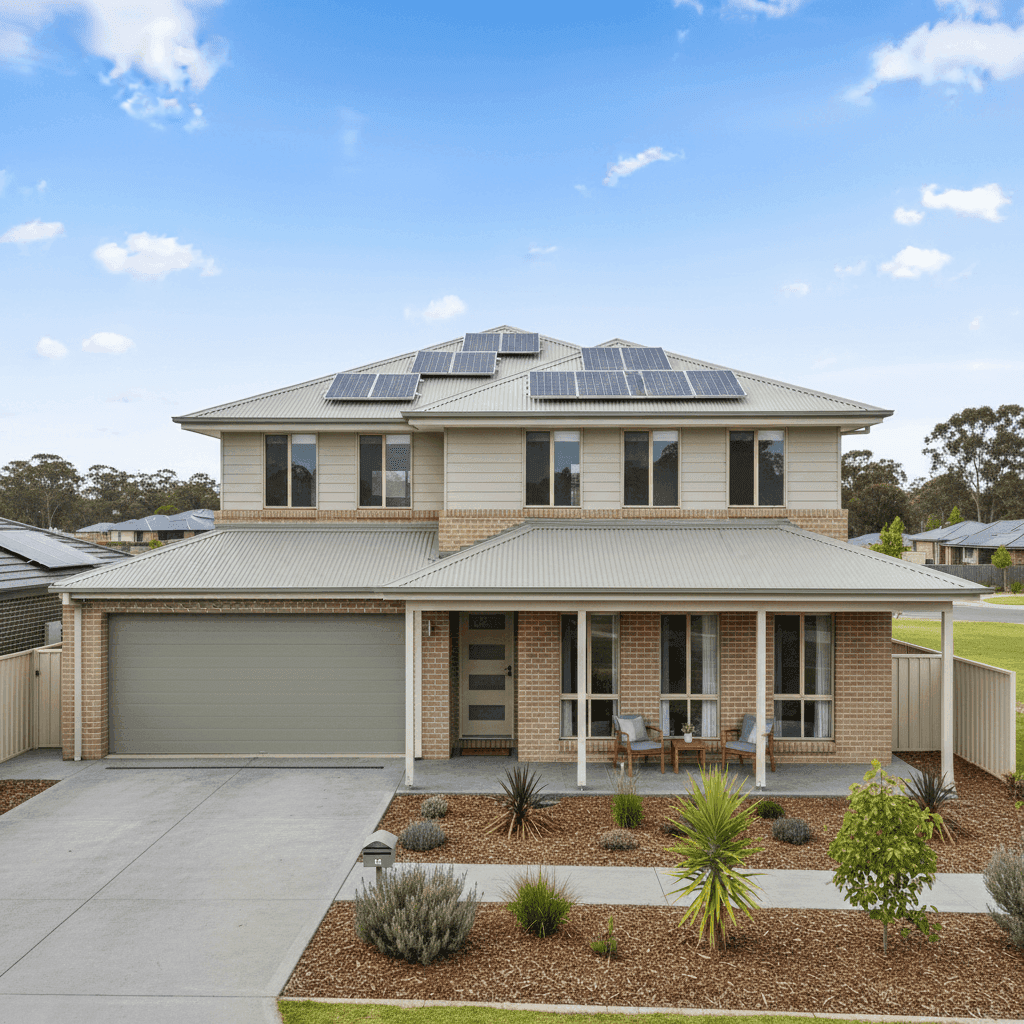
If you own a free standing home in Greta, NSW 2334, you've likely noticed that home insurance costs can vary enormously from one quote to the next. This article breaks down a real home and contents insurance quote for a four-bedroom, double brick property in Greta — and puts the numbers into context against suburb, state, and national benchmarks so you can make a more informed decision.
---
Is This Quote Fair?
The quote in question comes in at $4,107 per year (or $402 per month) for combined home and contents cover, with a building sum insured of $751,000 and contents valued at $60,000. Both the building and contents excess are set at $500.
Our price rating for this quote is EXPENSIVE — above average.
To understand why, it helps to look at what other homeowners in Greta are paying. The suburb average premium sits at $2,480 per year, with a median of $2,304. This quote lands well above the 75th percentile for the area ($2,910), meaning it is more expensive than at least three-quarters of comparable quotes in the postcode.
That said, context matters. The building sum insured of $751,000 is a significant coverage amount for a 214 sqm home built in 1970, and the contents cover adds another $60,000 to the policy. Higher insured values naturally push premiums upward. Even so, the gap between this quote and the suburb median is substantial — roughly $1,800 per year — which is well worth investigating before accepting the price at face value.
---
How Greta Compares
Understanding where Greta sits in the broader insurance landscape is useful context for any homeowner shopping for cover.
| Benchmark | Average Premium | Median Premium |
|---|---|---|
| Greta (2334) | $2,480/yr | $2,304/yr |
| NSW (State) | $9,528/yr | $3,770/yr |
| National | $5,347/yr | $2,764/yr |
| Maitland LGA | $13,875/yr | — |
A few things stand out here. The NSW state average of $9,528 is dramatically skewed by high-risk postcodes — think flood-prone areas in western Sydney or coastal regions exposed to storm surge. The state median of $3,770 is a more representative figure for typical NSW homeowners, and Greta's median of $2,304 sits comfortably below it, suggesting the suburb is considered relatively low-risk by insurers overall.
The Maitland LGA average of $13,875 is eye-catching, but this figure is heavily influenced by flood-affected properties in the broader Maitland area — a well-documented issue following the devastating 2022 Hunter Valley floods. Greta itself, while within the Maitland LGA, appears to attract more moderate premiums than many neighbouring areas.
At a national level, the median premium of $2,764 is broadly in line with what Greta homeowners are paying, which suggests the suburb is not an outlier on the national scale.
You can explore more local data on the Greta suburb stats page, or compare against NSW state averages and national benchmarks.
---
Property Features That Affect Your Premium
Every home is unique, and insurers weigh up a range of property characteristics when calculating your premium. Here's how the features of this particular Greta home are likely influencing the quote:
Double Brick Construction Double brick is generally viewed favourably by insurers. It offers strong structural integrity, good fire resistance, and durability against wind and impact. Compared to weatherboard or fibre cement clad homes, double brick properties often attract more competitive premiums — or at least face fewer loading penalties.
Steel/Colorbond Roof A Colorbond roof is another positive signal for insurers. It's lightweight, non-combustible, and highly resistant to corrosion and storm damage. Compared to older tile roofs, Colorbond tends to perform well in hail events and doesn't suffer from the cracking or slipping issues that can affect terracotta or concrete tiles over time.
Stump Foundation Homes on stumps (also known as pier or post foundations) can be a mixed bag from an insurance perspective. On the upside, they allow for underfloor ventilation and can be easier to inspect and repair. However, they may attract some scrutiny around stability and the potential for subsidence or movement, particularly in older homes.
Construction Year: 1970 At over 50 years old, this home sits in an age bracket where insurers may apply loadings to account for older wiring, plumbing, or structural elements that haven't been updated. It's worth noting on your policy whether any major renovations or upgrades have been completed, as this can positively influence your premium.
Solar Panels The presence of solar panels adds to the replacement cost of the home, which is reflected in the building sum insured. Panels also introduce some additional risk considerations (e.g., roof penetrations, electrical systems), though most standard policies cover them as part of the building.
Ducted Climate Control Ducted air conditioning is a valuable fixed asset that adds to the overall replacement cost of the building. Like solar panels, it's typically covered under the building component of a home and contents policy and contributes to the higher sum insured.
Vinyl Flooring and Standard Fittings Vinyl flooring and standard-grade fittings are relatively cost-effective to replace compared to premium alternatives like hardwood floors or stone benchtops. This helps keep the contents and building replacement estimates grounded.
---
Tips for Homeowners in Greta
If you're a homeowner in Greta looking to get better value from your insurance, here are four practical steps worth taking:
- Shop around — seriously. The gap between this quote and the suburb median is nearly $1,800 per year. With 17 quotes in our Greta sample, there's clear evidence that premiums vary widely for similar properties in the same postcode. Using a comparison tool to benchmark multiple insurers side by side is one of the most effective ways to reduce your annual premium.
- Review your sum insured carefully. A building sum insured of $751,000 for a 214 sqm home built in 1970 is on the higher end. Make sure your figure reflects the actual cost to rebuild the home (not its market value), including demolition and debris removal. Over-insuring drives up your premium unnecessarily, while under-insuring can leave you exposed at claim time.
- Document recent upgrades. If the home has had electrical rewiring, new plumbing, or structural improvements since 1970, make sure your insurer knows. Upgrades to older homes can reduce the risk profile in the eyes of underwriters and may translate to lower premiums or fewer exclusions.
- Consider your excess level. Both excesses on this policy are set at $500. Opting for a higher voluntary excess — say $1,000 or $2,000 — can meaningfully reduce your annual premium. Just make sure you're comfortable covering that amount out of pocket in the event of a claim.
---
Ready to Compare?
Whether you're renewing your current policy or shopping for cover for the first time, comparing quotes is the single best thing you can do to make sure you're not overpaying. CoverClub makes it easy to see how your premium stacks up against real data from your suburb and across Australia.
Get a home insurance quote today and find out if you could be paying less for the same level of cover.