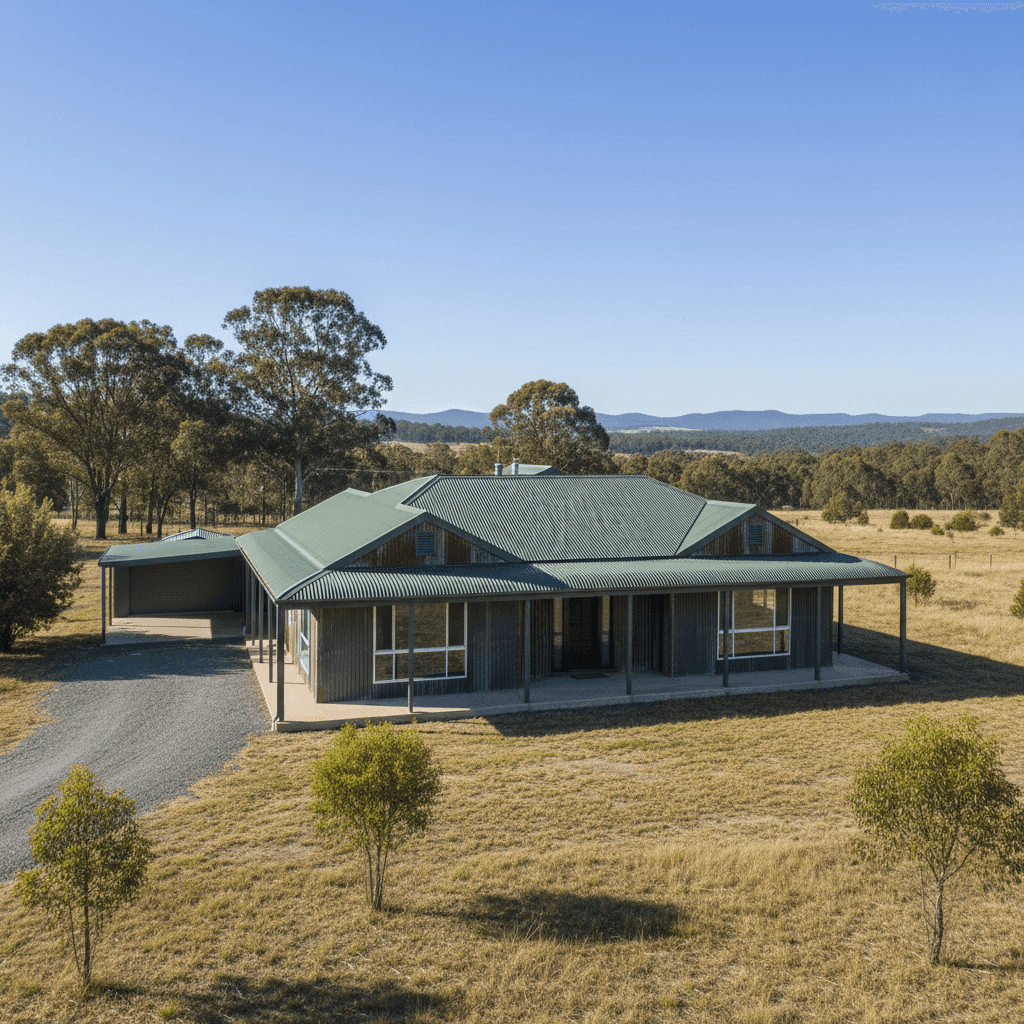
If you own a free standing home in Greta South, VIC 3675, you're likely no stranger to the realities of insuring a regional Victorian property. This article breaks down a real home and contents insurance quote for a four-bedroom home in the area — examining whether the premium stacks up, how local risk factors play a role, and what you can do to keep costs in check.
---
Is This Quote Fair?
The annual premium for this quote comes in at $5,733 per year (or $534 per month), covering a building sum insured of $795,000 and contents valued at $150,000, each with a $1,000 excess.
Our price rating for this quote is Expensive — Above Average.
To put that in perspective:
- The Victorian state average premium is $3,000/yr, with a median of $2,718/yr
- The national average sits at $5,347/yr, with a median of $2,764/yr
- The local LGA (Moira) average is $4,020/yr
This quote is approximately 91% above the Victorian state average and around 7% above the national average. Even when compared to the Moira LGA average of $4,020, this premium is notably higher — sitting about 43% above that local benchmark.
That said, it's worth remembering that premium comparisons aren't always apples-to-apples. A higher building sum insured ($795,000) and the combined home-and-contents nature of this policy will naturally push the price up compared to policies covering lower values or buildings only. Still, the "Expensive" rating is a signal worth taking seriously.
---
How Greta South Compares
While there isn't enough suburb-level data available to provide a Greta South-specific benchmark, we can draw meaningful context from the broader picture. You can explore Greta South insurance statistics as more data becomes available, and compare against all of Victoria or nationally.
| Benchmark | Average Premium |
|---|---|
| Greta South (suburb) | Insufficient data |
| Moira LGA | $4,020/yr |
| Victoria | $3,000/yr |
| National | $5,347/yr |
The Moira LGA average of $4,020 suggests that properties in this region do attract premiums above the Victorian norm — likely reflecting a combination of rural location factors, bushfire exposure in parts of the region, and the cost of rebuilding in areas with limited local trades and materials access.
Interestingly, this quote is above even the national average, which is typically skewed upward by high-risk areas in Queensland and Western Australia. That places this premium in a relatively elevated tier by any measure.
---
Property Features That Affect Your Premium
Several characteristics of this property are likely influencing the premium. Here's how they factor in:
Age of Construction (1979)
Homes built in the late 1970s can attract higher premiums due to older wiring, plumbing, and structural components that may not meet current building codes. Insurers often factor in a higher risk of claims related to wear and deterioration in properties of this age.
Roof Type: Steel / Colorbond
Colorbond steel roofing is generally viewed favourably by insurers — it's durable, fire-resistant, and low maintenance. This is unlikely to be a negative contributor to the premium.
Foundation: Concrete Slab
Slab foundations are common in Victoria and are generally considered stable, though they can be susceptible to movement in reactive clay soils. In regional areas, soil conditions vary, and some insurers may price this in.
External Walls: Other
The "Other" wall classification can sometimes attract additional scrutiny from insurers, as non-standard materials may carry different rebuild cost profiles or maintenance considerations compared to brick or weatherboard.
Flooring: Tiles
Tiled flooring is generally considered durable and lower risk from a contents-damage perspective, which is a neutral-to-positive factor.
Building Size: 130 sqm
At 130 square metres, this is a modestly sized home for four bedrooms. The $795,000 building sum insured reflects rebuild costs rather than market value — and in regional areas, per-square-metre rebuild costs can be elevated due to tradesperson availability and materials transport.
No Pool, Solar Panels, or Ducted Climate Control
The absence of these features means the policy avoids several common premium add-ons. Pools, in particular, can add meaningful liability risk, so their absence is a minor positive.
---
Tips for Homeowners in Greta South
1. Review Your Building Sum Insured Carefully
At $795,000 for a 130 sqm home, the sum insured is significant. Make sure this figure reflects a current, accurate estimate of what it would genuinely cost to rebuild — not the market value of your property. Overinsuring inflates your premium, while underinsuring can leave you exposed. Use a quantity surveyor or your insurer's calculator to validate the figure.
2. Compare Quotes Across Multiple Insurers
Given this quote is rated "Expensive," it's well worth shopping around. Premiums for the same property can vary by hundreds — or even thousands — of dollars between insurers. Get a comparison quote at CoverClub to see what other providers are offering for your address.
3. Consider Increasing Your Excess
Both the building and contents excess on this policy are set at $1,000. Opting for a higher voluntary excess — say, $2,000 or $2,500 — can meaningfully reduce your annual premium. Just make sure the excess is an amount you could comfortably cover out of pocket if you needed to make a claim.
4. Ask About Bundling Discounts and Loyalty Offers
Some insurers offer discounts when you hold multiple policies (such as home, contents, and car insurance) with them. If you're not already bundling, it's worth asking. Equally, if you've been with the same insurer for several years, check whether a competitor can beat your renewal price — loyalty doesn't always pay in insurance.
---
Ready to Find a Better Deal?
Whether this quote is right for your situation or you're looking for something more competitive, comparing your options is always a smart move. At CoverClub, we make it easy to see how your premium stacks up and explore alternatives — all in one place.
Compare home insurance quotes for your Greta South property →