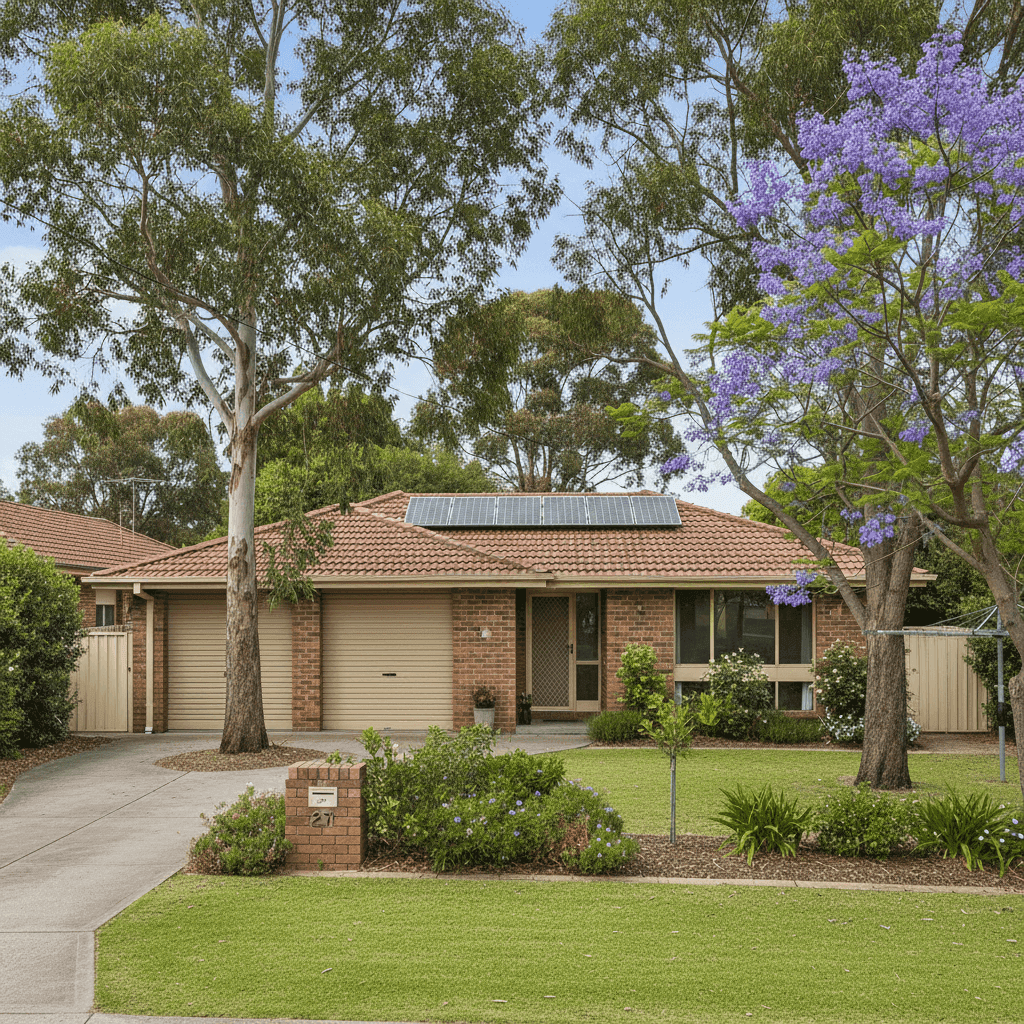
If you own a free standing home in Greystanes, NSW 2145, you've probably wondered whether your home insurance premium is reasonable — or whether you're paying more than you need to. This article breaks down a real building insurance quote for a four-bedroom, three-bathroom brick veneer home in the suburb, and stacks it up against local, state, and national benchmarks to help you make a more informed decision.
---
Is This Quote Fair?
The quote in question comes in at $2,882 per year (or $282/month) for building-only cover, with a $1,000 building excess and a sum insured of $1,099,000. Our price rating for this quote is EXPENSIVE — above average.
To put that in context, the average home insurance premium across Greystanes sits at just $1,435 per year, with a median of $1,380. That means this particular quote is roughly double the suburb average — a significant gap that's worth investigating before simply accepting the price.
It's worth noting that the sum insured here is $1,099,000, which is on the higher end and will naturally push the premium up compared to properties insured for less. That said, even accounting for a generous rebuild cost estimate on a 235 sqm home, the premium still lands well above what most Greystanes homeowners are paying. Shopping around is strongly recommended.
---
How Greystanes Compares
Understanding where Greystanes sits in the broader insurance landscape is useful context. Here's how the suburb stacks up:
| Benchmark | Premium |
|---|---|
| This Quote | $2,882/yr |
| Greystanes Suburb Average | $1,435/yr |
| Greystanes Suburb Median | $1,380/yr |
| Greystanes 25th Percentile | $829/yr |
| Greystanes 75th Percentile | $1,842/yr |
| LGA (Parramatta) Average | $2,031/yr |
| NSW State Average | $9,528/yr |
| NSW State Median | $3,770/yr |
| National Average | $5,347/yr |
| National Median | $2,764/yr |
(Based on 28 quotes sampled for the Greystanes postcode)
A few things stand out here. First, Greystanes is actually a relatively affordable suburb to insure compared to broader NSW benchmarks — the suburb median of $1,380 is well below the NSW state median of $3,770 and even sits under the national median of $2,764. This suggests the area carries a lower-than-average risk profile, which is good news for local homeowners.
The NSW state average of $9,528 is heavily skewed by high-risk postcodes — think flood-prone regions, cyclone corridors, and bushfire-exposed areas. Greystanes, sitting in Sydney's western suburbs, doesn't carry those same elevated risks, which is reflected in its comparatively modest suburb averages.
You can explore Greystanes-specific insurance data or browse national home insurance benchmarks to see how your situation fits the bigger picture.
---
Property Features That Affect Your Premium
Several characteristics of this property have a direct bearing on what insurers charge. Here's how the key features play out:
Brick Veneer Construction Brick veneer walls are generally viewed favourably by insurers. They offer solid fire resistance and durability compared to timber-framed or clad exteriors, which can translate to more competitive premiums. However, brick veneer is not the same as full brick — the timber frame behind the veneer still carries some risk.
Tiled Roof Terracotta or concrete tile roofs are considered a lower risk than Colorbond or corrugated iron in some scenarios, but they can be more expensive to repair or replace when damaged by storms or hail. For a 235 sqm home, the roof replacement cost is a meaningful component of the sum insured.
Slab Foundation A concrete slab is a stable foundation type that generally doesn't introduce significant underwriting concerns. It's a common choice for homes built in the 1980s across Western Sydney and is well understood by insurers.
Construction Year: 1986 Homes built in the mid-1980s are now approaching 40 years old. Insurers factor in the age of a property because older homes may have ageing plumbing, electrical wiring, and roofing materials that increase the likelihood of a claim. This can contribute to a higher premium compared to newer builds.
Solar Panels This property has solar panels installed, which adds value to the sum insured and can slightly increase the premium. Solar systems are covered under building insurance in most policies, but it's important to confirm this with your insurer and ensure the system's value is factored into your sum insured figure.
Ducted Climate Control Ducted air conditioning is a fixed building fixture and is typically included under building cover. Like solar, it contributes to the overall rebuild cost and should be accounted for in your sum insured calculation.
Timber and Laminate Flooring While flooring is generally a contents or building consideration depending on the policy, timber and laminate floors can be costly to replace following water damage or flooding — a factor some insurers weigh when pricing building cover.
---
Tips for Homeowners in Greystanes
1. Review your sum insured carefully A sum insured of $1,099,000 is substantial. Make sure it reflects the actual cost to rebuild your home from scratch — including demolition, materials, labour, and any fixed features like solar panels and ducted air conditioning — rather than the market value of the property. Overinsuring drives up your premium unnecessarily, while underinsuring can leave you seriously out of pocket after a major claim.
2. Compare multiple quotes before renewing The data shows a wide spread of premiums in Greystanes, from $829 at the 25th percentile to $1,842 at the 75th. This tells you there's significant variation between insurers for similar properties. Don't auto-renew — compare quotes at CoverClub to see what's available in the current market.
3. Ask about discounts for security features Many insurers offer premium reductions for homes with deadlocks, alarm systems, or monitored security. If your home has any of these features, make sure they're disclosed when you get a quote — they can make a meaningful difference to your annual cost.
4. Consider your excess level This quote carries a $1,000 building excess. Opting for a higher excess — say $2,000 or $2,500 — can reduce your annual premium. If you're a low-claim household and have the financial buffer to cover a higher out-of-pocket cost in the event of a claim, this trade-off can be worth it over time.
---
Compare Your Options with CoverClub
Whether you're reviewing an existing policy or shopping for cover on a new property, it pays to see the full market. CoverClub makes it easy to compare home insurance quotes from multiple Australian insurers in one place — so you can be confident you're getting fair value for your cover. Get a quote today and see how your premium stacks up.