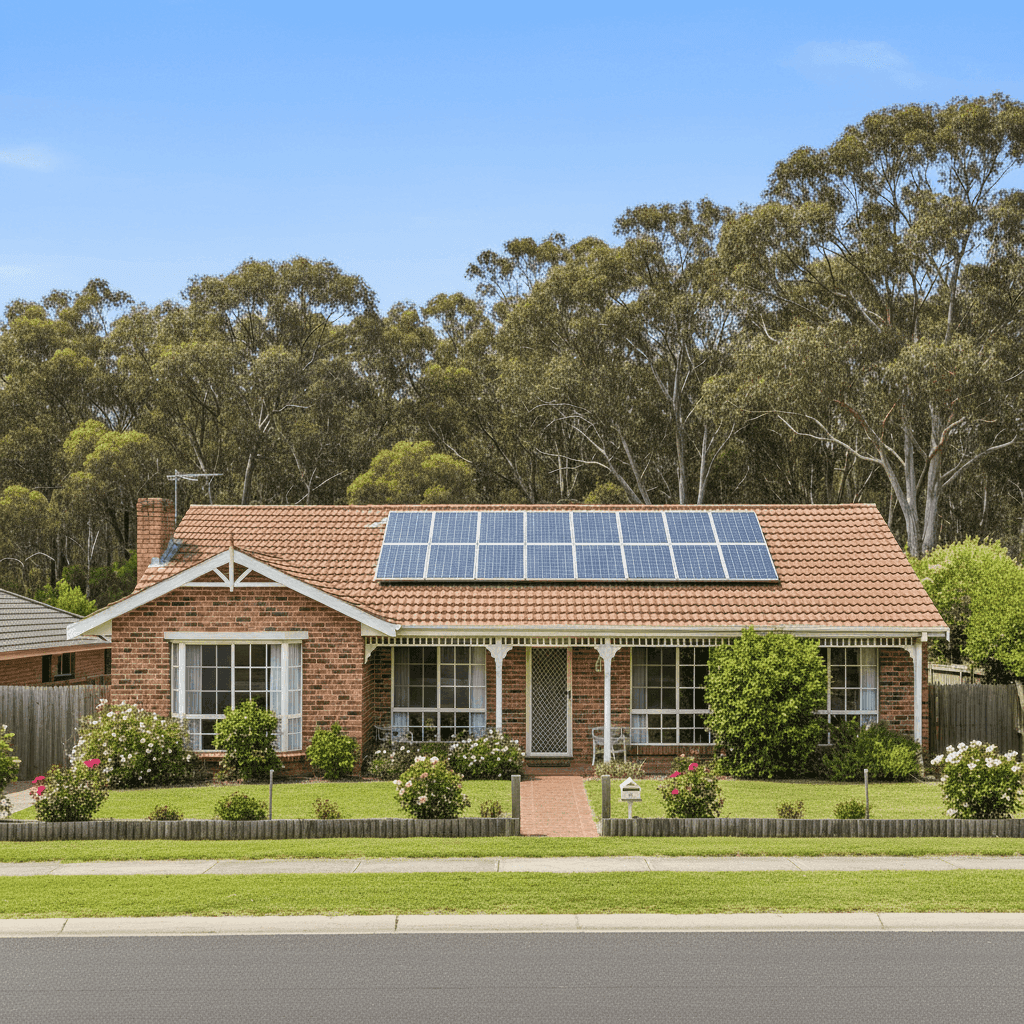
If you own a free standing home in Grose Vale, NSW 2753, you're likely already aware that insurance costs in the Hawkesbury region can vary significantly. Nestled in the foothills west of the Blue Mountains, Grose Vale is a semi-rural suburb where property characteristics, bushfire exposure, and local risk factors all play a role in shaping what you pay for cover. This article breaks down a recent home and contents insurance quote for a four-bedroom, brick veneer home in the area — and puts it in context against suburb, state, and national benchmarks.
---
Is This Quote Fair?
The quote in question comes in at $2,808 per year (or $269/month) for a combined home and contents policy, covering a building sum insured of $766,000 and contents valued at $120,000, each with a $1,000 excess.
Our pricing model rates this quote as CHEAP — below average for the area. That's a meaningful finding. In a suburb where premiums can swing wildly depending on the insurer and the risk profile they assign to the postcode, landing below the local average is a genuine win for the homeowner.
To put it in perspective: the suburb average premium in Grose Vale is $4,930/year, and the median sits at $3,739/year. This quote sits well below even the 25th percentile of local quotes (which is $3,018/year), meaning it's cheaper than at least 75% of comparable quotes collected in the area. That's a strong result.
It's worth noting that our local sample size for Grose Vale is currently eight quotes, so the suburb-level data is directionally useful but should be interpreted alongside broader benchmarks as more data accumulates. You can explore the full breakdown on our Grose Vale suburb stats page.
---
How Grose Vale Compares
Understanding where Grose Vale sits relative to the wider market helps frame whether this quote — and home insurance costs in the area generally — are reasonable.
| Benchmark | Average Premium | Median Premium |
|---|---|---|
| Grose Vale (suburb) | $4,930/yr | $3,739/yr |
| NSW (state) | $9,528/yr | $3,770/yr |
| National | $5,347/yr | $2,764/yr |
| Penrith LGA | $2,220/yr | — |
A few things stand out here. The NSW state average of $9,528/year is dramatically higher than the median of $3,770/year — a classic sign that a small number of very high-risk properties (think flood-prone or coastal areas) are pulling the average upward. The median is a far more representative figure for most NSW homeowners.
Grose Vale's median ($3,739/year) is broadly in line with the NSW state median, suggesting the suburb carries a typical risk profile relative to the rest of the state. However, it sits noticeably above the national median of $2,764/year, which reflects the elevated bushfire and environmental risk associated with properties near the Blue Mountains fringe.
Interestingly, the Penrith LGA average of $2,220/year is considerably lower than the Grose Vale suburb average, which makes sense — the bulk of Penrith LGA is urban and carries lower bushfire risk than the more rural pockets like Grose Vale. This quote, at $2,808/year, sits between those two benchmarks.
For a deeper dive into how NSW compares nationally, visit our NSW insurance stats page or the national home insurance statistics.
---
Property Features That Affect Your Premium
Every insurer prices risk differently, but certain property characteristics consistently influence premiums. Here's how the features of this particular home stack up:
Brick veneer construction with a tiled roof is generally viewed favourably by insurers. Brick veneer offers solid fire resistance compared to timber-framed cladding, and tiles are more durable and fire-resistant than Colorbond or corrugated iron in most risk models. Together, these features can contribute to a more competitive premium.
Slab foundation is standard for homes of this era and construction type in NSW. It doesn't carry the same flood-related concerns as homes with raised timber subfloors, which can be an advantage in some risk assessments.
Built in 1998, the property is mature enough that some building components may be approaching the end of their typical lifespan, but it's not old enough to attract the kind of surcharges sometimes applied to pre-1970s homes with outdated wiring or plumbing. It sits in a sweet spot for insurers.
Solar panels are worth highlighting. While they add value to the property, they can also increase the cost to rebuild — particularly if the system is a modern, higher-capacity installation. Homeowners should ensure their building sum insured accounts for the replacement cost of solar infrastructure, which is often overlooked when policies are first set up.
Ducted climate control is another feature that adds to rebuild cost. Ducted systems require significant labour and materials to reinstall, and underinsurance is a real risk if this isn't factored into the sum insured.
At 235 sqm, this is a reasonably sized family home. The $766,000 building sum insured equates to roughly $3,260/sqm — broadly in line with current NSW construction costs for a standard-quality build, though this will vary depending on finishes and site conditions.
---
Tips for Homeowners in Grose Vale
1. Review your sum insured annually Construction costs in NSW have risen sharply in recent years. A sum insured that was accurate two years ago may no longer reflect the true cost to rebuild your home today. Use a building cost calculator and factor in your solar panels, ducted systems, and any renovations you've made.
2. Understand your bushfire risk Grose Vale is adjacent to bushland and national park areas, which means bushfire risk is a genuine consideration. Check your property's Bushfire Attack Level (BAL) rating and confirm that your policy covers bushfire damage — most standard policies do, but exclusions and sub-limits can apply. The NSW Rural Fire Service website has mapping tools to help you assess your specific risk.
3. Don't auto-renew without comparing The fact that this quote came in well below the suburb average is a good reminder that premiums vary enormously between insurers for the same property. Auto-renewing year after year is one of the most common ways homeowners overpay. A quick comparison at renewal time can save hundreds of dollars.
4. Consider your excess carefully Both the building and contents excess on this policy are set at $1,000. Opting for a higher excess (say, $2,500 or $5,000) can meaningfully reduce your annual premium — but only makes sense if you have the financial buffer to cover it in the event of a claim. Think of it as self-insuring the smaller losses.
---
Compare Your Own Quote
Whether you're a Grose Vale local or just researching what home insurance should cost in your area, CoverClub makes it easy to see how your current premium stacks up. Our comparison tools draw on real quote data from across Australia to give you an honest picture of the market.
Get a home insurance quote today and find out whether you're paying a fair price — or whether it's time to switch.