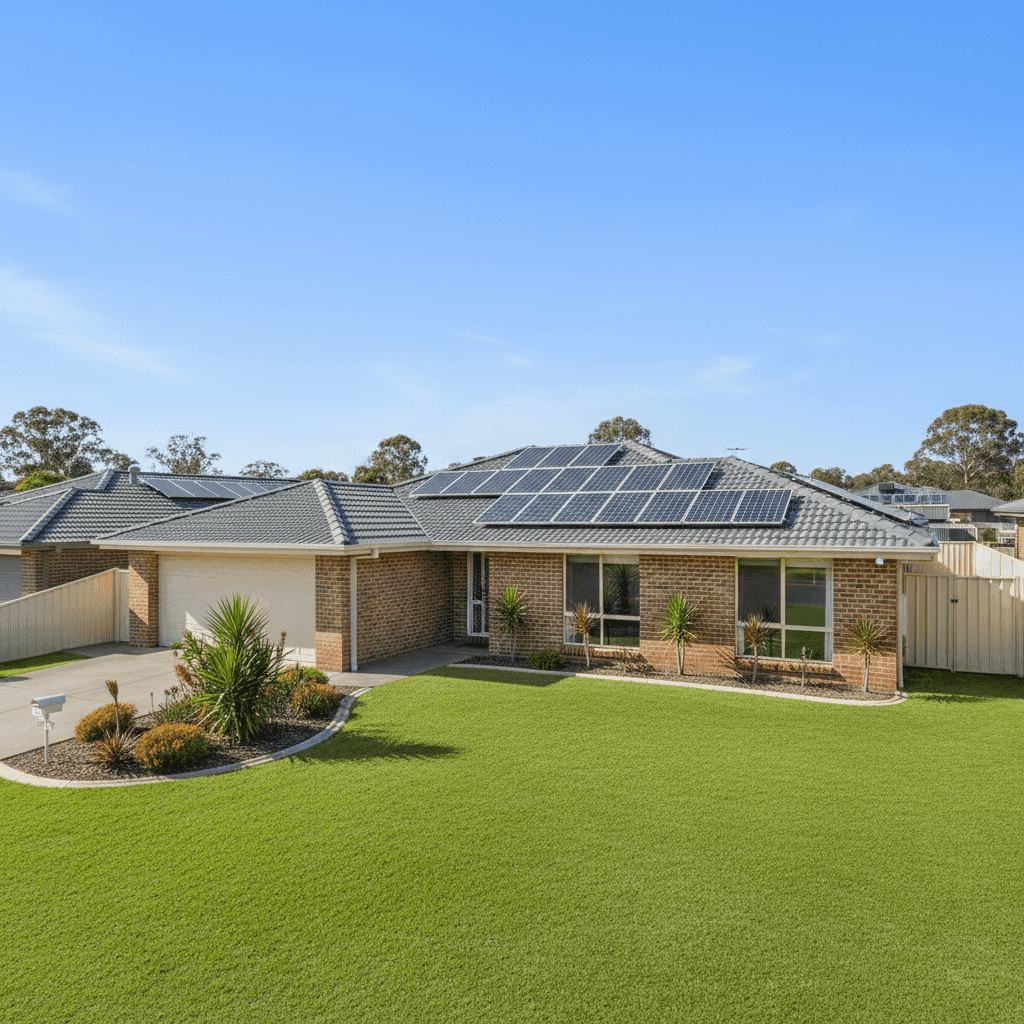
Gulmarrad is a quiet residential locality on the NSW Mid North Coast, sitting within the Clarence Valley local government area near the Clarence River estuary. It's a popular spot for families and sea-changers drawn to its relaxed lifestyle — but like many regional coastal communities, insuring a home here comes with its own set of considerations. This article takes a close look at a recent home and contents insurance quote for a four-bedroom, free-standing home in Gulmarrad, NSW 2463, unpacking what's driving the cost and whether it stacks up against the broader market.
---
Is This Quote Fair?
The quote in question comes in at $5,286 per year (or around $500/month) for a combined home and contents policy. The building is insured for $899,000 with a $1,000 excess, and contents are covered for $123,000 with the same excess threshold.
Our price rating for this quote is Expensive (Above Average).
To put that in context: the suburb average for Gulmarrad sits at $3,569/year, with a median of $3,566/year. This quote is roughly 48% above the local average — a meaningful gap that warrants some explanation. That said, it's worth noting that Gulmarrad premiums can vary quite widely; the 75th percentile of quotes in this postcode reaches $5,040/year, meaning this quote is only modestly above the upper quartile. It's not an outlier, but it's certainly on the pricier end of the spectrum.
When stacked against the NSW state average of $3,801/year, the quote is about 39% higher. Compared to the national average of $2,965/year, it's nearly double. These are significant differences, and they reflect a combination of property-specific factors and the unique risk profile of the Clarence Valley region.
---
How Gulmarrad Compares
Here's a snapshot of how this quote sits within the broader pricing landscape:
| Benchmark | Annual Premium |
|---|---|
| This Quote | $5,286 |
| Gulmarrad Suburb Average | $3,569 |
| Gulmarrad Suburb Median | $3,566 |
| Gulmarrad 75th Percentile | $5,040 |
| NSW State Average | $3,801 |
| NSW State Median | $3,410 |
| National Average | $2,965 |
| National Median | $2,716 |
| Clarence Valley LGA Average | $6,052 |
One figure that stands out is the Clarence Valley LGA average of $6,052/year. This is actually higher than the quote being analysed — which suggests that, within the broader local government area, this property is being priced more favourably than many of its neighbours. The Clarence Valley LGA encompasses a range of flood-prone and low-lying areas that attract significantly elevated premiums, and Gulmarrad itself is not immune to that risk profile given its proximity to the Clarence River system.
Based on just 63 quotes in the suburb sample, there's also a degree of variability in the local data — so individual results can shift meaningfully depending on the insurer, the sum insured, and the specific risk assessment applied to the property.
---
Property Features That Affect Your Premium
Several characteristics of this home are likely influencing the premium, both positively and negatively.
Building size and sum insured: At 214 sqm and a building sum insured of $899,000, this is a substantial property to cover. Rebuild costs in regional NSW have climbed sharply in recent years due to labour shortages and materials inflation, and insurers price accordingly. A higher sum insured directly increases the premium.
Brick veneer construction: Brick veneer walls are generally viewed favourably by insurers. They offer good fire resistance and structural durability compared to lightweight cladding, which can help moderate the premium to some extent.
Tiled roof: Terracotta or concrete tile roofs are considered a lower-risk roofing material than metal or older materials like fibrous cement. Combined with brick veneer walls, this home sits in a relatively standard risk category for construction type.
Slab foundation: A concrete slab foundation is common in homes built from the 1990s onwards and is generally considered structurally sound. It offers less exposure to subfloor moisture issues than older raised foundations.
Solar panels: The presence of solar panels on the roof adds a layer of complexity to insurance. Panels can be damaged by hail, storms, or falling debris, and their replacement cost needs to be factored into the building sum insured. Some insurers also apply a modest loading for the additional risk of electrical faults or fire originating from solar systems.
Construction year (2005): A home built in 2005 benefits from relatively modern building codes, including improved cyclone tie-down standards and energy efficiency requirements. This is a positive factor from an insurer's perspective, suggesting the structure is less likely to have significant age-related defects.
No cyclone risk designation: Gulmarrad is not classified as a cyclone risk area, which removes one of the more significant premium loadings that affect properties further north in Queensland or the NT.
Vinyl flooring: While flooring type has a modest impact on contents and building valuations, vinyl is generally straightforward and inexpensive to replace compared to hardwood or engineered timber floors.
---
Tips for Homeowners in Gulmarrad
1. Review your building sum insured carefully. With a sum insured of $899,000, it's important to ensure this figure reflects the actual cost to rebuild — not the market value of the property. Use a building cost calculator or engage a quantity surveyor to verify the figure. Being over-insured means you're paying more than necessary; being under-insured can leave you exposed at claim time.
2. Check your solar panel coverage. Confirm with your insurer exactly how your solar system is covered. Some policies include panels under building cover automatically, while others require them to be listed separately or may have sub-limits. Given solar systems can cost $8,000–$15,000 or more to replace, this is worth clarifying before you need to make a claim.
3. Shop around — especially within the Clarence Valley. The LGA average of $6,052/year shows that many local homeowners are paying considerably more than this quote. However, the suburb 25th percentile of just $1,833/year also demonstrates that significant savings are possible for the right property with the right insurer. Comparing multiple quotes is one of the most effective ways to reduce your premium without sacrificing cover.
4. Consider your excess level. Both the building and contents excess on this policy are set at $1,000. Opting for a higher voluntary excess — say $2,500 or $5,000 — can reduce your annual premium meaningfully. This strategy works well if you have sufficient savings to cover a larger out-of-pocket cost in the event of a claim.
---
Compare Home Insurance Quotes in Gulmarrad
Whether you're reviewing an existing policy or shopping for cover for the first time, it pays to compare. Premiums for the same property can vary by hundreds — or even thousands — of dollars between insurers. CoverClub makes it easy to see what's available for your home in one place. Get a home insurance quote today and find out if you could be paying less for the same level of protection.
For more localised pricing data, visit the Gulmarrad suburb stats page or explore NSW home insurance benchmarks to see how your premium compares across the state.