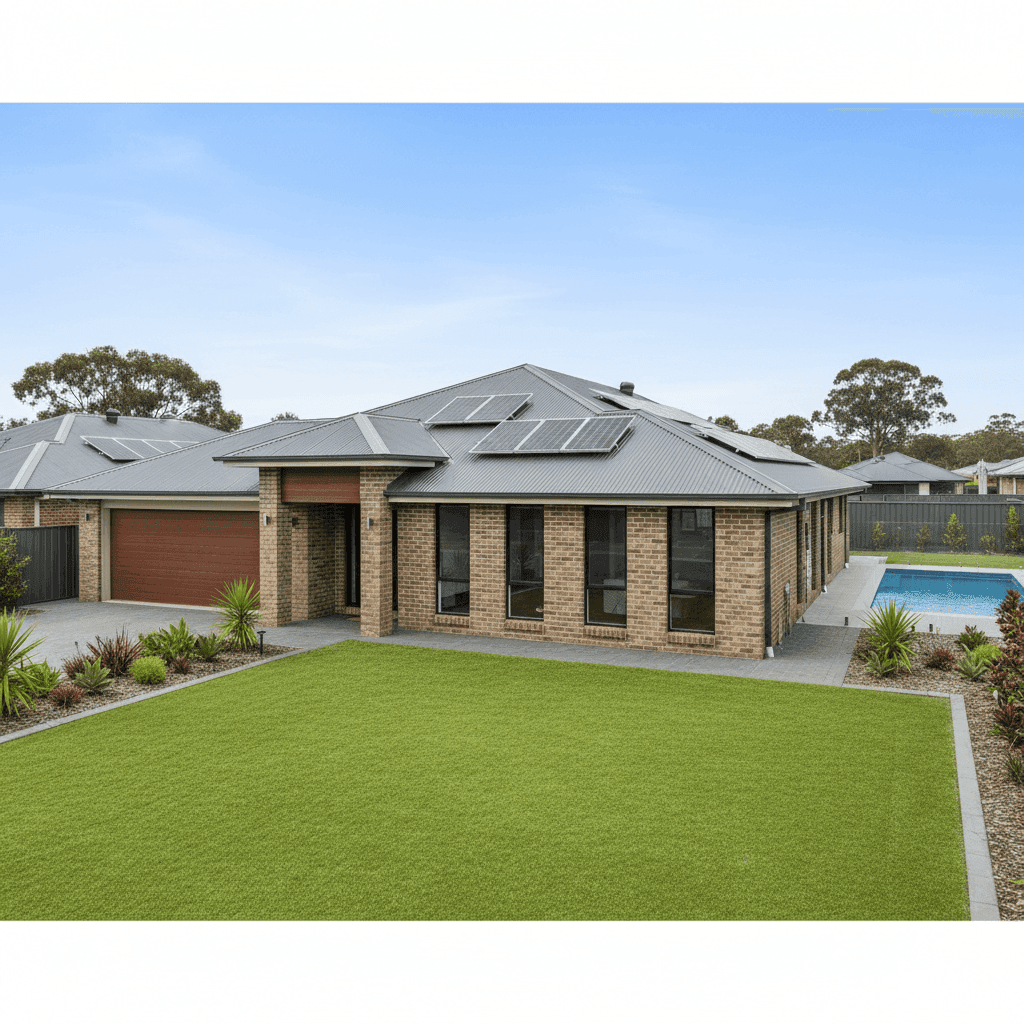
Gwandalan is a relaxed lakeside suburb on the Central Coast of New South Wales, sitting on the northern shores of Lake Macquarie. It's a popular spot for families and sea-changers drawn to its quiet streets, water access, and relatively affordable housing. If you own a free standing home here, understanding what you should be paying for home and contents insurance — and why — is one of the smartest financial checks you can make.
This article breaks down a real insurance quote for a 4-bedroom, 3-bathroom free standing home in Gwandalan, comparing it against local, state, and national benchmarks to help you decide whether your own premium is reasonable.
---
Is This Quote Fair?
The annual premium for this quote comes in at $3,165 per year (or $312/month), covering both building (sum insured: $880,000) and contents ($70,000). Based on our pricing analysis, this quote is rated CHEAP — sitting below the NSW state average, which is a positive result for the homeowner.
To put that in perspective:
- The NSW state average for home and contents insurance is $3,801/year
- The NSW state median sits at $3,410/year
- The national average is $2,965/year, with a national median of $2,716/year
So while this quote is competitive against other NSW premiums, it does sit above the national average — which is typical for New South Wales, where insurers price in higher property values, weather exposure, and claims history compared to many other states.
The building excess on this policy is $3,000, which is on the higher side. A higher excess is one of the most common ways to reduce your annual premium, so it's worth considering whether that trade-off suits your financial situation. The contents excess of $1,000 is more standard.
---
How Gwandalan Compares
Drilling into the local data, the Cessnock LGA average premium is $2,585/year — notably lower than both the NSW state average and this particular quote. Gwandalan falls within the Cessnock LGA, which covers a broad inland and coastal fringe region. Premiums within the LGA can vary considerably depending on proximity to water, flood zones, and local bushfire risk, so individual suburb-level results can differ from the LGA average.
Here's a quick snapshot:
| Benchmark | Annual Premium |
|---|---|
| This Quote | $3,165 |
| Cessnock LGA Average | $2,585 |
| NSW State Average | $3,801 |
| NSW State Median | $3,410 |
| National Average | $2,965 |
| National Median | $2,716 |
You can explore detailed premium data for this postcode at our Gwandalan suburb stats page, compare it against all NSW suburbs, or see how the state stacks up on our national insurance stats hub.
The fact that this quote beats the NSW state average by over $600/year is a meaningful saving — particularly given the property's features, which we'll explore below.
---
Property Features That Affect Your Premium
Insurers don't just price on location — the physical characteristics of a home play a significant role in determining your premium. Here's how the features of this property likely influence the cost:
Brick Veneer Walls & Colorbond Roof Brick veneer is one of the more insurer-friendly wall materials. It offers solid fire resistance and durability, which can help moderate premiums compared to timber-clad or weatherboard homes. Similarly, a steel/Colorbond roof is highly regarded by insurers — it's lightweight, resistant to ember attack, and handles heavy rain well. This combination is considered a relatively low-risk construction type.
Slab Foundation A concrete slab foundation is standard for modern builds and generally viewed favourably by insurers. It reduces the risk of subsidence, pest damage, and moisture-related structural issues that can arise with older raised foundations.
Built in 2017 A relatively modern construction year works in the homeowner's favour. Newer homes are built to current Australian Standards, including updated bushfire attack level (BAL) requirements and improved structural codes. This typically translates to lower claims risk — and lower premiums.
Swimming Pool A pool adds to the rebuild cost and introduces some liability considerations, which can nudge premiums upward. It's important to ensure your sum insured accounts for the full cost of pool reinstatement, including surrounding paving and equipment.
Solar Panels Solar panels are increasingly common on Australian homes, but they do add to the insured value of the property. Some insurers include them automatically under building cover; others may require them to be specifically listed. It's worth confirming with your insurer that your panels are covered for storm damage, hail, and accidental breakage.
Ducted Climate Control Ducted air conditioning systems are a significant fixed asset and are typically covered under building insurance. Their inclusion supports the $880,000 sum insured, which reflects a well-appointed home.
244 sqm Building Size At 244 square metres, this is a generously sized family home. Rebuild costs in NSW currently range from approximately $2,500–$3,500+ per sqm depending on fittings quality and location, so an $880,000 sum insured is broadly appropriate for a standard-finish home of this size — though it's always worth getting an independent building valuation to ensure you're not underinsured.
---
Tips for Homeowners in Gwandalan
1. Review Your Sum Insured Annually Construction costs in Australia have risen sharply in recent years. A sum insured that was adequate in 2022 may leave you underinsured today. Use a building calculator or engage a quantity surveyor to verify your rebuild cost each year at renewal.
2. Check Your Pool and Solar Panel Coverage Don't assume these are automatically included. Ask your insurer directly whether the pool (including equipment and surrounds) and solar panels are covered under your building policy, and for what events. Hail and storm damage to solar panels is a common claim that catches homeowners off guard.
3. Consider Your Excess Strategy This policy carries a $3,000 building excess. While a higher excess lowers your premium, it means you'll need to fund the first $3,000 of any building claim yourself. If you have a solid emergency fund, this is a reasonable trade-off — but if cash flow is tight, a lower excess (with a slightly higher premium) might offer better peace of mind.
4. Compare Quotes at Renewal Even a "cheap" rating doesn't mean you can't do better. The insurance market shifts every year, and loyalty doesn't always pay. Use a comparison tool at renewal time to make sure your current insurer is still competitive — especially as your property value and risk profile evolve.
---
Ready to Compare Home Insurance in Gwandalan?
Whether you're reviewing your existing policy or shopping for cover on a new purchase, CoverClub makes it easy to see what you should be paying. Get a home insurance quote today and compare your result against real premium data from across NSW and Australia. A few minutes could save you hundreds.