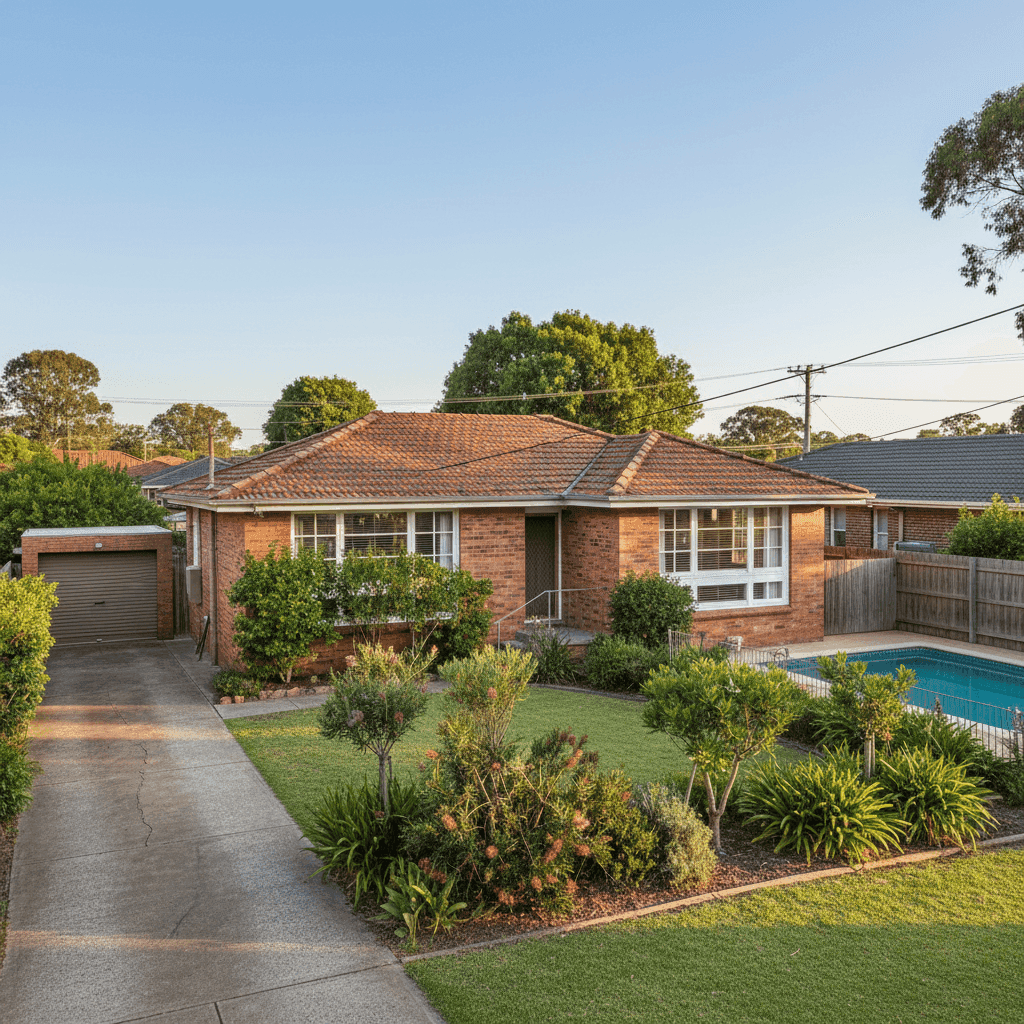
If you own a free standing home in Gymea, NSW 2227, you've probably wondered whether the premium sitting in your inbox is genuinely competitive — or whether you're quietly overpaying year after year. In this article, we break down a real home and contents insurance quote for a three-bedroom, two-bathroom brick veneer home in Gymea, compare it against suburb, state, and national benchmarks, and share practical tips to help you get better value on your cover.
---
Is This Quote Fair?
The quote in question comes in at $3,271 per year (or $320 per month) for combined home and contents cover, with a building sum insured of $760,000 and contents valued at $287,000. Both the building and contents excess are set at $1,000.
Based on CoverClub's pricing data, this premium is rated Expensive — above average for the Gymea area. To put that in perspective, the suburb average annual premium sits at $2,131, and the median is even lower at $1,635. That means this quote is roughly 53% above the suburb average and nearly double the median — a meaningful gap worth investigating before you accept the renewal or sign on the dotted line.
That said, "expensive" doesn't automatically mean "wrong." A higher-than-average premium can reflect legitimate risk factors tied to the specific property — more on those shortly. The key is knowing whether the price is justified, or simply the result of not shopping around.
---
How Gymea Compares
To understand whether this quote is truly out of step, it helps to zoom out and look at the broader picture. You can explore the full local breakdown on the Gymea suburb stats page.
| Benchmark | Annual Premium |
|---|---|
| This quote | $3,271 |
| Gymea suburb average | $2,131 |
| Gymea suburb median | $1,635 |
| Gymea 25th percentile | $1,408 |
| Gymea 75th percentile | $2,778 |
| NSW average | $9,528 |
| NSW median | $3,770 |
| National average | $5,347 |
| National median | $2,764 |
A few things stand out here. First, while this quote feels steep locally, it actually sits below both the NSW average and the national average — a reminder that home insurance costs vary enormously across the country, and New South Wales in particular has some very high-risk postcodes driving those state-level figures upward. You can dig deeper into statewide trends on the NSW insurance stats page, or compare against national benchmarks.
Second, the Gymea sample size of 16 quotes is relatively modest, so averages can shift with just a few outliers. It's worth noting that the 75th percentile sits at $2,778 — meaning this quote is above even the top quarter of local pricing, which reinforces the "expensive" rating.
The Sutherland LGA average of $23,423 appears unusually elevated and is likely skewed by high-value or high-risk properties elsewhere in the council area, so it's less useful as a direct comparison for a standard residential home in Gymea.
---
Property Features That Affect Your Premium
Insurance pricing isn't arbitrary — it's driven by the specific characteristics of your home. Here's how the features of this property likely influence the premium:
Brick veneer construction and tiled roof are generally viewed favourably by insurers. These materials are fire-resistant and durable, and tend to attract lower premiums compared to timber-framed or Colorbond-roofed homes. That's a positive for this property.
Stumps foundation is worth noting. Homes built on stumps — common in older Australian suburbs — can be more susceptible to subsidence, movement, and pest-related damage over time. Some insurers price this risk into the premium, particularly for homes built in the 1970s where the original stumps may be ageing.
Construction year: 1970. Older homes often carry higher premiums simply because ageing electrical wiring, plumbing, and structural components can increase the likelihood of a claim. A 50-plus-year-old home may also cost more to rebuild to current Australian standards, which pushes the sum insured — and therefore the premium — upward.
Timber and laminate flooring can be more costly to replace than tiles or carpet, which may contribute modestly to the contents and building valuations.
Swimming pool adds both value and liability. Pools increase the replacement cost of the property and can introduce public liability considerations, both of which tend to nudge premiums higher.
Ducted climate control is a significant asset. Ducted systems are expensive to repair or replace, and their presence typically increases the building sum insured — which at $760,000 is already substantial for a 214 sqm home, though not unreasonable in the current Gymea market.
No cyclone risk is a genuine saving grace. Properties in cyclone-prone regions of Queensland and northern Australia face dramatically higher premiums. Being in the southern Sydney suburbs means this risk factor simply doesn't apply.
---
Tips for Homeowners in Gymea
1. Review your sum insured carefully. At $760,000 for a 214 sqm home, the building sum insured is significant. Make sure this reflects the actual cost to rebuild — not the market value of the land and home combined. Overinsuring can quietly inflate your premium without adding real protection. Use a building cost calculator or speak to a quantity surveyor if you're unsure.
2. Shop around — seriously. The gap between this quote and the suburb median ($1,635) is over $1,600 per year. That's real money. Insurers use different risk models, and prices for the same property can vary substantially between providers. Comparing multiple quotes is one of the most effective ways to reduce your premium without changing your cover.
3. Consider your excess settings. Both excesses here are set at $1,000. Opting for a higher voluntary excess — say, $2,000 or $2,500 — can meaningfully reduce your annual premium. Just make sure the excess amount is something you could comfortably cover in the event of a claim.
4. Ask about discounts for home security and maintenance. Some insurers offer reduced premiums for homes with monitored alarm systems, deadbolts, or smoke detectors. For an older home like this one, demonstrating that you've updated the electrical system or re-stumped recently can also support a more favourable assessment.
---
Ready to Find a Better Rate?
Whether you're reviewing a renewal or shopping for the first time, comparing quotes is the single most effective step you can take. CoverClub makes it easy to see what multiple insurers would charge for your specific home — no obligation, no jargon.