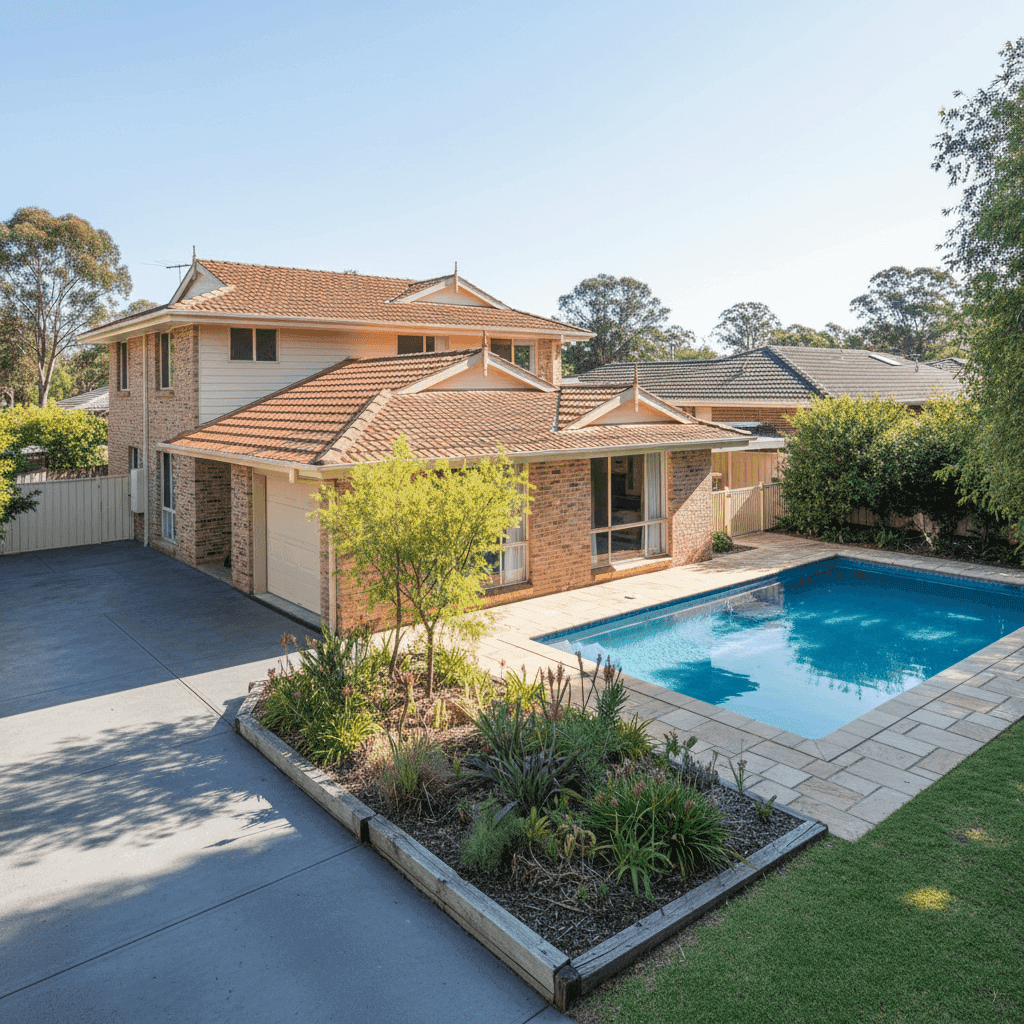
If you own a semi detached home in Gymea, NSW 2227, you're living in one of Sydney's well-established southern suburbs — a family-friendly pocket of the Sutherland Shire known for its leafy streets and solid brick homes. Like any homeowner, keeping your property protected with the right insurance is essential, but knowing whether you're paying a fair price can be surprisingly difficult. This article breaks down a real home and contents insurance quote for a five-bedroom, three-bathroom semi detached in Gymea, so you can benchmark your own cover and make a more informed decision.
---
Is This Quote Fair?
The short answer: yes — and then some. This quote comes in at $1,895 per year (or $185/month) for a combined home and contents policy covering a building sum insured of $1,005,000 and $80,000 in contents. CoverClub's pricing engine rates this as Cheap (Below Average) — meaning it sits well below what most comparable homeowners are paying.
To put that in perspective:
- The NSW state average premium is $3,801/year, and the median sits at $3,410/year
- The national average is $2,965/year, with a national median of $2,716/year
At $1,895/year, this policy is paying roughly 50% less than the NSW average and about 36% less than the national average. That's a meaningful saving — we're talking close to $1,900 annually compared to what a typical NSW homeowner forks out. Over five years, that compounds to nearly $10,000 in potential savings.
It's worth noting that the Sutherland LGA average of $23,423/year is an outlier figure likely driven by a small number of very high-value or high-risk properties in the dataset, and shouldn't be used as a direct benchmark for a standard residential home like this one. You can explore more granular data on the Gymea suburb stats page.
---
How Gymea Compares
Understanding how your suburb stacks up against broader benchmarks is one of the most useful things you can do as a homeowner shopping for insurance. Here's a snapshot:
| Benchmark | Annual Premium |
|---|---|
| This Quote | $1,895 |
| NSW State Average | $3,801 |
| NSW State Median | $3,410 |
| National Average | $2,965 |
| National Median | $2,716 |
Gymea itself sits in a relatively low-risk zone for many of the perils that drive premiums sky-high in other parts of Australia. There's no cyclone risk, the area is not classified as a high bushfire zone compared to more inland or elevated parts of NSW, and the suburb doesn't face the kind of coastal storm surge exposure you'd see in beachside postcodes.
For broader context on how NSW premiums compare to the rest of the country, visit the NSW insurance stats page or check out national home insurance data.
---
Property Features That Affect Your Premium
Insurance underwriters assess dozens of variables when pricing a policy. Here's how this particular property's features likely influence the premium:
Double Brick Construction
Double brick walls are highly regarded by insurers. They offer superior resistance to fire, wind, and general impact compared to timber or clad construction. This is one of the most premium-friendly building materials available in Australia, and it almost certainly contributes to the competitive rate on this quote.
Tiled Roof
Terracotta or concrete tiles are a solid mid-range roofing choice from an insurance perspective — more durable than Colorbond in some hail scenarios, and far more resilient than older asbestos or fibrous cement sheeting. A well-maintained tile roof on a home built in 2015 presents minimal risk to an insurer.
Slab Foundation
A concrete slab is a stable, low-maintenance foundation type that reduces the risk of subsidence and pest-related structural damage. Compared to older suspended timber floors or pier-and-beam constructions, slab foundations are generally viewed favourably at underwriting.
Built in 2015
A relatively modern construction year works in your favour. Homes built after 2010 typically comply with updated building codes, including improved fire resistance standards and wind load requirements. Insurers generally price newer homes more competitively than older stock.
Swimming Pool
Having a pool on the property does introduce some additional liability considerations — primarily around public liability cover, which is usually bundled into a standard home policy. It's worth confirming your policy explicitly covers pool-related liability and any fixed pool equipment such as pumps and filtration systems.
Ducted Climate Control
Ducted air conditioning systems are a common inclusion in modern homes and are generally covered as a fixed fitting under building insurance. However, it's worth checking whether your policy covers mechanical breakdown separately, as standard home insurance typically covers damage from insured events (like storms or fire) rather than general wear and tear.
Building Size: 235 sqm
At 235 sqm, this is a substantial semi detached home. The $1,005,000 sum insured works out to approximately $4,277 per sqm — a reasonable rebuild cost estimate for a double brick, tiled-roof property in Sydney's south, though it's always worth reviewing this figure with a quantity surveyor to ensure you're not underinsured.
---
Tips for Homeowners in Gymea
1. Review your sum insured annually Construction costs have risen significantly across Sydney in recent years. A rebuild estimate that was accurate in 2022 may no longer reflect current labour and materials costs. Use a building cost calculator or engage a quantity surveyor every year or two to make sure your $1,005,000 sum insured still holds up.
2. Check your pool liability cover If you have guests — especially children — using your pool, confirm that your policy includes adequate public liability cover. Most standard home policies include $10–$20 million in liability, but it's worth reading the Product Disclosure Statement (PDS) to verify exactly what's covered and under what circumstances.
3. Bundle building and contents strategically This quote already combines building and contents, which often attracts a multi-cover discount. However, it's still worth getting separate quotes for each to make sure the bundled price is genuinely competitive. Sometimes splitting cover across two providers can save money, though the admin convenience of a single policy has its own value.
4. Don't set and forget Even a great premium today doesn't mean you're locked into the best deal forever. Insurers regularly reprice their books, and loyalty doesn't always pay. Set a calendar reminder to compare quotes at renewal time each year — even 30 minutes of research could save you hundreds.
---
Ready to Compare?
Whether you're reviewing your current policy or shopping for cover for the first time, comparing quotes is the smartest move you can make. [Get a home insurance quote at CoverClub](https://coverclub.com.au/?focus=address) and see how your premium stacks up against real data from homeowners across Gymea, NSW, and Australia.