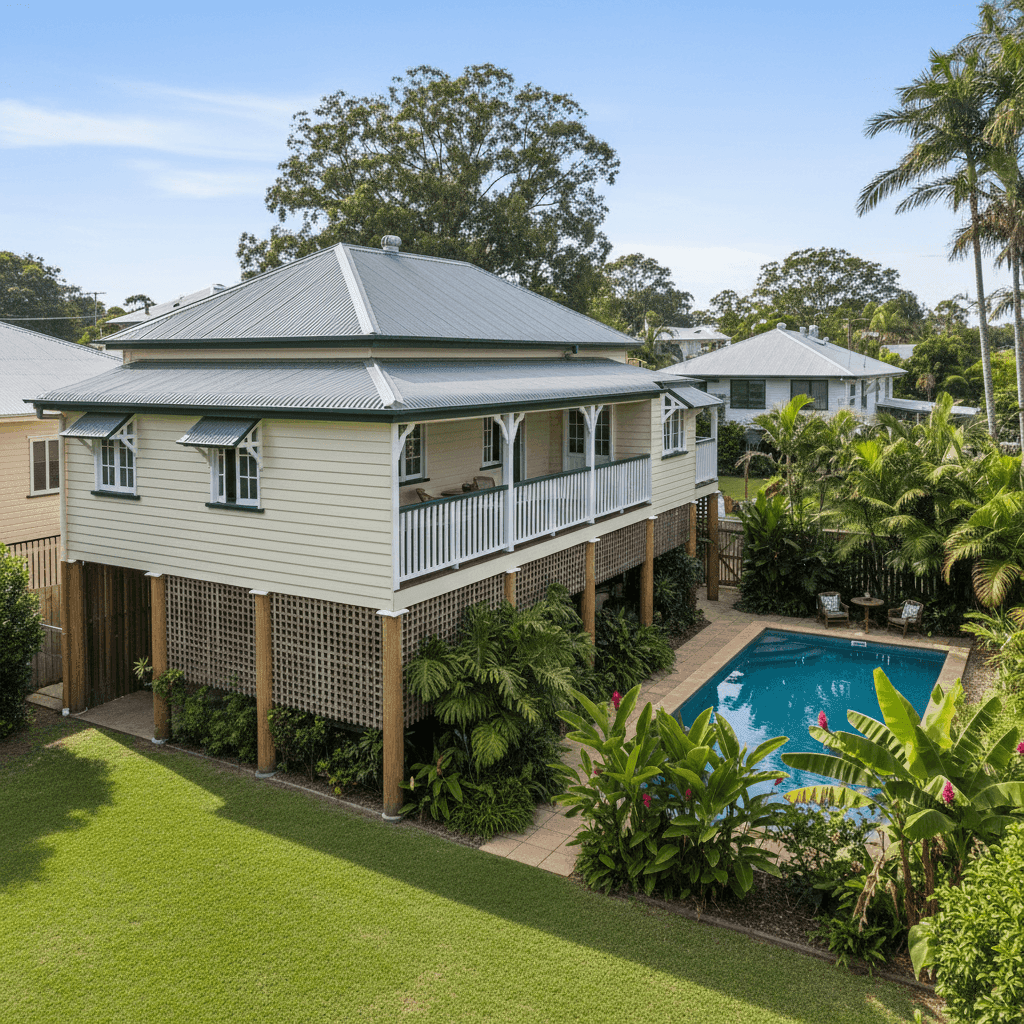
Gympie is a well-established regional city in Queensland's Sunshine Coast hinterland, known for its rich gold-rush history, community spirit, and a housing stock that reflects its heritage — including plenty of older weatherboard homes on stumps. If you own a free standing home in the Gympie 4570 area, understanding what drives your insurance premium is an important step toward making sure you're getting fair value for your cover.
In this article, we break down a recent home and contents insurance quote for a 4-bedroom, 2-bathroom property in Gympie — examining how it stacks up against local, state, and national benchmarks, and what property features are likely influencing the cost.
---
Is This Quote Fair?
The quote in question comes in at $2,623 per year (or approximately $257 per month) for combined home and contents cover, with a building sum insured of $930,000 and contents valued at $110,000. The building excess sits at $3,000, while the contents excess is $1,000.
Our price rating for this quote is FAIR — Around Average.
Based on data from 42 quotes collected for the Gympie 4570 postcode, the suburb average premium is $2,309 per year and the median sits at $2,284. This quote lands above both of those figures, placing it closer to the 75th percentile ($2,901) than the 25th ($1,623). That said, it's not out of range — it sits comfortably within the middle band of what Gympie homeowners are paying.
Given the property's characteristics (more on those below), a modest premium above the suburb median is understandable. The "Fair" rating reflects that while there may be room to find a slightly better price with a different insurer, this quote is not unreasonable for the risk profile involved.
---
How Gympie Compares
One of the most striking takeaways from the comparison data is just how favourably Gympie fares relative to the broader Queensland insurance market.
| Benchmark | Average Premium |
|---|---|
| Gympie 4570 (suburb average) | $2,309/yr |
| LGA – Fraser Coast | $3,385/yr |
| Queensland state average | $4,547/yr |
| Queensland state median | $3,931/yr |
| National average | $2,965/yr |
| National median | $2,716/yr |
Queensland homeowners are paying some of the highest insurance premiums in the country — the state average of $4,547 is dramatically higher than the national average of $2,965. This is largely driven by the elevated natural disaster risk across much of the state, particularly in coastal, flood-prone, and cyclone-affected regions.
Gympie, however, sits in a comparatively more favourable position. The suburb average of $2,309 is well below both the Queensland state average and the national average, and even below the national median of $2,716. It's also notably cheaper than the broader Fraser Coast LGA average of $3,385, suggesting that Gympie's specific risk profile is viewed more favourably by insurers than some surrounding areas.
For Queensland homeowners, a premium around the $2,600 mark for a well-appointed 4-bedroom home with contents cover is actually quite competitive in the broader context of the state.
---
Property Features That Affect Your Premium
Several characteristics of this property are likely influencing the premium, both positively and negatively.
Weatherboard Timber Walls
Weatherboard construction is extremely common in older Queensland homes and carries a mixed impact on premiums. Timber is considered a higher fire risk than brick or rendered masonry, and older weatherboard homes can be more susceptible to storm and water damage. Insurers typically price this material at a slight premium compared to brick veneer or double-brick alternatives.
Steel / Colorbond Roof
A Colorbond steel roof is generally viewed favourably by insurers. It's durable, low-maintenance, and performs well in high-wind conditions compared to terracotta or concrete tiles. This is a positive factor in the overall risk assessment.
Stump Foundation
The home is built on stumps — a very traditional Queensland construction method, particularly for homes of this era (built in 1966). While stumps provide excellent airflow and are well-suited to the local climate, they can introduce additional risk around structural movement and pest damage. Some insurers factor this into their pricing.
Timber and Laminate Flooring
Timber floors in a home on stumps can be more vulnerable to moisture and flooding compared to concrete slab flooring. In a region like Gympie, which has a documented history of flooding events, this is a relevant consideration.
Swimming Pool
The presence of a pool adds to the replacement cost of the property and introduces additional liability considerations. This will contribute modestly to the overall premium.
Construction Year (1966)
Older homes often attract slightly higher premiums due to the age of electrical wiring, plumbing, and structural components. A home built in 1966 is over 60 years old, and while many of these properties are beautifully maintained, insurers will factor in the increased likelihood of claims related to ageing infrastructure.
Building Sum Insured: $930,000
It's worth noting that the building sum insured of $930,000 is on the higher end for a 130 sqm home, even accounting for today's elevated construction costs. Homeowners should periodically review their sum insured to ensure it reflects current rebuild costs — neither underinsuring nor over-insuring the property.
---
Tips for Homeowners in Gympie
1. Review Your Sum Insured Annually
Construction costs have risen significantly in recent years. Use a building cost calculator or speak with a local builder to confirm your sum insured accurately reflects what it would cost to fully rebuild your home. Underinsurance is a real risk — but so is paying unnecessarily high premiums on an inflated sum.
2. Consider Your Excess Levels
This policy carries a $3,000 building excess and a $1,000 contents excess. Opting for a higher excess is one of the most straightforward ways to reduce your annual premium. If you have the financial buffer to cover a larger out-of-pocket amount in the event of a claim, increasing your excess could deliver meaningful savings.
3. Ask About Flood Cover
Gympie has experienced significant flood events historically, including major flooding along the Mary River. Make sure your policy explicitly includes flood cover — it's not always included by default — and understand exactly what's covered under your policy's definition of flood versus storm damage.
4. Shop Around at Renewal Time
The "Fair" rating on this quote means there's a reasonable chance a comparable level of cover is available at a lower price elsewhere. Insurance markets are competitive, and premiums can vary significantly between providers for the same property. Use a comparison tool like CoverClub to benchmark your renewal quote before automatically accepting it.
---
Find a Better Deal with CoverClub
Whether you're reviewing your current policy or shopping for cover on a new property, comparing quotes is the single most effective way to ensure you're not overpaying. At CoverClub, you can enter your address and instantly see how your premium compares to others in your suburb, your LGA, and across Queensland. It takes just a few minutes and could save you hundreds of dollars a year.