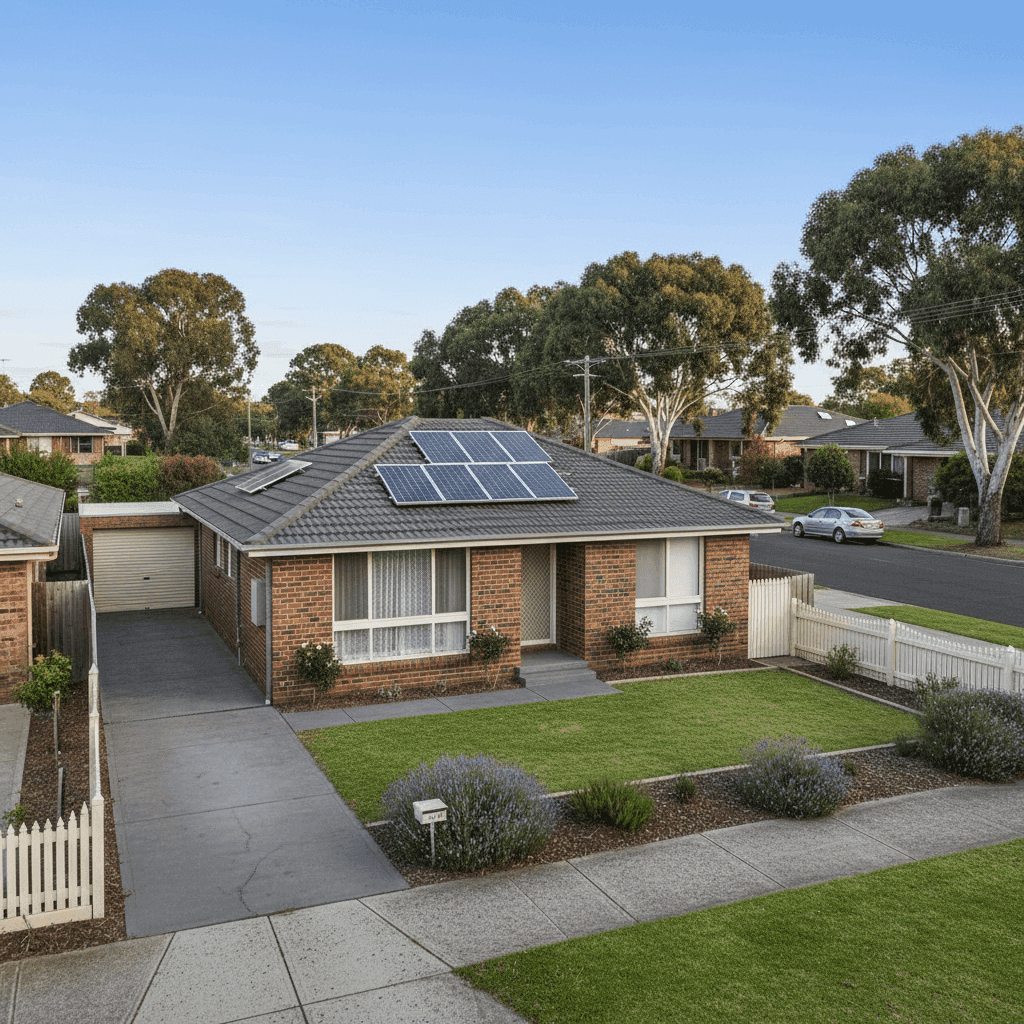
If you own a free standing home in Hadfield, VIC 3046, you're probably curious about what a fair home insurance premium looks like — and whether you're paying too much (or too little). This article breaks down a real building-only insurance quote for a four-bedroom, two-bathroom brick veneer home in Hadfield, comparing it against local, state, and national benchmarks to help you make a more informed decision.
---
Is This Quote Fair?
The annual premium for this quote comes in at $1,078 per year (or $110/month), covering building only with a $3,000 excess. Our price rating for this quote is CHEAP — below average for the suburb.
To put that in perspective, the suburb average for Hadfield sits at $1,662/year, with a median of $1,576/year. This quote lands well beneath even the 25th percentile of $1,261/year, meaning it's cheaper than at least 75% of quotes we've seen in the area. That's a meaningful saving — roughly $584 less per year than the typical Hadfield homeowner is paying.
Of course, a lower premium isn't always a sign of better value. It's worth checking what's included in the policy, what exclusions apply, and whether the sum insured of $407,000 is adequate to fully rebuild the property in the event of a total loss. Building costs in Melbourne's northern suburbs have risen considerably in recent years, so it's worth reviewing that figure regularly.
That said, based purely on price, this quote represents a genuinely competitive outcome for a Hadfield property.
---
How Hadfield Compares
Understanding where Hadfield sits in the broader insurance landscape is useful context for any homeowner. Here's how the numbers stack up:
| Benchmark | Average Premium | Median Premium |
|---|---|---|
| Hadfield (3046) | $1,662/yr | $1,576/yr |
| LGA (Moreland) | $1,551/yr | — |
| Victoria | $3,000/yr | $2,718/yr |
| National | $5,347/yr | $2,764/yr |
Hadfield premiums are notably lower than the Victorian state average, which itself is significantly below the national average — largely driven up by high-risk areas in Queensland, Western Australia, and the Northern Territory that face cyclone, flood, and extreme weather exposure.
You can explore the full breakdown of local insurance costs on the Hadfield suburb stats page, or compare how Victoria stacks up on the VIC state stats page. For a bird's-eye view of the insurance market, the national stats page gives useful context on what Australians are paying across the country.
It's worth noting that the Hadfield data is based on a sample of 28 quotes, which gives a reasonable (if not exhaustive) picture of the local market. As more quotes are collected, these averages will become increasingly reliable.
---
Property Features That Affect Your Premium
Insurers assess risk based on a wide range of property characteristics. Here's how the features of this particular home are likely influencing its premium:
Brick Veneer Walls Brick veneer is one of the most common external wall types in Melbourne's suburban homes, and insurers generally view it favourably. It offers solid fire resistance and durability compared to timber-framed or clad alternatives, which can translate into lower premiums.
Tiled Roof Concrete or terracotta tiles are considered a robust roofing material. They hold up well against hail and general weathering, and are less susceptible to fire than Colorbond or corrugated iron in some assessments — though this can vary by insurer.
Slab Foundation A concrete slab foundation is typically seen as low-risk by underwriters. It's structurally stable and less prone to subsidence issues than older pier-and-beam foundations, particularly in areas with reactive clay soils — which are common across parts of Melbourne's north.
Solar Panels This property has solar panels installed, which is worth flagging. Most standard building policies cover solar panels as part of the building sum insured, but it's essential to confirm this with your insurer. Panels can be expensive to replace, and some policies may apply sub-limits or exclusions for storm or hail damage to panels.
Ducted Climate Control Ducted heating and cooling systems are considered a fixed building fixture and are typically included under building cover. Their presence can slightly increase the rebuild cost estimate, so it's important that the sum insured accounts for the full cost of replacing these systems.
Construction Year: 1996 A home built in 1996 is approaching 30 years old — not ancient, but old enough that some components (roof tiles, plumbing, electrical wiring) may be due for attention. Insurers may factor in the age of a property when pricing risk, particularly for older electrical systems.
No Pool, No Cyclone Risk The absence of a swimming pool removes a common liability exposure, and Hadfield's location in metropolitan Melbourne means there's no cyclone risk — a factor that significantly drives up premiums in northern Australia.
---
Tips for Homeowners in Hadfield
Whether you're reviewing your existing policy or shopping for a new one, these tips are worth keeping in mind:
- Review your sum insured annually. Building costs in Victoria have risen sharply in recent years due to labour shortages and material price increases. A sum insured that was accurate three years ago may no longer be sufficient to cover a full rebuild. Use a building cost calculator or speak with a quantity surveyor if you're unsure.
- Check your solar panel coverage. Confirm with your insurer that your solar panels are explicitly covered under your building policy and understand any sub-limits that apply. Given the cost of modern solar systems, a gap in coverage here could be costly.
- Understand your excess before you claim. This policy carries a $3,000 building excess. That's on the higher side, and it means smaller claims may not be worth lodging (as claiming can affect your no-claims history). Make sure the excess level reflects your financial comfort zone.
- Don't auto-renew without comparing. Insurance premiums can shift significantly year to year, and loyalty doesn't always pay. Even if your current insurer has been competitive, it's worth getting a few comparison quotes at renewal time to make sure you're still getting a fair deal.
---
Compare Your Own Quote
Curious how your Hadfield home insurance stacks up? CoverClub makes it easy to benchmark your premium against real data from your suburb, LGA, and state. Whether you're buying, renewing, or just checking in, get a quote at CoverClub and see exactly where you stand in seconds.
---