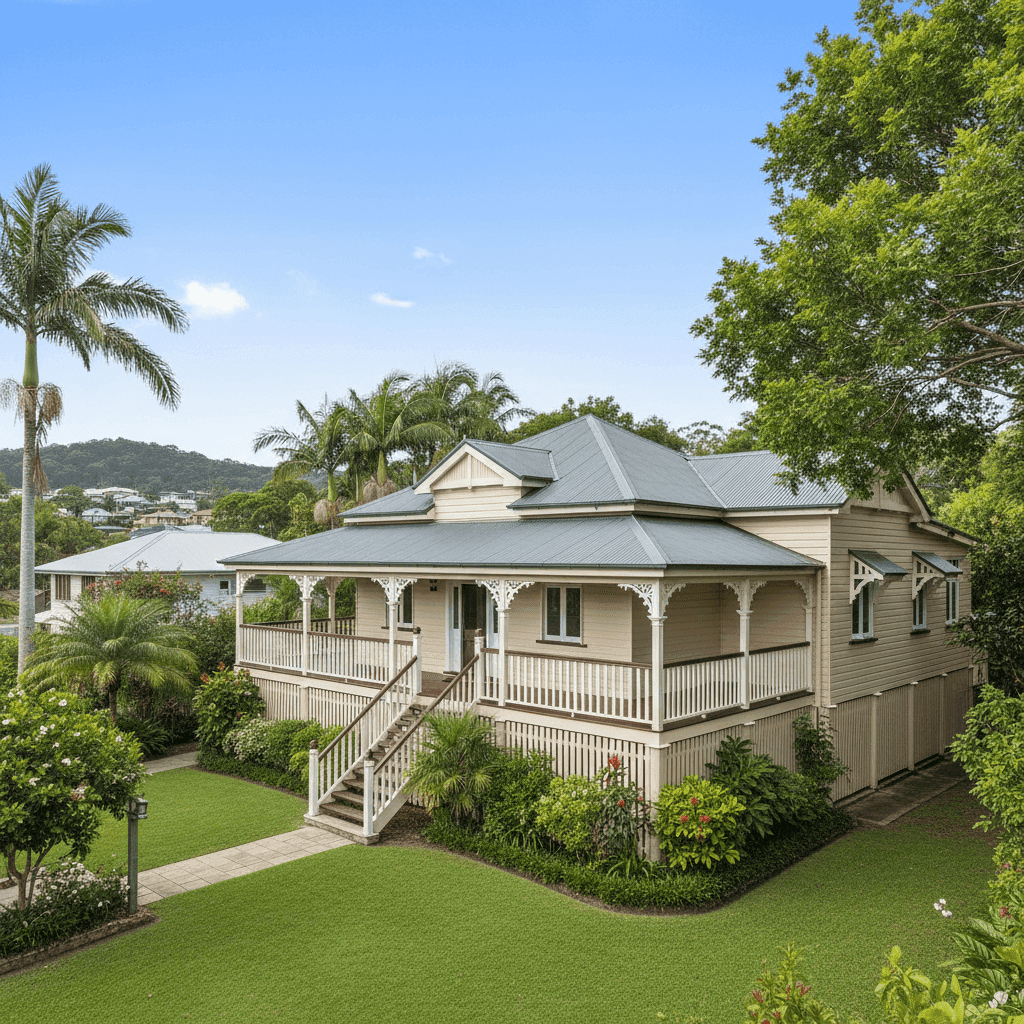
Hamilton is one of Brisbane's most established and sought-after inner suburbs, sitting just a few kilometres from the CBD along the Brisbane River. Known for its leafy streets, elevated blocks, and a rich stock of pre-war Queenslander homes, it's a suburb where heritage character meets premium real estate. If you own a free-standing home here, you're likely sitting on a significant asset — and your building insurance should reflect that.
This article breaks down a real building-only insurance quote for a four-bedroom, two-bathroom free-standing home in Hamilton (postcode 4007), constructed in 1913 with weatherboard timber walls, a steel/Colorbond roof, and a stump foundation. The sum insured is $1,502,000, with an annual premium of $4,437 (or $431/month) and a $1,000 building excess. Let's unpack what that means in context.
---
Is This Quote Fair?
The short answer: yes, broadly speaking. This quote has been rated Fair (Around Average), which means it sits comfortably within the typical range for the area — not a bargain, but not an outlier either.
To put the $4,437 annual premium in perspective:
- The suburb median for Hamilton (4007) is $4,709/yr, meaning this quote comes in below the median — a positive sign.
- The 25th percentile for the suburb is $3,380/yr, and the 75th percentile is $6,560/yr, placing this quote squarely in the middle of the pack.
- Compared to the QLD state median of $3,903/yr, this quote is modestly higher — which is expected given Hamilton's premium property values and the significant sum insured.
- Against the national median of $2,764/yr, it looks more expensive, but that comparison is less meaningful when you consider the high rebuild cost of a heritage home in an inner-Brisbane suburb.
For a property with a sum insured of $1.5 million, a pre-war construction date, and the complexities of timber/stump construction, landing near the suburb median is a reasonable outcome. Homeowners in Hamilton should feel reassured rather than alarmed by this figure.
---
How Hamilton Compares
One figure that stands out immediately in the Hamilton suburb data is the suburb average premium of $56,360/yr — dramatically higher than the median of $4,709/yr. This enormous gap signals a small number of very high-value properties pulling the average upward, which is common in prestige suburbs. With only 34 quotes in the sample, a handful of large sums insured can skew the average significantly. The median is a far more reliable benchmark for typical homeowners in this postcode.
Here's a quick comparison snapshot:
| Benchmark | Premium |
|---|---|
| This quote | $4,437/yr |
| Hamilton suburb median | $4,709/yr |
| Hamilton suburb 25th percentile | $3,380/yr |
| Hamilton suburb 75th percentile | $6,560/yr |
| QLD state median | $3,903/yr |
| National median | $2,764/yr |
Zooming out to the QLD state picture, the state average of $9,129/yr is heavily influenced by high-risk areas in North Queensland — cyclone-prone regions like Cairns, Townsville, and the Whitsundays — which push premiums significantly higher. Hamilton is not in a designated cyclone risk area, which works in its favour.
At the national level, the average of $5,347/yr and median of $2,764/yr reflect enormous variation across Australia's diverse climates and property types. Coastal Queensland properties, older homes, and high-value builds all attract higher premiums than, say, a brick veneer home in suburban Melbourne.
---
Property Features That Affect Your Premium
Several characteristics of this property have a meaningful impact on the premium — some pushing it higher, others keeping it in check.
Age and construction (1913, weatherboard timber walls) This is one of the most significant rating factors. A home built in 1913 is over 110 years old, and weatherboard timber construction is more susceptible to fire, moisture damage, and general wear than modern brick or rendered finishes. Insurers price this risk accordingly. That said, well-maintained Queenslanders are genuinely resilient — the challenge is demonstrating that maintenance to underwriters.
Stump foundation and elevated design The property sits on stumps and is elevated by less than one metre. Stump foundations are common in Queensland's older housing stock and can be a double-edged sword for insurance purposes. On one hand, elevation can reduce flood inundation risk in some scenarios. On the other, stumps require periodic inspection and replacement, and the underfloor space can be a vulnerability. Insurers will factor in the additional complexity of repairing or rebuilding an elevated structure.
Colorbond steel roof This is actually a positive for insurers. Colorbond roofing is durable, fire-resistant, and widely used in Australian conditions. It's a modern upgrade that likely replaced the original roof material and may help moderate the premium compared to older terracotta or corrugated iron alternatives.
Timber and laminate flooring Timber floors in a 110-year-old home are both a heritage feature and a risk consideration — they can be expensive to repair or replace, particularly if period-matched materials are required. This contributes to the high sum insured.
Ducted climate control The presence of ducted air conditioning adds to the rebuild cost and is appropriately reflected in the sum insured. It's a meaningful inclusion that many homeowners overlook when calculating their coverage needs.
Sum insured: $1,502,000 This is a substantial figure, but given the property's size (268 sqm), heritage construction, and inner-Brisbane location, it's not unreasonable. Underinsurance is a genuine risk with older homes — rebuild costs for heritage properties routinely exceed expectations due to the need for specialist trades and period-appropriate materials.
---
Tips for Homeowners in Hamilton
1. Review your sum insured regularly Construction costs in Brisbane have risen sharply in recent years. A sum insured set two or three years ago may no longer reflect the true cost to rebuild your home. Use a qualified quantity surveyor or an online building cost calculator to validate your figure annually — especially for a heritage property where specialist labour and materials add significant cost.
2. Maintain your stumps and subfloor Insurers may apply exclusions or increase premiums if subfloor structures show signs of deterioration. Have your stumps inspected every few years and address any issues promptly. Keeping records of maintenance can also support a claim if damage occurs.
3. Compare quotes before renewal A "Fair" rating means you're around average — but average isn't necessarily the best available. The 25th percentile for Hamilton sits at $3,380/yr, which suggests there are more competitive options in the market. Use CoverClub's free quote comparison tool to see what other insurers are offering for your specific property before your policy renews.
4. Consider bundling or adjusting your excess If cashflow allows, opting for a higher excess (say, $2,500 instead of $1,000) can meaningfully reduce your annual premium. Conversely, if you have contents to insure, bundling building and contents cover with the same insurer often unlocks a discount worth exploring.
---
Find a Better Deal on Your Hamilton Home Insurance
Whether you're reviewing an existing policy or shopping for the first time, comparing quotes is the single most effective way to ensure you're not overpaying. CoverClub makes it easy to benchmark your premium against real data from homeowners in your suburb.
Get a home insurance quote for your Hamilton property today and see how your premium stacks up — it takes just a few minutes and could save you hundreds.