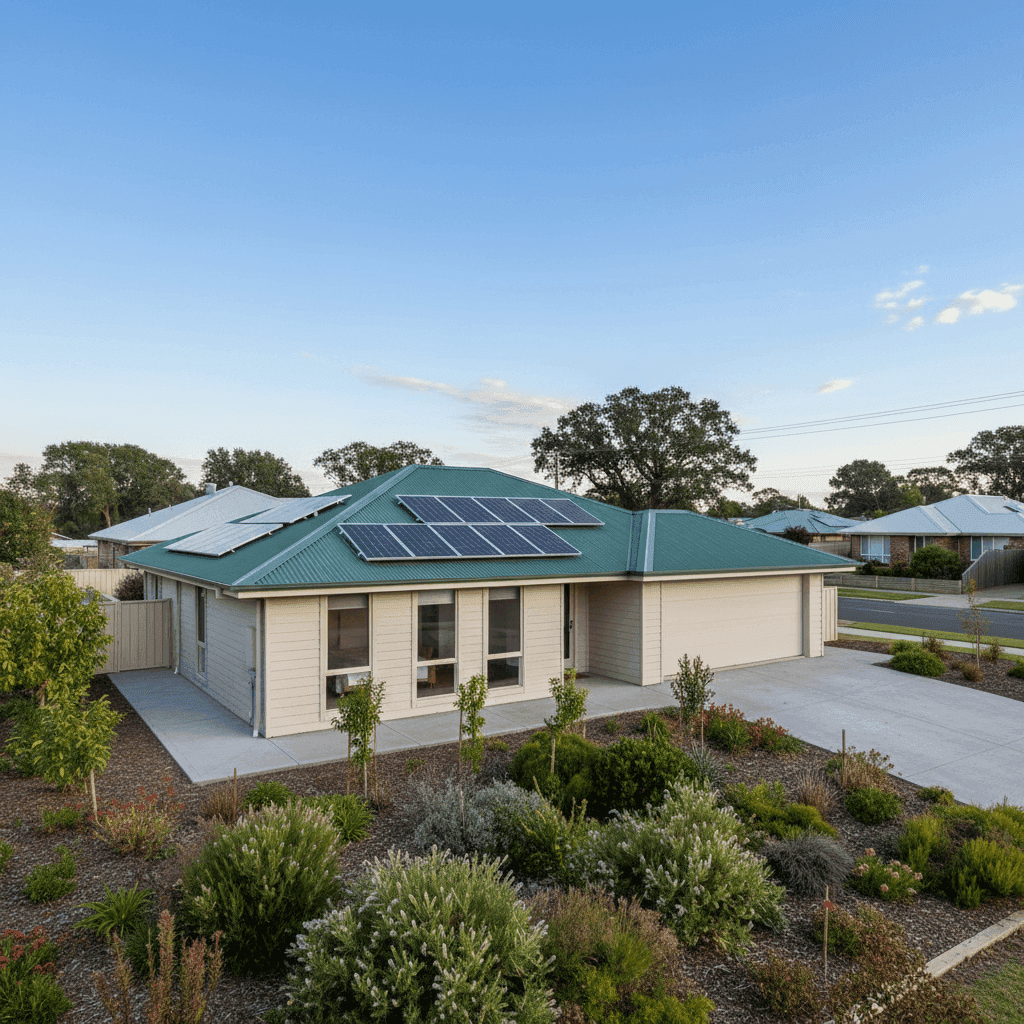
If you own a free standing home in Hamilton, VIC 3300, you've probably wondered whether you're paying a fair price for home insurance — or quietly overpaying while your insurer quietly profits. This article breaks down a real building-only insurance quote for a four-bedroom home in Hamilton, benchmarks it against local, state, and national data, and offers practical tips to help you get the best value cover.
---
Is This Quote Fair?
The quote in question comes in at $2,149 per year (or $219/month) for building-only cover on a four-bedroom, single-bathroom free standing home in Hamilton. The sum insured is $513,000, with a $1,000 building excess.
Our price rating for this quote is FAIR — Around Average, and the data backs that up. At $2,149/yr, this premium sits almost exactly in line with both the Hamilton suburb average ($2,168/yr) and the suburb median ($2,137/yr). In other words, this homeowner is paying essentially what most of their neighbours are paying — not a bargain, but certainly not being taken for a ride.
To put it in perspective:
- The suburb 25th percentile is $1,780/yr — meaning roughly a quarter of Hamilton homeowners are finding cheaper cover.
- The suburb 75th percentile is $2,500/yr — so about a quarter are paying more.
This quote lands comfortably in the middle of the local market. Whether that's good enough depends on your appetite for shopping around — and there's always room to do better.
---
How Hamilton Compares to the Rest of Victoria and Australia
One of the most reassuring things about this quote is how well Hamilton stacks up against broader benchmarks. Check out the full Hamilton suburb insurance stats for more detail, but here's the headline picture:
| Benchmark | Average Premium |
|---|---|
| Hamilton (suburb average) | $2,168/yr |
| Southern Grampians LGA average | $3,537/yr |
| Victoria state average | $3,000/yr |
| Victoria state median | $2,718/yr |
| National average | $5,347/yr |
| National median | $2,764/yr |
Hamilton homeowners are paying significantly less than the Victorian state average and well below the national average. Compared to the broader VIC state insurance data, Hamilton premiums run about 28% cheaper than the Victorian average — a meaningful difference that reflects the town's relatively low-risk profile.
It's also worth noting that the Southern Grampians LGA average of $3,537/yr is notably higher than Hamilton's suburb average. This suggests that some surrounding areas within the same local government zone carry higher risk profiles — bushfire exposure, for instance — pushing the LGA figure up. Hamilton itself appears to be one of the more affordable pockets within the region.
Looking at the national insurance comparison data, the contrast is even starker. The national average of $5,347/yr is more than double what Hamilton homeowners typically pay. Much of that national figure is skewed upward by high-risk coastal and cyclone-prone regions in Queensland and Western Australia — areas where premiums can be eye-watering.
For Hamilton, the numbers paint a relatively benign insurance environment.
---
Property Features That Affect Your Premium
Every home is different, and insurers assess a range of property characteristics when calculating your premium. Here's how the features of this particular home likely influence the quote:
Hardiplank/Hardiflex Cladding
The external walls are clad in Hardiplank Hardiflex, a fibre cement product that's popular across regional Victoria. It's considered a solid, fire-resistant material and generally attracts more favourable underwriting treatment than older weatherboard or timber cladding. This is likely a mild positive for the premium.
Steel/Colorbond Roof
A Colorbond steel roof is one of the most insurer-friendly roof types available in Australia. It's durable, low-maintenance, resistant to fire and hail, and has a long lifespan. This is a genuine premium advantage compared to homes with ageing tile or asbestos roofing.
Slab Foundation
Built on a concrete slab, this home avoids some of the underfloor moisture and pest issues associated with raised stumped foundations. Slab homes are generally straightforward to insure.
Solar Panels
The home has solar panels, which are typically covered under building insurance as a fixed structure. It's worth confirming with your insurer that the panels are explicitly included in the sum insured — some policies treat them as an optional extra or have specific sub-limits. Given the cost of modern solar systems, this is an important detail to check.
Construction Year: 1989
At around 35 years old, this home is mature but not ancient. Homes of this era are generally well-constructed but may have ageing plumbing, wiring, or roofing components that insurers factor into their risk assessment. Keeping up with maintenance is key.
Timber and Laminate Flooring
Timber and laminate floors can be more susceptible to water damage than tiles, which may be a minor consideration for claims related to burst pipes or flooding. Ensuring your sum insured accurately accounts for the cost of floor replacement is worthwhile.
Slightly Elevated
The home is elevated by less than one metre, which can provide a small degree of protection from surface water inundation — a modest but not insignificant factor in flood risk assessment.
---
Tips for Homeowners in Hamilton
1. Review Your Sum Insured Annually
With $513,000 in building cover, this policy appears well-calibrated for a 205 sqm home in regional Victoria. However, construction costs have risen sharply in recent years. Make it a habit to reassess your sum insured each renewal — underinsurance is one of the most common and costly mistakes homeowners make.
2. Shop Around at Renewal Time
This quote is rated as fair — around the suburb average — but that doesn't mean it's the best available. The gap between the 25th and 75th percentile in Hamilton is around $720/yr. A quick comparison could put you in the lower bracket without sacrificing cover quality. Get a new quote at CoverClub to see what's on offer.
3. Confirm Solar Panel Coverage
If you have solar panels, ask your insurer specifically how they're treated under your policy. Are they included in the building sum insured? Is there a sub-limit? What happens if they're damaged by hail or a storm? Getting clarity upfront avoids nasty surprises at claim time.
4. Consider Your Excess Strategically
This policy carries a $1,000 building excess. Opting for a higher excess — say $2,000 — can meaningfully reduce your annual premium. If you have the financial buffer to cover a larger out-of-pocket cost in the event of a claim, this can be a smart way to lower ongoing costs.
---
Compare Your Home Insurance Today
Whether you're renewing your existing policy or shopping for the first time, comparing quotes is the single most effective way to ensure you're not overpaying. CoverClub makes it easy to benchmark your premium against real data from your suburb, your state, and across Australia.
Get a home insurance quote now at CoverClub and find out whether your current cover is genuinely competitive — or whether it's time to switch.