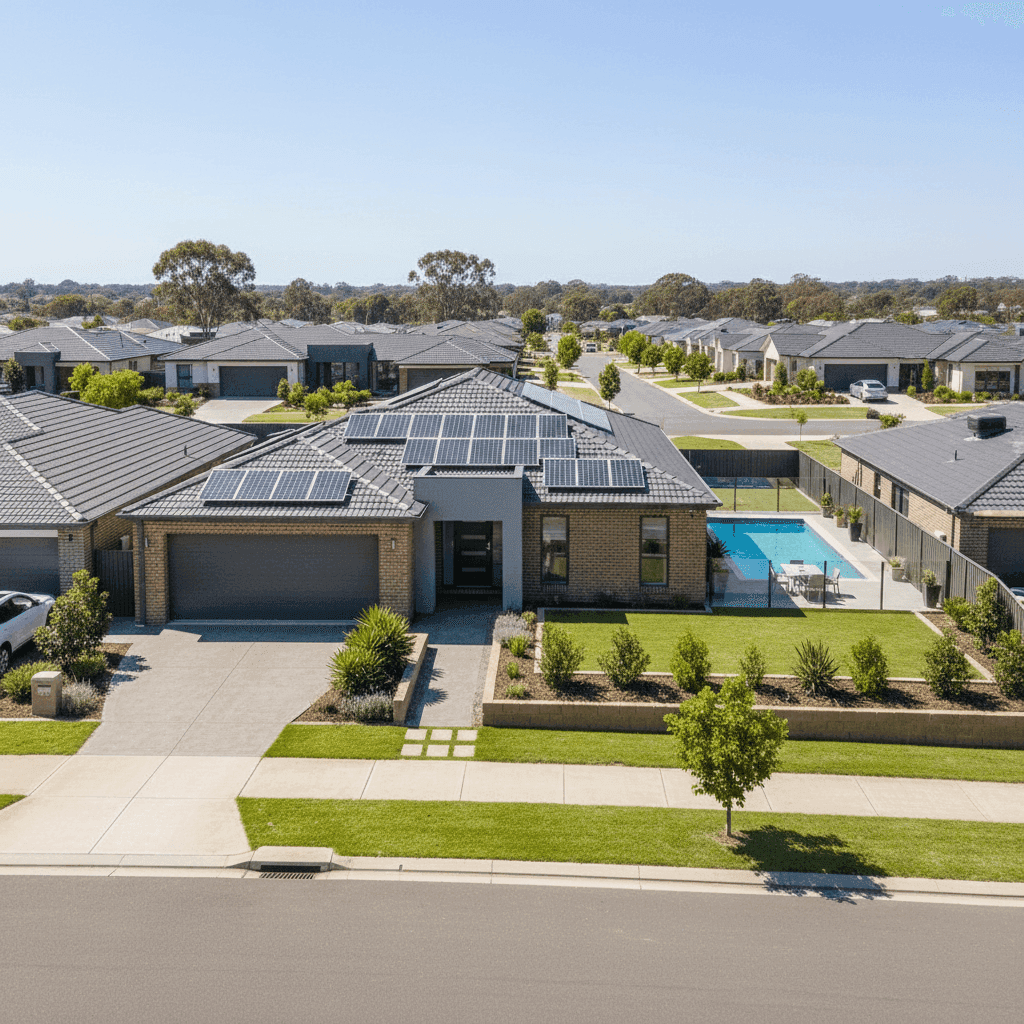
Hamlyn Terrace is a well-established residential suburb on the Central Coast of New South Wales, popular with families drawn to its quiet streets, modern housing stock, and easy access to both the M1 Pacific Motorway and nearby coastal lifestyle. If you own a free standing home here, understanding what you should be paying for home and contents insurance — and why — can make a significant difference to your household budget.
This article breaks down a recent home and contents insurance quote for a four-bedroom, four-bathroom free standing home in Hamlyn Terrace (postcode 2259), built in 2000 with brick veneer walls, a tiled roof, and a slab foundation. The property sits at 214 sqm and includes a swimming pool, solar panels, and ducted climate control. We'll look at whether the quoted premium is competitive, how it stacks up against local and national benchmarks, and what you can do to potentially reduce your costs.
---
Is This Quote Fair?
The quoted annual premium of $4,073 (or $390/month) covers building insurance to a sum insured of $1,402,000 and contents valued at $240,000, with a $5,000 excess applying to both building and contents claims.
Our price rating for this quote is Expensive — above average for the area.
To put that in context: the suburb average for Hamlyn Terrace sits at just $2,018 per year, with a median of $1,669. This quote comes in at more than double the local median, which is a meaningful gap worth investigating.
That said, context matters. The building sum insured of $1,402,000 is likely higher than many comparable properties in the suburb, and the $240,000 contents value adds meaningfully to the overall risk exposure the insurer is covering. Higher insured values naturally push premiums up, so a direct comparison with the suburb average — which reflects a broad mix of coverage levels — isn't entirely apples-to-apples. Even so, homeowners in this position should be actively shopping around to ensure they're not overpaying for the same level of coverage.
---
How Hamlyn Terrace Compares
Here's how this quote sits relative to broader benchmarks:
| Benchmark | Premium |
|---|---|
| This Quote | $4,073/yr |
| Hamlyn Terrace Suburb Average | $2,018/yr |
| Hamlyn Terrace Suburb Median | $1,669/yr |
| Hamlyn Terrace 75th Percentile | $2,476/yr |
| LGA Average (Cessnock) | $2,462/yr |
| NSW State Average | $9,528/yr |
| NSW State Median | $3,770/yr |
| National Average | $5,347/yr |
| National Median | $2,764/yr |
A few things stand out here. First, the NSW state average of $9,528 is extraordinarily high — this is heavily skewed by high-value properties and high-risk areas across the state, so the median of $3,770 is a more useful reference point. Against that metric, this quote of $4,073 is slightly above the NSW median but well below the state average, which suggests it's not wildly out of step for a well-appointed property with a substantial sum insured.
Compared to the national median of $2,764, however, the quote is noticeably higher. And against the Hamlyn Terrace suburb data — based on a sample of 26 quotes — it sits above the 75th percentile of $2,476, meaning it's more expensive than at least three-quarters of quotes seen locally.
The Cessnock LGA average of $2,462 further reinforces that this premium is on the higher end for the region.
---
Property Features That Affect Your Premium
Several characteristics of this property influence how insurers price the risk — some favourably, some less so.
Brick veneer construction and tiled roof are generally viewed positively by insurers. Brick veneer is considered more resilient than timber or clad weatherboard, and tiles are a durable, fire-resistant roofing material. These features typically attract lower premiums compared to properties with lightweight cladding or metal roofing in certain configurations.
Slab foundation is standard for properties of this era in NSW and doesn't typically add a loading to premiums, though it can affect claims outcomes in subsidence events.
Timber and laminate flooring can be a factor in contents and building claims, as these materials can be costly to replace or repair — particularly if water damage is involved. Insurers may factor this into their building sum insured calculations.
Swimming pool adds liability exposure and increases the overall replacement cost of the property. Pools require their own structural coverage and can attract a premium loading, particularly when factored into the building sum insured.
Solar panels are increasingly common on Australian homes, but they do add to the insured value of the building. Panels can be damaged by hail, storms, or falling debris, and their replacement cost — including inverters and installation — is not insignificant. Ensuring your building sum insured adequately covers the solar system is important.
Ducted climate control is another high-value fixture that contributes to the overall building replacement cost. Systems like these can cost tens of thousands of dollars to replace and are typically covered under building insurance.
No cyclone risk is a positive factor for this location. Properties in cyclone-prone regions of Queensland and northern WA often attract significant premium loadings; Hamlyn Terrace on the Central Coast does not carry this risk.
---
Tips for Homeowners in Hamlyn Terrace
1. Review your sum insured carefully A building sum insured of $1,402,000 is substantial. While it's critical not to underinsure — which can leave you badly exposed after a major loss — it's equally worth ensuring your figure reflects a realistic rebuild cost rather than the market value of your home. Consider using an independent building cost calculator or consulting a quantity surveyor to validate the figure.
2. Compare multiple quotes before renewing With this quote sitting above the 75th percentile for the suburb, there's a real chance a competing insurer would offer comparable coverage at a lower price. Use CoverClub's free quote comparison tool to see what other providers would charge for the same property and coverage level.
3. Consider the impact of your excess Both the building and contents excesses on this policy are set at $5,000 — which is relatively high. A higher excess generally reduces your premium, so if this level was chosen to bring the cost down, it's worth modelling whether a lower excess with a slightly higher premium might be better value overall, particularly for contents claims.
4. Bundle and ask about discounts Many insurers offer discounts when you hold multiple policies with them (such as car and home insurance). It's also worth asking directly about loyalty discounts, security system discounts, or any promotions available at renewal time. These aren't always advertised upfront.
---
Compare Your Home Insurance Today
Whether you're renewing your existing policy or shopping for the first time, comparing quotes is the single most effective way to ensure you're not overpaying. CoverClub makes it easy to see how your premium stacks up against real data from your suburb and beyond.
Get a home insurance quote at CoverClub and find out if you could be paying less — without sacrificing the cover you need.