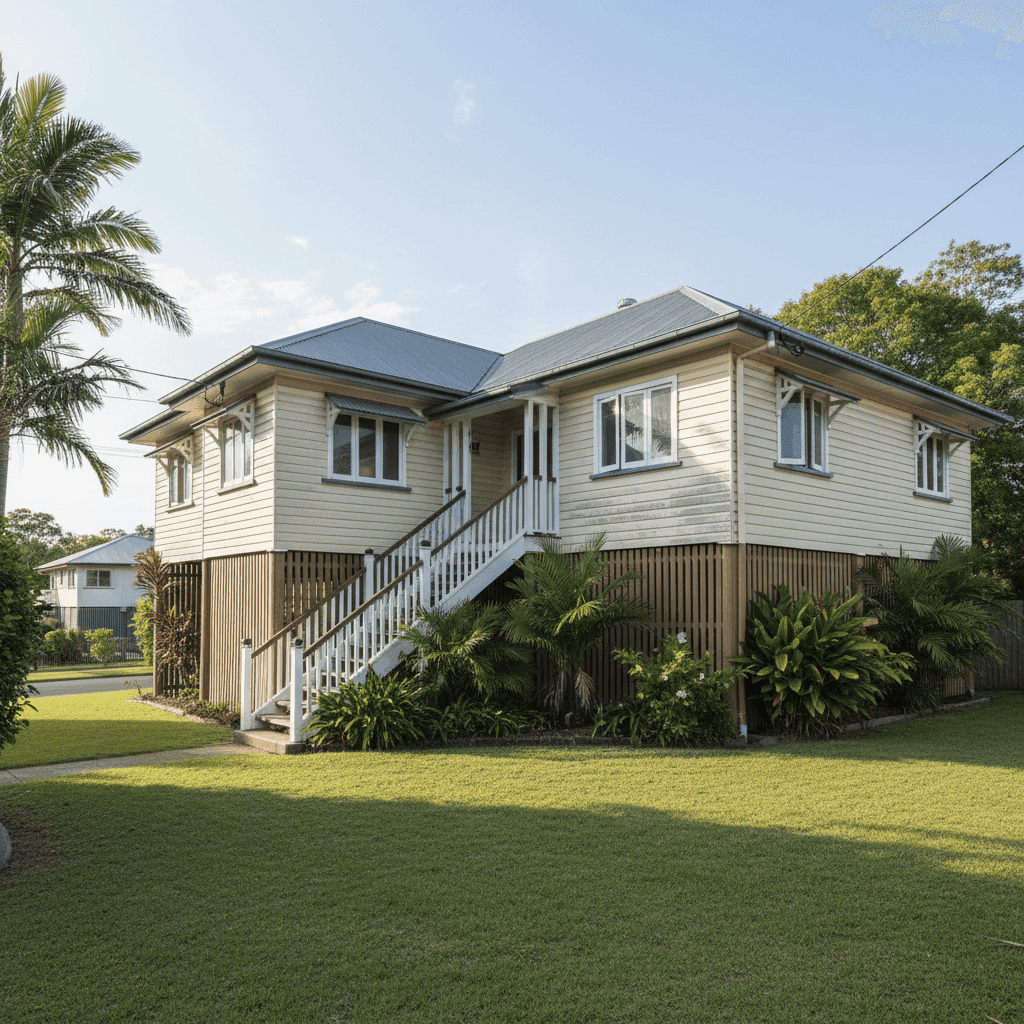
Insuring a home in Hampden, QLD 4741 comes with its own unique set of considerations — from the region's cyclone exposure to the character of older, timber-framed construction. This article breaks down a real home and contents insurance quote for a three-bedroom free standing home in Hampden, assessing whether the premium is competitive, what's driving the cost, and what local homeowners can do to get better value.
---
Is This Quote Fair?
The annual premium for this property came in at $3,896 per year (or $390/month), covering both building and contents with a sum insured of $686,000 for the building and $179,000 for contents.
Our price rating for this quote is FAIR — Around Average, and the numbers back that up. Sitting below the Queensland state average of $4,547/yr and just under the state median of $3,931/yr, this quote is tracking in a reasonable range for the region. It's not a bargain, but it's not an outlier either — and given the property's risk profile (more on that below), it reflects a broadly appropriate price point.
That said, "fair" doesn't mean you can't do better. Insurance markets are competitive, and even a modest saving of $300–$500 per year adds up significantly over time.
---
How Hampden Compares
Understanding where this premium sits relative to broader benchmarks helps put things in perspective.
| Benchmark | Annual Premium |
|---|---|
| This Quote | $3,896 |
| LGA (Isaac) Average | $3,526 |
| QLD State Median | $3,931 |
| QLD State Average | $4,547 |
| National Average | $2,965 |
| National Median | $2,716 |
Unfortunately, no suburb-level data is currently available for Hampden specifically — you can check the Hampden suburb stats page for updates as more data comes in. For now, the Isaac LGA average of $3,526/yr is the most relevant local benchmark, and this quote sits roughly $370 above that figure.
Compared to the QLD state average of $4,547/yr, this quote is actually $651 cheaper — a meaningful difference. However, when stacked against national averages, Queensland premiums (including this one) run considerably higher, which is largely a reflection of the elevated natural hazard risk across much of the state.
The gap between Queensland and national averages is not unusual. Insurers price Queensland properties more aggressively due to the frequency and severity of weather events — cyclones, flooding, and severe storms — that affect large parts of the state.
---
Property Features That Affect Your Premium
Several characteristics of this property have a direct bearing on what insurers charge. Here's how they factor in:
Cyclone Risk Area
This is arguably the single biggest cost driver for this property. Hampden falls within a designated cyclone risk zone, which triggers significantly higher premiums across virtually all insurers. Properties in these areas face greater exposure to wind damage, storm surge, and associated losses, so insurers price this risk into every policy.
Weatherboard Timber Construction
The external walls are weatherboard wood — a construction type common in older Queensland homes, but one that insurers view as higher risk than brick or rendered masonry. Timber is more susceptible to fire, termite damage, and wind uplift, all of which contribute to a higher premium. It also tends to cost more to repair or replace on a like-for-like basis.
Age of Construction (1935)
At nearly 90 years old, this home predates modern building codes by decades. Older homes can have ageing electrical wiring, plumbing, and structural elements that increase the likelihood of a claim. Insurers factor construction year into their risk models, and properties from this era typically attract a loading.
Steel/Colorbond Roof
On the positive side, a Colorbond steel roof is considered a relatively resilient roofing material — particularly in cyclone-prone areas. It's less prone to cracking than terracotta or concrete tiles, and modern Colorbond profiles are designed to resist wind uplift. This is one feature that may be working in favour of the premium rather than against it.
Stump Foundation
The home sits on stumps, which is typical for Queensland's older housing stock. While stumps allow for airflow beneath the home (important in the tropics), they can be a liability in high-wind events if not properly maintained or braced.
Building Size and Sum Insured
At 130 sqm with a building sum insured of $686,000, the replacement cost is on the higher side relative to the floor area. This likely reflects the cost of rebuilding a heritage-style weatherboard home with period-appropriate materials and finishes, as well as the elevated labour and material costs in regional Queensland.
---
Tips for Homeowners in Hampden
Whether you're reviewing an existing policy or shopping around for the first time, here are four practical steps worth taking:
1. Review Your Sum Insured Carefully
Underinsurance is a serious risk — but so is overinsurance. Make sure your building sum insured reflects the actual cost to rebuild, not the market value of the land. Use a building cost calculator or speak to a local builder to get a realistic estimate for a weatherboard home of this age and size in regional QLD.
2. Cyclone-Proof Where You Can
Some insurers offer discounts or more favourable terms for homes that have been cyclone-rated or retrofitted to meet higher wind resistance standards. If your home hasn't been assessed, it may be worth engaging a building inspector. Improvements like roof tie-downs, braced stumps, and cyclone-rated windows can reduce risk — and potentially your premium.
3. Compare Multiple Quotes
The insurance market is more competitive than many homeowners realise. A quote that's "around average" is a starting point, not a ceiling. Use a comparison tool like CoverClub to see what multiple insurers would charge for the same coverage — you may find a materially better deal without sacrificing protection.
4. Consider Your Excess Strategy
This policy carries a $2,000 building excess and a $1,000 contents excess. Opting for a higher excess is one of the most reliable ways to reduce your annual premium. If you have sufficient savings to cover a larger out-of-pocket cost in the event of a claim, increasing your excess could unlock meaningful savings each year.
---
Ready to Compare?
If you own a home in Hampden or anywhere across regional Queensland, it pays to shop around regularly — ideally at each renewal. Insurers frequently adjust their pricing models, and the best deal today may not be the best deal next year.
Get a home insurance quote through CoverClub and see how your current premium stacks up against the broader market. It takes just a few minutes and could save you hundreds.