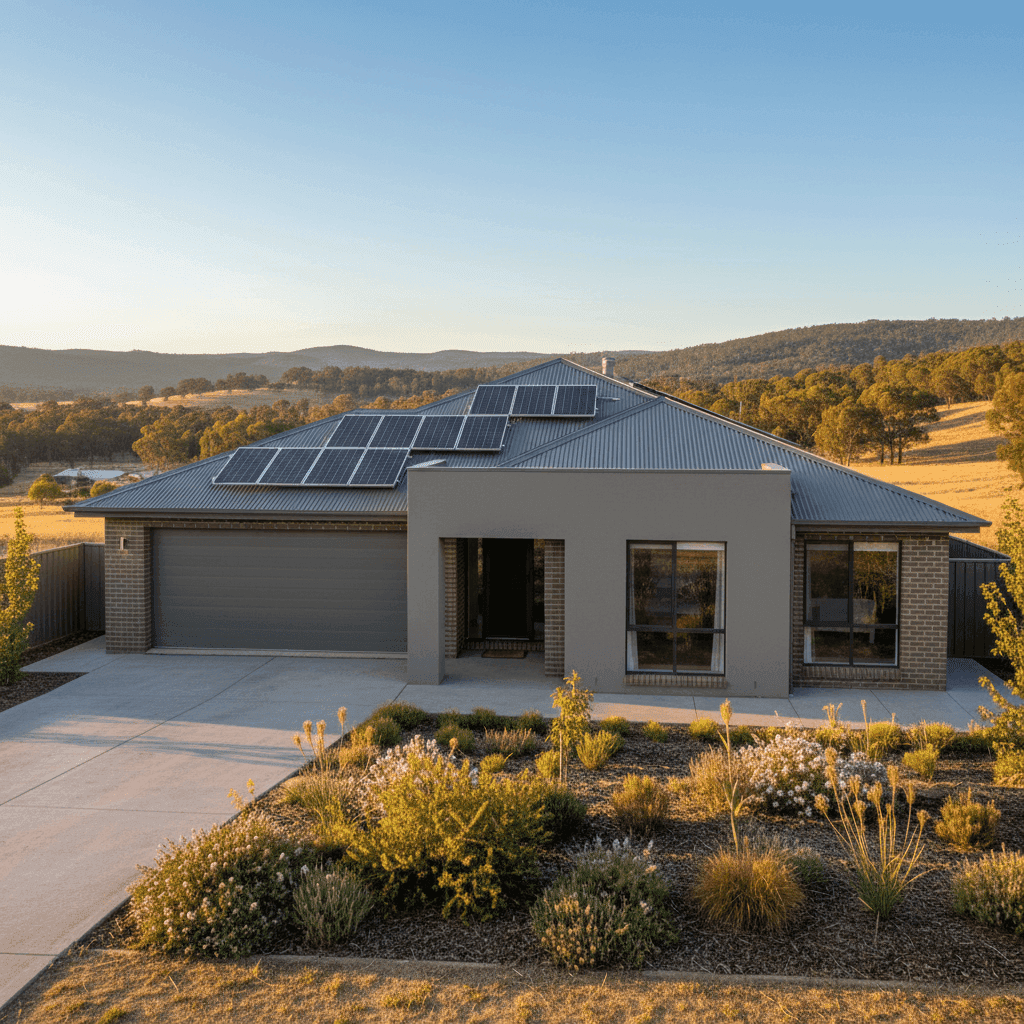
Harcourt is a quiet township nestled in the foothills of Mount Alexander in central Victoria, best known for its apple orchards and proximity to Castlemaine. It's a popular choice for families and tree-changers seeking a relaxed rural lifestyle without straying too far from regional services. But what does home insurance actually cost for a free standing home here — and is the quote you've received a fair one?
This article breaks down a real home and contents insurance quote for a 3-bedroom, 2-bathroom free standing home in Harcourt (postcode 3453), comparing it against local, state, and national benchmarks to help you make a more informed decision.
---
Is This Quote Fair?
The quote in question comes in at $1,706 per year (or $177/month), covering both building (sum insured: $723,000) and contents ($113,000). Our price rating for this quote is Expensive — Above Average.
To put that in context: the suburb average for Harcourt sits at $1,400/year, and the suburb median is $1,279/year. That means this particular quote is running roughly $306 above the local average and $427 above the median — a meaningful gap that's worth investigating before you sign on the dotted line.
That said, "expensive" is relative. The building sum insured of $723,000 is on the higher end for a regional Victorian property, and the contents cover of $113,000 adds meaningful weight to the premium. The building excess is set at $3,000 (which is fairly standard) while the contents excess is $1,000 — both figures that influence how the insurer prices the risk.
If you're comfortable with the coverage levels and the insurer's reputation, the premium may still represent good value for what's included. But it's always worth shopping around.
---
How Harcourt Compares
Understanding where your premium sits relative to broader benchmarks gives you real negotiating power. Here's how this quote stacks up:
| Benchmark | Annual Premium |
|---|---|
| This Quote | $1,706 |
| Harcourt Suburb Average | $1,400 |
| Harcourt Suburb Median | $1,279 |
| Harcourt 25th Percentile | $1,083 |
| Harcourt 75th Percentile | $1,628 |
| Greater Bendigo LGA Average | $2,278 |
| VIC State Average | $3,000 |
| VIC State Median | $2,718 |
| National Average | $5,347 |
| National Median | $2,764 |
A few things stand out here. First, while this quote is above the Harcourt suburb average, it sits well below the Greater Bendigo LGA average of $2,278 — suggesting that Harcourt itself may be considered a relatively lower-risk pocket within the broader region. Second, compared to the Victorian state average of $3,000/year and the national average of $5,347/year, this quote is actually quite competitive in the bigger picture.
The Harcourt suburb stats page shows a sample of 19 quotes, which is a reasonable dataset for a small township. The 75th percentile sits at $1,628 — meaning this quote at $1,706 is in the top quarter of premiums seen locally. That's the clearest signal that there may be room to find a better price.
---
Property Features That Affect Your Premium
Insurers don't just look at your postcode — they assess the physical characteristics of your home in detail. Here's how the features of this particular property likely influence the premium:
Brick Veneer Walls Brick veneer is generally viewed favourably by insurers. It offers solid fire resistance and structural durability, which can help keep premiums in check compared to timber-framed or weatherboard homes.
Steel / Colorbond Roof A Colorbond steel roof is one of the more insurance-friendly roofing materials available. It's resistant to ember attack, doesn't crack or split, and performs well in high-wind events — all factors that reduce risk in the eyes of an underwriter.
Slab Foundation Concrete slab foundations are typically considered low-risk. They're less susceptible to subsidence and termite damage than raised timber stumps, which can translate to lower structural risk assessments.
Timber / Laminate Flooring Flooring type can influence contents and internal damage assessments. Timber and laminate floors can be costly to replace after water damage events, which may nudge the premium slightly upward compared to tiled flooring.
Solar Panels This property has solar panels installed. While solar systems add value to a home, they also represent an additional insurable asset. Some insurers include solar panels under building cover automatically; others require them to be specified. It's worth confirming exactly how your policy treats them.
Ducted Climate Control Ducted heating and cooling systems are a fixed building fixture and typically covered under building insurance. They're also expensive to repair or replace, so their presence can influence the building sum insured calculation.
Construction Year: 2017 A relatively modern build, the 2017 construction date means this home was built to contemporary Australian Standards, including updated bushfire and energy efficiency requirements. Newer homes often attract more competitive premiums due to lower maintenance risk.
No Pool The absence of a pool removes one common liability risk factor from the equation — good news for the premium.
---
Tips for Homeowners in Harcourt
1. Review your building sum insured carefully At $723,000, the building sum insured is a significant figure. Make sure it reflects the current cost to rebuild — not the market value of the property. Underinsurance is a common and costly mistake. Use a quantity surveyor or your insurer's rebuild calculator to validate the figure annually.
2. Confirm solar panel coverage in writing Don't assume your solar panels are automatically covered. Ask your insurer specifically whether the panels, inverter, and mounting hardware are included under the building policy — and at what value. If they're not listed, request an endorsement.
3. Shop around at renewal time Given that this quote sits above the Harcourt suburb median, it's worth getting at least two or three competing quotes before renewing. Insurers frequently offer introductory pricing to new customers, and loyalty doesn't always pay in the home insurance market.
4. Consider your excess trade-off The building excess on this policy is $3,000. Opting for a higher excess can meaningfully reduce your annual premium — but only make this choice if you're confident you could cover that amount out of pocket in a claim scenario. For contents, the $1,000 excess is fairly standard.
---
Compare Home Insurance Quotes in Harcourt
Whether you're reviewing an existing policy or shopping for the first time, comparing quotes is the single most effective way to ensure you're not overpaying. CoverClub aggregates real quote data from across Australia so you can see exactly where your premium sits — and find a better deal if one exists.