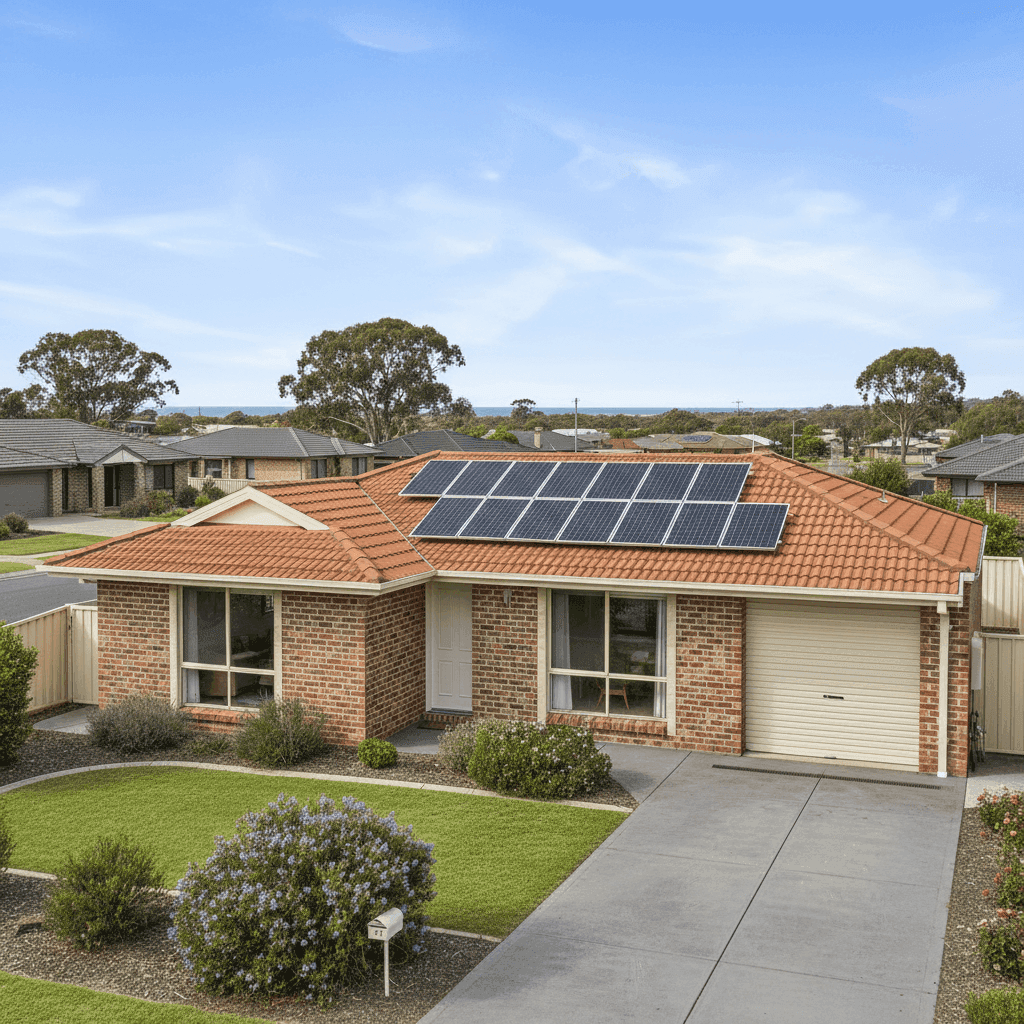
If you own a free standing home in Harrington, NSW 2427, you've probably noticed that home insurance isn't cheap — and you may be wondering whether the quote sitting in your inbox is reasonable or whether you're paying more than you should. This article breaks down a real building insurance quote for a three-bedroom, two-bathroom brick veneer home in Harrington, compares it against local, state and national benchmarks, and offers practical tips to help you get better value.
---
Is This Quote Fair?
The quote in question is $6,030 per year (or $543 per month) for building-only cover, with a sum insured of $554,000 and a building excess of $5,000. Our rating for this quote is Expensive — above average for the Harrington area.
To put that in context, the suburb average premium across 70 quotes collected for Harrington (postcode 2427) sits at $3,650 per year, with a median of $2,679. That means this particular quote is running roughly 65% above the suburb average and more than double the median. Even at the 75th percentile — meaning only 25% of quotes in the area are more expensive — the benchmark is $4,496 per year, still well below the $6,030 being quoted here.
That said, it's worth acknowledging that premiums vary significantly depending on the insurer, the level of cover, and specific property characteristics. A higher sum insured, certain building features, or a more comprehensive policy can all push a premium upward. The key is knowing what's driving the cost and whether there's room to negotiate or shop around.
---
How Harrington Compares
Harrington is a coastal town on the Mid-North Coast of NSW, and like many waterfront communities, insurance pricing reflects the elevated risks that come with proximity to the ocean and estuaries — including storm surge, flooding, and wind damage.
Here's how the numbers stack up across different benchmarks:
| Benchmark | Average Premium | Median Premium |
|---|---|---|
| Harrington (NSW 2427) | $3,650/yr | $2,679/yr |
| Mid-Coast LGA | $5,840/yr | — |
| NSW State | $9,528/yr | $3,770/yr |
| National | $5,347/yr | $2,764/yr |
A few things stand out from this data. First, NSW as a whole has one of the highest average premiums in the country — $9,528 per year — though the median of $3,770 suggests a significant number of very high-cost quotes are pulling that average up. Second, the national average of $5,347 is actually higher than the Harrington suburb average, which suggests that — relative to many parts of Australia — Harrington isn't necessarily an outlier when viewed at the LGA level ($5,840 for Mid-Coast). The quote of $6,030 sits just above the Mid-Coast LGA average, which does provide some additional context, even if it remains above what most Harrington homeowners are paying.
---
Property Features That Affect Your Premium
Several characteristics of this property are worth examining when trying to understand the premium.
Brick veneer construction and tiled roof are generally viewed favourably by insurers. Brick veneer offers solid fire resistance and structural durability, while tiled roofs are considered robust and long-lasting. These features typically attract lower premiums compared to, say, weatherboard cladding or a metal roof in a high-wind area.
Stump foundations are common in older coastal and regional NSW homes and can introduce some complexity for insurers. Stumps require periodic maintenance, and homes on stumps may be more susceptible to movement or moisture-related issues over time. Some insurers price this risk into their premiums.
Construction year (1992) places this home in a middle ground — not old enough to attract significant concerns about ageing infrastructure, but not new enough to benefit from the latest building standards either. Homes built before the introduction of modern cyclone and flood-resistant building codes may attract slightly higher premiums in coastal areas.
Solar panels are an increasingly common feature and can add to the sum insured, since they are considered part of the building. A quality solar system can add tens of thousands of dollars to replacement costs, which flows through to a higher building sum insured and, consequently, a higher premium.
Ducted climate control is another fixed installation that contributes to the building's replacement value. Like solar panels, ducted systems are expensive to replace and are factored into the sum insured calculation.
The $554,000 sum insured is a significant figure for a 139 sqm home, though it reflects the full cost of rebuilding — not the market value of the property. In regional coastal NSW, construction costs have risen sharply in recent years, and ensuring your home is adequately insured to rebuild (rather than underinsured) is critical. That said, it's worth having a builder or quantity surveyor validate your sum insured to make sure it's accurate rather than inflated.
---
Tips for Homeowners in Harrington
1. Shop around — seriously. The spread between the 25th percentile ($1,783/yr) and this quote ($6,030/yr) in Harrington is enormous. That's not just a rounding difference; it's a signal that different insurers are pricing this risk very differently. Using a comparison platform like CoverClub to gather multiple quotes side-by-side is one of the most effective ways to identify whether you're overpaying.
2. Review your sum insured carefully. A higher sum insured means a higher premium. If your $554,000 figure was estimated rather than calculated by a professional, it may be worth getting a building replacement cost assessment. Underinsurance is a genuine risk, but overinsurance means you're paying more than necessary every year.
3. Consider your excess strategically. This quote carries a $5,000 building excess — which is on the higher end. Opting for a higher excess is one way insurers offer lower premiums, but make sure the excess is an amount you could genuinely afford to pay in the event of a claim. If $5,000 would be a financial stretch, a lower excess with a slightly higher premium might be the smarter trade-off.
4. Ask about discounts for security and safety features. Some insurers offer discounts for homes with monitored alarm systems, smoke detectors, or deadbolts. It's always worth asking your insurer what discounts are available — they won't always volunteer the information upfront.
---
Ready to Find a Better Deal?
Whether you're renewing your policy or comparing for the first time, CoverClub makes it easy to see what other homeowners in Harrington are paying and to get quotes tailored to your property. Start comparing home insurance quotes now — it takes just a few minutes and could save you hundreds of dollars a year.
You can also explore the full Harrington suburb insurance data, NSW state-wide statistics, and national benchmarks to better understand how your premium stacks up.