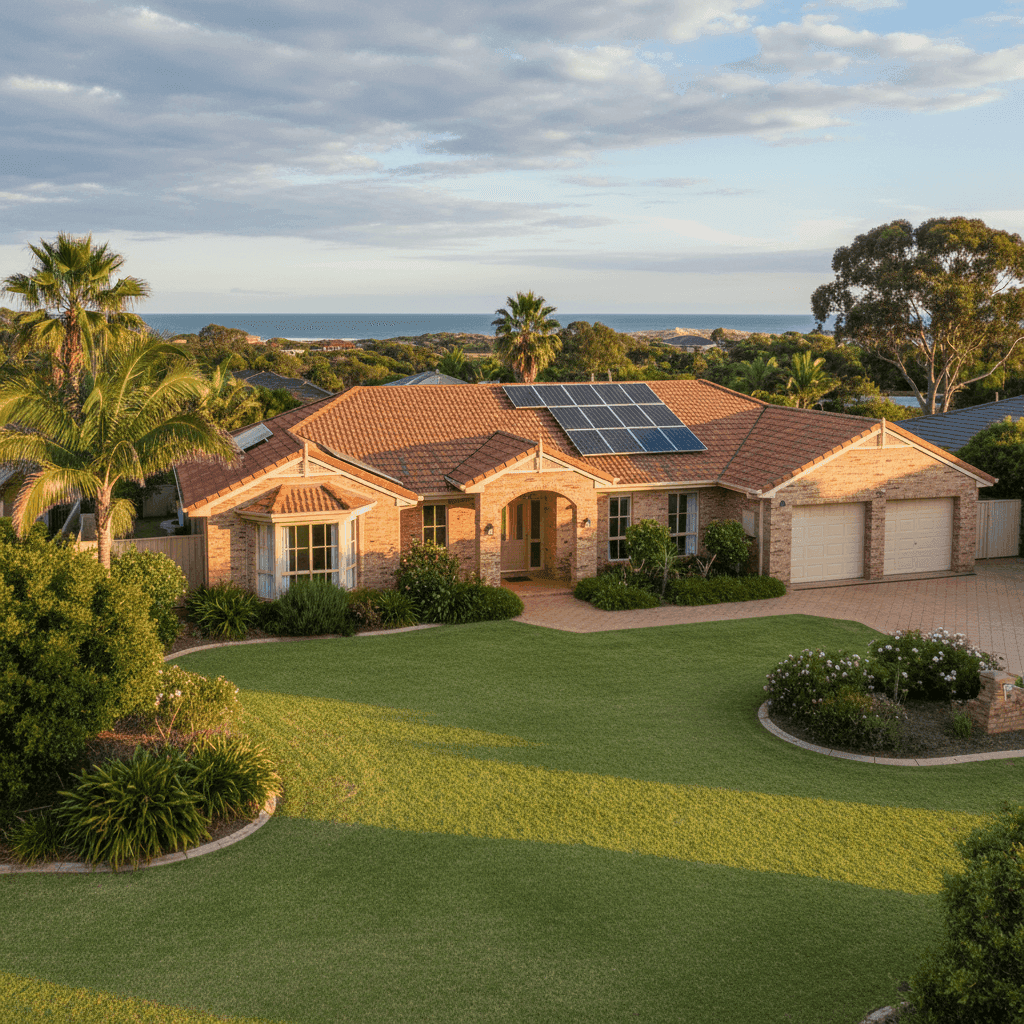
If you own a free standing home in Harrington, NSW 2427, you already know this coastal Mid-Coast town comes with its own unique set of insurance considerations. Nestled near the Manning River and the Tasman Sea, Harrington is a popular destination for retirees and families alike — but its coastal character and regional location mean home insurance premiums can look quite different from what you'd pay in a major metropolitan area. In this article, we break down a real home insurance quote for a five-bedroom property in Harrington, examine how it stacks up against local, state, and national benchmarks, and share practical tips to help you get better value on your cover.
---
Is This Quote Fair?
The quote in question comes in at $7,902 per year (or $777/month) for combined Home and Contents insurance, covering a building sum insured of $1,320,000 and contents valued at $120,000. The building excess is $2,000 and the contents excess $600.
Our price rating for this quote is EXPENSIVE — above average.
To put that in perspective, the average home insurance premium across Harrington (postcode 2427) sits at $4,974 per year, with a median of $4,085. This quote lands well above both figures — and it's nearly double the suburb's 25th percentile of $3,254/yr. Even compared to the 75th percentile of $5,638/yr, this premium is noticeably higher.
That said, context matters enormously. A 5-bedroom, 367 sqm double brick home with a $1,320,000 building sum insured is a significantly larger and more valuable property than the typical Harrington home captured in our sample of 40 quotes. Higher rebuild costs naturally attract higher premiums, so some of the gap is expected. The question worth asking is whether this particular insurer is pricing the risk competitively — or whether there's room to do better by shopping around.
---
How Harrington Compares
Looking at the broader picture, Harrington premiums are already elevated compared to state and national figures:
| Benchmark | Average Premium | Median Premium |
|---|---|---|
| Harrington (2427) | $4,974/yr | $4,085/yr |
| Mid-Coast LGA | $4,463/yr | — |
| New South Wales | $3,801/yr | $3,410/yr |
| National | $2,965/yr | $2,716/yr |
Harrington's suburb average is 31% higher than the NSW average and a substantial 68% above the national average. This reflects the realities of insuring coastal and regional properties — proximity to water, flood-prone land near the Manning River, and the higher cost of tradespeople and materials in regional areas all push premiums up.
The Mid-Coast LGA average of $4,463/yr sits slightly below the Harrington suburb average, suggesting that Harrington itself carries a marginally higher risk profile than surrounding areas in the council region — likely due to its direct coastal and riverfront exposure.
For homeowners in this area, it's worth remembering that these comparisons are based on a broad mix of properties. A larger home with a high sum insured will always attract a premium above the suburb average — but that doesn't mean you should accept the first quote you receive.
---
Property Features That Affect Your Premium
Several characteristics of this property influence how insurers calculate the premium:
Double brick construction is generally viewed favourably by insurers. It offers strong structural integrity, better fire resistance, and greater durability compared to lightweight timber or clad construction. This can work in your favour when it comes to pricing.
Tiled roof is another positive signal for underwriters. Terracotta and concrete tiles are durable and perform well in most weather conditions, though they can be more expensive to repair or replace than Colorbond steel in some circumstances.
Slab foundation is the standard for homes built in this era and region, and generally carries no additional risk loading compared to older stumped or pier foundations.
Tile flooring throughout the home is considered low-risk from an insurer's perspective — tiles are durable, water-resistant, and less susceptible to damage from leaks or humidity than carpet or timber floors.
Solar panels are worth noting. While they add value to the property, solar systems can introduce complexity into a claim — particularly if panels are damaged in a storm or hail event. It's essential to confirm that your policy explicitly covers solar panels as part of the building sum insured, and that the $1,320,000 figure accounts for the cost of replacing the system.
Construction year of 2000 places this home in a relatively modern bracket. Post-1990s construction in NSW generally meets more robust building codes, which can reduce risk in the eyes of insurers compared to older homes with outdated wiring or plumbing.
No pool and no ducted climate control remove two common sources of liability and mechanical breakdown claims, which is a minor positive for pricing.
At 367 sqm, this is a large home — and the $1,320,000 building sum insured reflects that. It's worth periodically reviewing your sum insured to ensure it accurately reflects current rebuild costs (not market value), especially given rising construction costs in regional NSW over recent years.
---
Tips for Homeowners in Harrington
1. Shop around — seriously. This quote is rated expensive relative to the suburb average, and the gap is significant. Use a comparison service like CoverClub to get multiple quotes side by side. Insurers price coastal and regional properties very differently, and the spread between the cheapest and most expensive quote for the same property can be thousands of dollars per year.
2. Review your sum insured carefully. With a building sum insured of $1,320,000, it's important to make sure this figure reflects the true cost of rebuilding your home from scratch — including demolition, professional fees, and the current cost of labour and materials in the Mid-Coast region. Underinsurance is a serious risk; overinsurance means you're paying more than you need to. Consider getting a professional building valuation every few years.
3. Check your flood and storm cover. Harrington's location near the Manning River estuary and the coast means flood and storm surge risk is a genuine concern. Not all home insurance policies automatically include flood cover — some treat it as an optional add-on. Read your Product Disclosure Statement (PDS) carefully and confirm exactly what's covered before you commit.
4. Ask about discounts for security and safety features. If your home has a monitored alarm system, deadlocks, or other security features, some insurers will offer a discount. It's always worth asking — even a small percentage off a premium this size adds up to real money.
---
Compare Quotes and Save
Whether you're renewing your existing policy or shopping for the first time, the best way to know if you're getting a fair deal is to compare. CoverClub makes it easy to see how your quote stacks up against real premiums paid by homeowners in Harrington and across NSW. Get a quote today and find out if you could be paying less for the same level of protection.