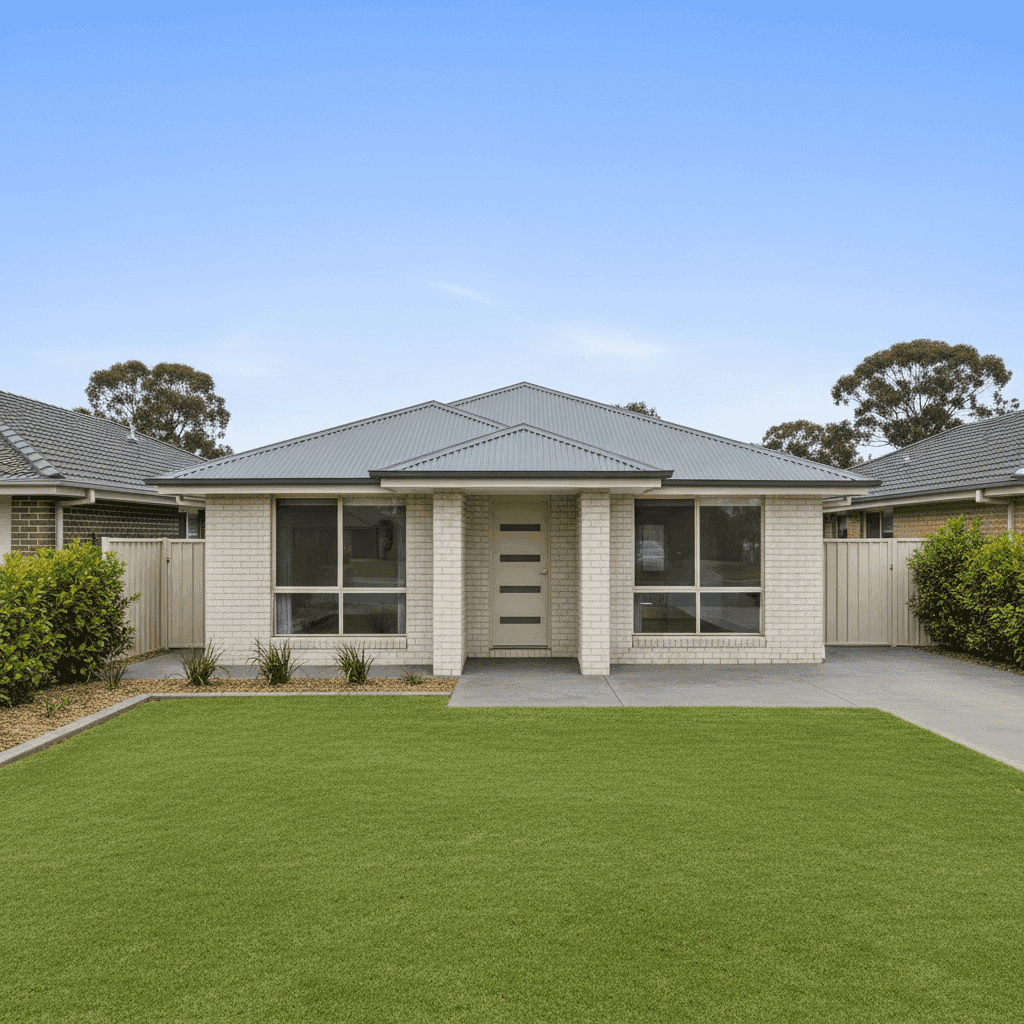
Harrington is a relaxed coastal town on the Mid North Coast of New South Wales — known for its fishing, beaches, and the kind of quiet lifestyle that makes it a popular destination for both retirees and young families. But living near the coast comes with its own insurance considerations, and if you own a free standing home in this postcode, understanding what you're paying — and why — is well worth your time.
This article breaks down a recent home and contents insurance quote for a four-bedroom, two-bathroom free standing home in Harrington (NSW 2427), comparing it against local, state, and national benchmarks to help you make a more informed decision.
---
Is This Quote Fair?
The quoted annual premium for this property is $4,999 per year (or $472/month), covering a building sum insured of $593,000 and contents valued at $110,008. Both the building and contents excess are set at $1,000.
Based on our pricing data, this quote has been rated FAIR — Around Average. That assessment holds up when you look at the numbers closely. The suburb average for Harrington sits at $4,974 per year, meaning this quote is almost exactly in line with what most homeowners in the area are paying. It falls comfortably within the interquartile range — between the 25th percentile of $3,254 and the 75th percentile of $5,638 — which suggests it's a reasonable market rate rather than an outlier in either direction.
That said, "fair" doesn't necessarily mean "the best available." There's still meaningful room between this quote and the cheaper end of the market in this suburb, so shopping around is always worthwhile.
---
How Harrington Compares
To put this quote in proper context, it helps to look at how Harrington's insurance costs stack up against broader benchmarks.
| Benchmark | Average Premium | Median Premium |
|---|---|---|
| Harrington (2427) | $4,974/yr | $4,085/yr |
| NSW State | $3,801/yr | $3,410/yr |
| National | $2,965/yr | $2,716/yr |
| Mid-Coast LGA | $5,840/yr | — |
A few things stand out here. First, Harrington premiums are noticeably higher than the NSW state average of $3,801 — roughly 31% above it. Compared to the national average of $2,965, the gap is even wider, with local premiums running about 68% higher.
This isn't unusual for coastal NSW towns. Proximity to water, flood risk, and storm exposure all contribute to elevated premiums in areas like Harrington. Interestingly, the quote analysed here actually comes in below the Mid-Coast LGA average of $5,840 — a sign that, within the broader regional context, this is a reasonably competitive price.
The difference between the suburb's average ($4,974) and its median ($4,085) is also worth noting. When the average is significantly higher than the median, it typically means a smaller number of high-cost properties are pulling the average up. If your property is more modestly valued, you may find cheaper options available.
---
Property Features That Affect Your Premium
Several characteristics of this property directly influence how insurers assess and price the risk.
Brick veneer construction is generally viewed favourably by insurers. It offers solid fire resistance and structural durability, which can help keep premiums lower compared to timber-framed or clad homes.
Steel/Colorbond roofing is another positive factor. Colorbond is lightweight, durable, and performs well in both high-wind and fire-prone conditions. Insurers typically regard it as lower risk than older tile roofs, which can crack or dislodge during storms.
Concrete slab foundation provides stability and reduces the risk of subsidence or movement-related claims — another box ticked from an underwriting perspective.
Timber and laminate flooring is worth mentioning because it can be more susceptible to water damage than tiles. In a coastal town like Harrington, where humidity and storm events are more common, this is something to keep in mind when reviewing your contents and building cover limits.
The building size of 244 sqm and a sum insured of $593,000 gives a rebuild cost of roughly $2,430 per sqm — a figure that aligns reasonably well with current construction costs in regional NSW, though it's always wise to revisit this figure annually as building costs continue to rise.
With standard fittings and no pool, solar panels, or ducted climate control, this property avoids several features that can push premiums higher, which likely helps keep the quote closer to the suburb average rather than the upper end.
---
Tips for Homeowners in Harrington
1. Review your sum insured every year Construction costs in regional NSW have risen sharply over the past few years. A sum insured that was accurate in 2022 may leave you underinsured today. Use a building cost calculator or speak with a local builder to sense-check your coverage amount before each renewal.
2. Consider the gap between average and median The $889 difference between Harrington's average and median premium suggests there are cheaper policies available in this postcode. Don't accept a renewal quote without comparing — even a modest saving of $500–$800 per year adds up significantly over time.
3. Ask about flood and storm surge cover Harrington sits close to the Manning River and the coast, making flood and storm surge exposure a real consideration. Check whether your policy explicitly covers riverine flooding, flash flooding, and storm surge — these are sometimes excluded or subject to separate sub-limits. Don't assume they're included.
4. Bundle building and contents — but verify the value This quote covers both building and contents together, which often attracts a discount. However, make sure your contents sum of $110,008 genuinely reflects the replacement value of everything inside your home. It's easy to underestimate contents — especially in a four-bedroom home — and being underinsured at claim time can be a costly surprise.
---
Ready to Compare?
Whether you're renewing your existing policy or taking out cover for the first time, it pays to see what the broader market has to offer. Get a home insurance quote through CoverClub and compare your options side by side — it only takes a few minutes and could save you hundreds of dollars a year.