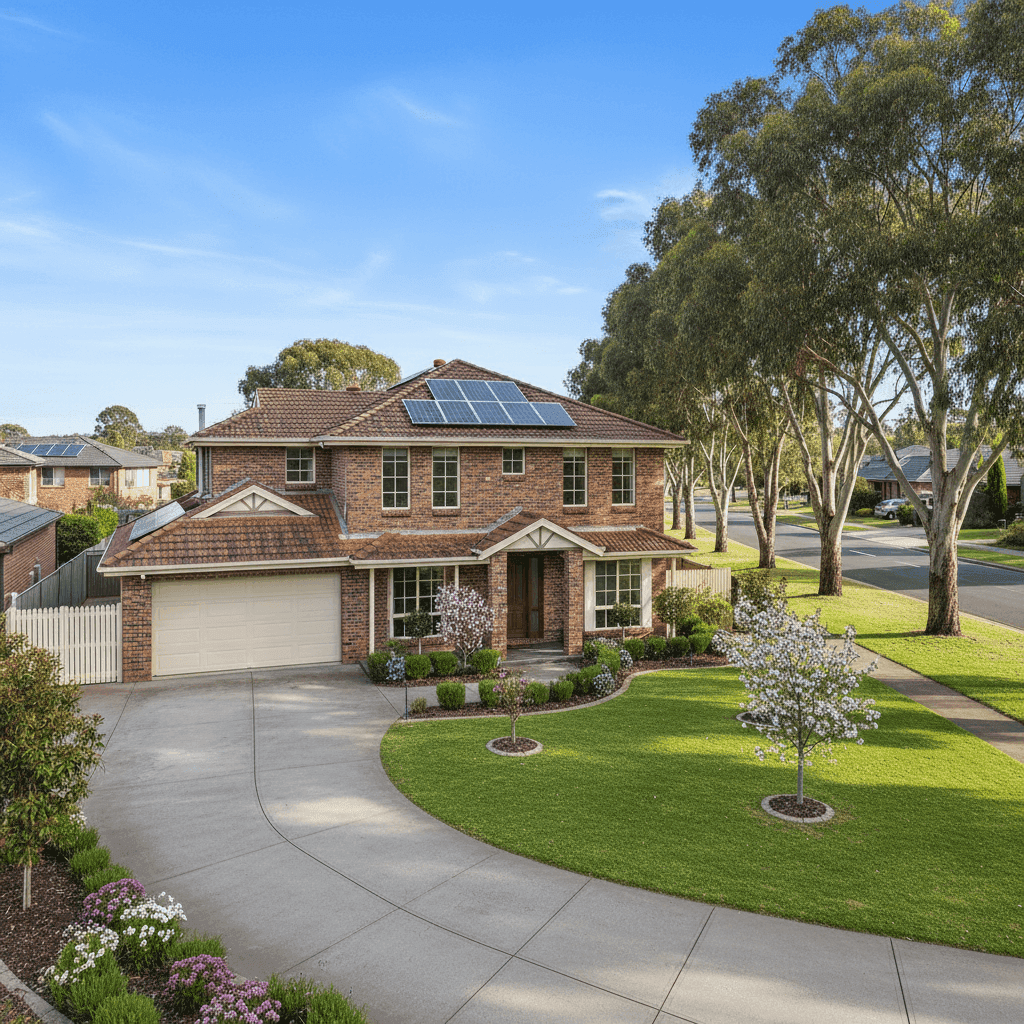
If you own a free standing home in Harrington Park, NSW 2567, you're probably wondering whether you're paying a fair price for your building insurance — or leaving money on the table. This article breaks down a real building-only insurance quote for a five-bedroom property in the suburb, benchmarking it against local, state, and national data so you can make a truly informed decision.
---
Is This Quote Fair?
The short answer? Yes — and then some. This quote comes in at $2,042 per year (or around $200/month), and it has been rated CHEAP relative to comparable properties in the area. To put that in perspective, the suburb average for Harrington Park sits at $3,844/year, meaning this quote is roughly 47% below what most homeowners in the area are paying. Even against the suburb's 25th percentile — the cheapest quarter of quotes — of $3,036/year, this premium still undercuts the field by a significant margin.
That's a genuinely strong result for a 277 sqm, five-bedroom home with a sum insured of $820,000. While individual premiums are shaped by many factors (more on those below), a quote this far below the local average is worth taking seriously.
---
How Harrington Park Compares
To understand just how competitive this quote is, it helps to zoom out and look at the broader picture. Here's how Harrington Park stacks up against the rest of New South Wales and the country:
| Benchmark | Average Premium | Median Premium |
|---|---|---|
| Harrington Park (suburb) | $3,844/yr | $3,774/yr |
| NSW (state) | $3,801/yr | $3,410/yr |
| Australia (national) | $2,965/yr | $2,716/yr |
| Campbelltown LGA | $2,555/yr | — |
(Based on a sample of 24 quotes in the Harrington Park area.)
A few things stand out here. First, Harrington Park premiums run notably higher than both the national average and the broader Campbelltown LGA average of $2,555/year. This suggests that suburb-specific risk factors — whether that's claims history, local weather exposure, or property values — are pushing local premiums up relative to the wider region.
Second, the quote analysed here ($2,042/yr) sits below even the Campbelltown LGA average, making it an outlier in the best possible sense. It's also well under the national median of $2,716/year, which is a meaningful benchmark given that Harrington Park properties tend to attract higher premiums than the Australian norm.
You can explore more data for this postcode at our Harrington Park suburb stats page, or compare across the state on our NSW insurance stats page. For a broader view, check out the national home insurance stats.
---
Property Features That Affect Your Premium
Every home is different, and insurers weigh up a range of property characteristics when calculating your premium. Here's how the key features of this particular property are likely to influence what you pay:
Brick Veneer Walls & Tiled Roof
Brick veneer is one of the most common external wall materials in Australian suburbia, and for good reason — it's durable, fire-resistant, and relatively straightforward to repair. Combined with a tiled roof, this property presents a solid risk profile from an insurer's perspective. Both materials tend to attract more favourable premiums compared to alternatives like weatherboard or metal roofing.
Concrete Slab Foundation
A slab foundation is generally viewed positively by insurers. It reduces the risk of subsidence-related claims and provides a stable base that holds up well in a range of soil conditions — an important consideration in parts of south-west Sydney where reactive clay soils can cause issues.
Timber & Laminate Flooring
While timber and laminate floors look great, they can be more costly to repair or replace after a water-related event compared to tiles. This is a factor some insurers may price into their assessments, particularly for larger homes.
Solar Panels
This property has solar panels installed on the roof. Insurers treat solar panels differently — some include them under building cover automatically, while others require you to confirm coverage or may apply specific sub-limits. It's worth checking your policy documents to ensure your solar system is adequately covered under your building sum insured.
Ducted Climate Control
Ducted air conditioning is a significant fixed asset and is typically covered under building insurance. However, as with solar panels, it pays to verify that your sum insured accounts for the full replacement cost of this system, particularly given rising labour and equipment costs.
Construction Year (2006) & Building Size (277 sqm)
A home built in 2006 is relatively modern by Australian standards, meaning it was constructed under more recent building codes that generally improve structural resilience. At 277 sqm, this is a sizeable home, and the $820,000 sum insured reflects the cost to rebuild — not the market value — which is the correct basis for calculating building cover.
---
Tips for Homeowners in Harrington Park
Whether you're reviewing your existing policy or shopping for the first time, here are four practical steps to make sure you're getting the right cover at the right price:
- Check your sum insured annually. Building costs have risen sharply in recent years. The $820,000 sum insured on this property may be appropriate today, but it's worth recalculating your rebuild cost each year — especially as labour and materials continue to fluctuate. Underinsurance is one of the most common and costly mistakes Australian homeowners make.
- Confirm solar panel coverage. If you have solar panels (as this property does), don't assume they're automatically covered. Ask your insurer specifically whether panels are included under the building sum insured, whether there are sub-limits, and what happens in the event of storm or hail damage.
- Compare quotes — not just at renewal. Premiums in Harrington Park vary enormously, as the data above shows. The gap between the cheapest and most expensive quotes in this suburb spans thousands of dollars per year. Shopping around at renewal (or even mid-policy if you can exit without penalty) is one of the most effective ways to reduce your insurance costs.
- Review your excess settings. This policy carries a $2,000 building excess. Opting for a higher excess can reduce your annual premium, but make sure you're comfortable covering that amount out of pocket if you need to make a claim. Finding the right balance between premium savings and excess risk is a personal decision worth thinking through carefully.
---
Compare Your Home Insurance Today
Whether you think your current premium is too high or you're just curious how it stacks up, CoverClub makes it easy to see where you stand. Get a home insurance quote in minutes and compare it against real data from your suburb, your state, and across Australia. With prices in Harrington Park running well above both the national and LGA averages, there's every reason to make sure you're not paying more than you need to.