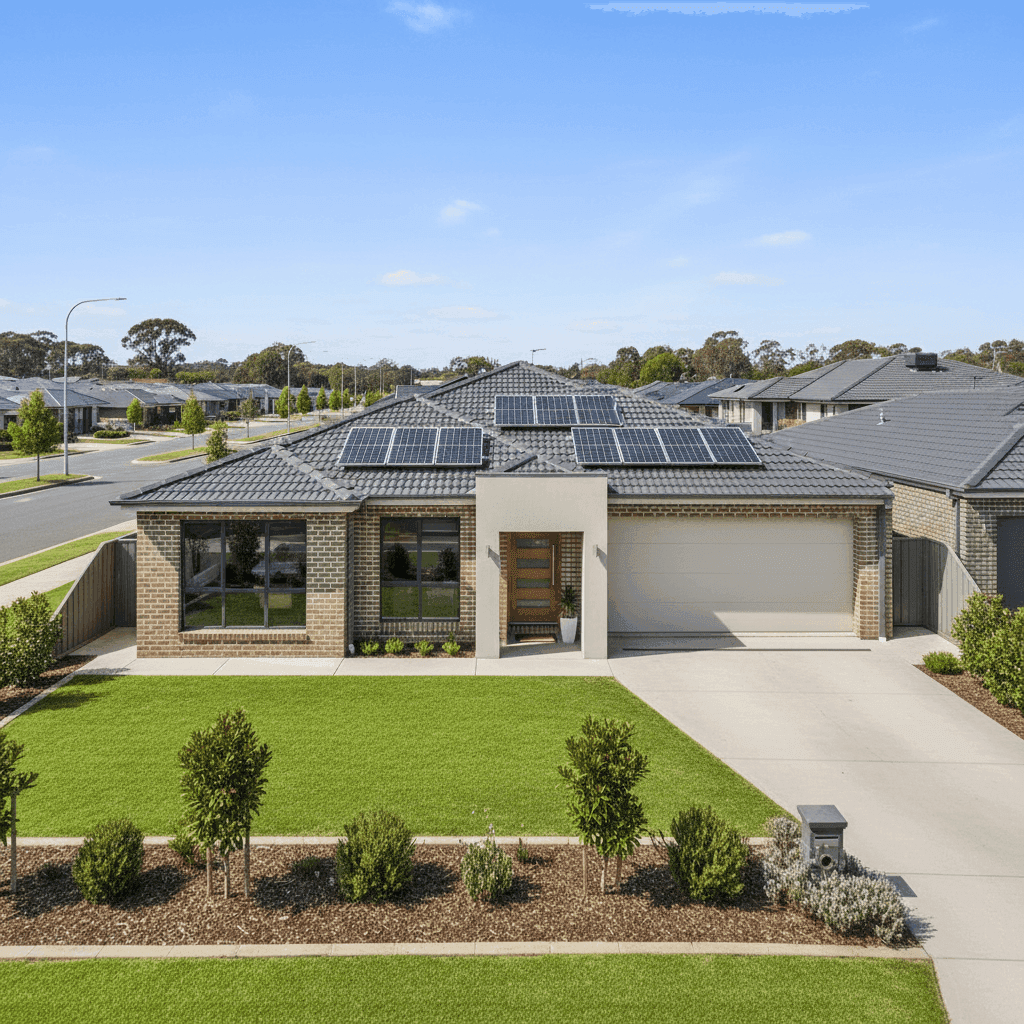
Harrington Park is a well-established suburb in Sydney's south-west, sitting within the Campbelltown local government area. Known for its family-friendly streets, modern housing stock, and well-maintained streetscapes, it's the kind of suburb where a solid brick veneer home on a concrete slab is very much the norm. This article takes a close look at a real home and contents insurance quote for a four-bedroom, two-bathroom free standing home in Harrington Park (NSW 2567) — and unpacks whether it represents good value.
---
Is This Quote Fair?
The annual premium for this property comes in at $2,409 per year (or $231/month), covering both building and contents. The building is insured for $818,055 and contents for $343,344, with a $1,000 excess on each.
Our pricing analysis rates this quote as Fair — Around Average, which is a reasonable outcome for a property of this size and specification. It sits comfortably within the middle band of what homeowners in this suburb are paying, and reflects a balanced risk profile: a relatively modern home (built in 2014), brick veneer construction, tiled roof, and no pool — all factors that tend to keep premiums in check.
That said, "fair" doesn't necessarily mean you can't do better. It means the quote is broadly in line with market rates, but there may still be room to optimise your cover or find a more competitive price by shopping around.
---
How Harrington Park Compares
Understanding where your premium sits relative to the broader market is one of the most useful things you can do as a homeowner. Here's how this quote stacks up:
| Benchmark | Premium |
|---|---|
| This quote | $2,409/yr |
| Harrington Park suburb average | $2,227/yr |
| Harrington Park suburb median | $2,160/yr |
| Harrington Park 25th percentile | $1,641/yr |
| Harrington Park 75th percentile | $2,594/yr |
| Campbelltown LGA average | $1,893/yr |
| NSW state average | $9,528/yr |
| NSW state median | $3,770/yr |
| National average | $5,347/yr |
| National median | $2,764/yr |
A few things stand out here. First, this quote is slightly above the Harrington Park suburb average of $2,227, but still well within the upper quartile range of $2,594 — meaning roughly 75% of comparable quotes in the suburb are at or below this level. That's a reasonable position to be in.
Second, the contrast with NSW state-wide figures is striking. The NSW average of $9,528 is heavily skewed by high-risk and high-value properties across the state — coastal flood zones, bushfire-prone areas, and prestige suburbs all pull that number up significantly. The median of $3,770 is a more useful yardstick, and this quote sits well below it.
Compared to national benchmarks, the picture is similarly favourable. The national average of $5,347 reflects the enormous diversity of risk across Australia — from cyclone-prone Queensland to flood-affected regional NSW. Harrington Park's relatively benign risk profile keeps premiums more grounded.
---
Property Features That Affect Your Premium
Several characteristics of this property play a meaningful role in shaping the premium:
Brick Veneer Construction & Tiled Roof Brick veneer walls and a tiled roof are among the most common and well-regarded combinations in Australian suburban housing. Insurers generally view this construction type favourably — it's durable, fire-resistant, and well-understood from a claims perspective. This likely contributes to a more competitive premium compared to properties with timber weatherboard or metal cladding.
Concrete Slab Foundation A slab-on-ground foundation is standard for homes built in this era and region. It offers good structural stability and is less susceptible to subsidence issues than older pier-and-beam constructions, which can be a positive factor in underwriting assessments.
Built in 2014 At just over a decade old, this home sits in a sweet spot for insurers. It's modern enough to meet contemporary building codes (which include improved fire and structural standards), yet established enough that any early construction defects would likely have already surfaced. Newer homes often attract more competitive rates than older properties requiring more maintenance.
Solar Panels The presence of rooftop solar panels is worth noting. While solar systems can add value to a property, they also represent an additional insurable asset. It's important to confirm with your insurer that your solar panels are explicitly covered under your building policy — some policies include them automatically, while others may require a specific endorsement.
Ducted Climate Control Ducted air conditioning is a significant fixed asset and typically forms part of the building sum insured. At a building replacement value of $818,055 for a 214 sqm home, the inclusion of ducted systems is well accounted for in this quote.
No Pool, No Cyclone Risk The absence of a swimming pool removes a common source of liability and maintenance-related claims. And being outside a designated cyclone risk zone means this property avoids the premium loadings that affect many properties in northern Australia.
---
Tips for Homeowners in Harrington Park
1. Review your building sum insured regularly Construction costs have risen considerably in recent years. A replacement cost estimate that was accurate in 2022 may no longer be sufficient today. Use a building calculator or speak with a quantity surveyor to make sure your sum insured reflects current rebuild costs — underinsurance can leave you significantly out of pocket after a major claim.
2. Confirm solar panel coverage with your insurer As mentioned above, don't assume your rooftop solar system is automatically covered. Ask your insurer specifically whether panels, inverters, and associated wiring are included in your building cover — and for how much. This is a common gap in many standard policies.
3. Shop around at renewal time Loyalty doesn't always pay in insurance. Premiums can drift upward at renewal without a corresponding change in your risk profile. Use a comparison tool like CoverClub to benchmark your renewal quote against the current market before you auto-renew.
4. Consider your excess level strategically Both the building and contents excess on this policy sit at $1,000. Opting for a higher excess (say, $2,000) can meaningfully reduce your annual premium — particularly if you have a good claims history and are comfortable self-insuring for smaller incidents. Just make sure the excess is genuinely affordable in a worst-case scenario.
---
Compare Your Own Quote
Whether you're reviewing an existing policy or shopping for cover on a new property, it pays to understand where your premium sits in the market. CoverClub makes it easy to benchmark your home insurance costs against real data from your suburb and beyond. Get a quote or compare your current premium today — it takes just a few minutes and could save you hundreds each year.