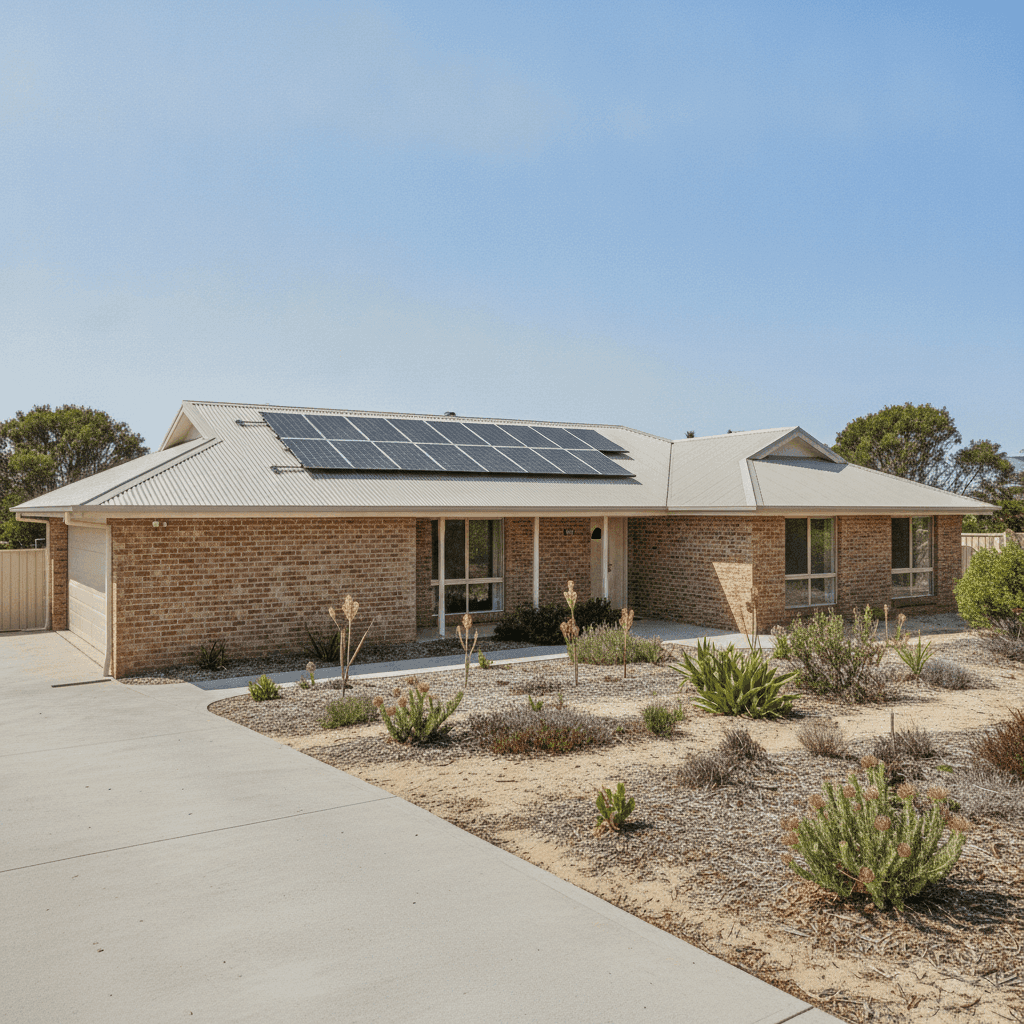
Hat Head is a small coastal village on the Mid North Coast of New South Wales, nestled within the Kosciuszko-to-coast stretch of the Macleay Valley. It's the kind of place where the beach is minutes away and the pace of life slows right down — but that coastal charm comes with its own set of insurance considerations. This article breaks down a recent home and contents insurance quote for a five-bedroom free standing home in Hat Head (postcode 2440), and puts the numbers into context so you can make a more informed decision about your own cover.
---
Is This Quote Fair?
The quote in question comes in at $8,690 per year (or $833 per month) for a combined home and contents policy. The building is insured for $1,052,000 and contents for $50,000, with a $1,000 excess applying to both building and contents claims.
Our pricing engine has rated this quote as FAIR — Around Average, and the data backs that up. When you look at the suburb-level statistics for Hat Head (2440), the average premium sits at $8,222 per year, while the median lands at $7,584. This quote is slightly above both of those figures, but still comfortably within the interquartile range — the 25th percentile for the suburb is $3,753 and the 75th is $9,720, meaning this premium falls well within the middle 50% of what Hat Head homeowners are paying.
In short, you're not being gouged, but there may be room to shop around.
---
How Hat Head Compares
To put this quote in proper perspective, it helps to zoom out and look at the broader picture.
| Benchmark | Premium |
|---|---|
| This Quote | $8,690/yr |
| Hat Head suburb average | $8,222/yr |
| Hat Head suburb median | $7,584/yr |
| Port Macquarie-Hastings LGA average | $7,001/yr |
| NSW state average | $9,528/yr |
| NSW state median | $3,770/yr |
| National average | $5,347/yr |
| National median | $2,764/yr |
A few things stand out here. First, this quote sits below the NSW state average of $9,528 — which is a positive sign. Coastal and regional NSW properties often attract higher premiums due to weather exposure and rebuild costs, so coming in under the state average for a large five-bedroom home is reasonable.
Second, the gap between the NSW state average and median ($9,528 vs $3,770) is significant, which tells us that a small number of very high-value or high-risk properties are pulling the average upward. The same pattern appears at the national level, where the average ($5,347) is nearly double the median ($2,764). This skew is common in home insurance data and is worth keeping in mind when interpreting any average figure.
Compared to the Port Macquarie-Hastings LGA average of $7,001, this quote is higher — but that's largely explained by the property's size and sum insured, which we'll explore below.
> Note: The Hat Head suburb sample includes 17 quotes, so while directionally useful, these figures should be treated as a guide rather than a definitive benchmark.
---
Property Features That Affect Your Premium
Several characteristics of this property have a meaningful influence on the premium being quoted.
Size and Sum Insured At 305 square metres and a building sum insured of $1,052,000, this is a substantial home. Larger homes cost more to rebuild, and that rebuild cost is the primary driver of the building premium. A five-bedroom property in a coastal location with quality finishes will naturally attract a higher insured value than a typical three-bedroom suburban home.
Construction: Brick Veneer and Colorbond Roof Brick veneer walls are generally viewed favourably by insurers — they offer solid structural integrity and reasonable fire resistance. The steel/Colorbond roof is similarly well-regarded; it's durable, low-maintenance, and performs well in high-wind events. Together, these materials typically result in more competitive premiums compared to timber-framed or older fibro construction.
Built in 1978 The home was constructed in 1978, which places it in an era before many modern building codes were introduced. Older homes can present higher risks around plumbing, electrical wiring, and structural elements — all of which insurers factor into their pricing. That said, the brick veneer and slab foundation suggest the home has solid bones.
Slab Foundation and Timber/Laminate Flooring A concrete slab foundation reduces the risk of subsidence and underfloor moisture issues. Timber and laminate flooring, while attractive, can be more susceptible to water damage than tiles — something worth keeping in mind if you're in an area prone to flooding or storm surge.
Solar Panels The presence of solar panels adds a small degree of complexity to the insurance picture. Panels themselves can be damaged by hail or high winds, and some policies cover them under the building sum insured while others treat them separately. It's worth confirming exactly how your policy handles solar panel damage and replacement.
Ducted Climate Control Ducted air conditioning systems are a significant fixed asset and are typically covered under the building policy rather than contents. Ensuring your building sum insured accounts for the replacement cost of this system is important — it's easy to underinsure when large mechanical systems aren't top of mind.
Coastal Location Hat Head sits directly on the coast, which means exposure to salt air, storm events, and potential coastal erosion over time. Insurers price in this coastal risk, which partly explains why Hat Head's average premium is higher than the broader LGA average.
---
Tips for Homeowners in Hat Head
1. Review your building sum insured regularly Construction costs have risen sharply in recent years. A sum insured that was accurate two or three years ago may now fall short of what it would actually cost to rebuild your home. Use a quantity surveyor or your insurer's rebuild cost calculator to check your figure annually — underinsurance can leave you seriously out of pocket after a major claim.
2. Confirm how your solar panels are covered Ask your insurer directly: are the solar panels included in the building sum insured, or do they need to be listed separately? Also check whether accidental damage to panels (such as hail impact) is covered, and what the claims process looks like.
3. Consider a higher excess to reduce your premium With a $1,000 excess currently in place, there may be scope to increase this — say, to $2,000 or $2,500 — in exchange for a lower annual premium. This strategy works best if you have a financial buffer to cover a higher out-of-pocket cost in the event of a claim.
4. Shop around at renewal time A "fair" rating means this quote is reasonable, but it doesn't mean it's the best available. Insurance markets shift, and the insurer who offered the best deal last year may not be the most competitive this year. Comparing multiple quotes before you renew is one of the simplest ways to avoid paying more than you need to.
---
Compare Your Options with CoverClub
Whether you're renewing your existing policy or shopping for the first time, comparing quotes is the smartest move you can make. CoverClub makes it easy to see what insurers are offering for properties like yours in Hat Head and across Australia. Get a home insurance quote today and find out if you could be paying less — or getting more cover for what you're already spending.