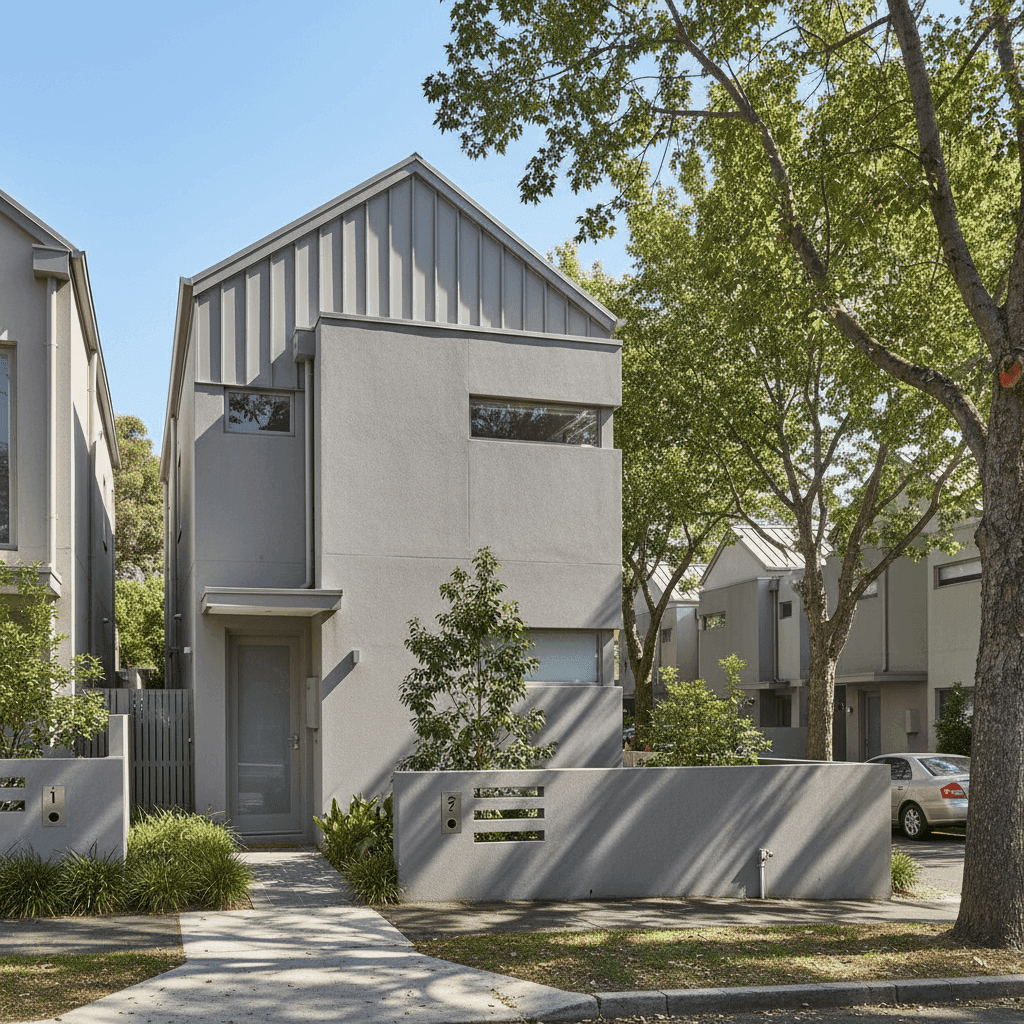
Hawthorn is one of Melbourne's most sought-after inner-eastern suburbs — a leafy, character-rich postcode where period architecture sits comfortably alongside contemporary townhouse developments. If you own a three-bedroom townhouse in this area and you're wondering whether your home and contents insurance premium stacks up, this analysis breaks down a real quote from the area and puts it in context.
---
Is This Quote Fair?
The quote in question comes in at $2,623 per year (or roughly $257 per month) for a combined home and contents policy. It covers a building sum insured of $928,000 and contents valued at $50,000, with a $1,000 excess on both building and contents claims.
Our price rating for this quote is FAIR — Around Average.
That assessment holds up when you look at the numbers. The suburb average for Hawthorn sits at $3,105 per year, and the median is $2,970 per year, meaning this quote lands meaningfully below both benchmarks. It's also well under the 75th percentile of $3,673/yr, which represents the higher end of what Hawthorn homeowners are paying.
To put it plainly: this policyholder is paying less than the majority of comparable properties in the same postcode, which is a solid outcome — though there's still room to explore whether an even better rate is available elsewhere.
---
How Hawthorn Compares
Understanding your premium isn't just about your suburb — it helps to zoom out and see how Hawthorn's insurance costs sit within the broader Victorian and national landscape.
| Benchmark | Annual Premium |
|---|---|
| This Quote | $2,623 |
| Hawthorn Suburb Average | $3,105 |
| Hawthorn Suburb Median | $2,970 |
| LGA Average (Boroondara) | $2,673 |
| VIC State Average | $3,000 |
| VIC State Median | $2,718 |
| National Average | $5,347 |
| National Median | $2,764 |
A few things stand out here. First, this quote is slightly above the Victorian state median of $2,718, but comfortably below the state average of $3,000 — a gap that typically reflects higher-value properties skewing averages upward.
Second, the national average of $5,347 is dramatically higher than what Hawthorn homeowners are paying. That figure is heavily influenced by premiums in high-risk regions — particularly cyclone-prone areas in Queensland and Western Australia, and flood-affected zones in northern NSW. Victoria, and inner Melbourne in particular, tends to benefit from lower natural hazard exposure, which keeps premiums comparatively moderate.
The LGA average for Boroondara ($2,673) is also worth noting — it's the closest geographic benchmark to this property, and this quote sits just $50 above it, reinforcing the "around average" rating.
Based on a sample of 45 quotes from the Hawthorn postcode, the 25th percentile sits at $2,073/yr — so roughly a quarter of comparable properties are paying less than $2,100. That suggests there may be value in shopping around, even if the current quote is reasonable.
---
Property Features That Affect Your Premium
Every home is different, and insurers price risk based on a detailed combination of construction, location, and features. Here's how the key characteristics of this particular property influence what it costs to insure.
Concrete external walls are generally viewed favourably by insurers. Concrete is highly resistant to fire and impact, and performs well against strong winds — all factors that reduce the likelihood of a major structural claim. Compared to timber-framed or weatherboard homes, concrete construction can contribute to a lower base premium.
Steel/Colorbond roofing is another tick in the right column. Colorbond is durable, lightweight, and resistant to ember attack — an important consideration even in urban areas during bushfire seasons. It's also less prone to storm damage than some tile alternatives, and many insurers treat it as a low-maintenance, low-risk roofing material.
Slab foundation is standard for a 2004-era townhouse and is generally considered a stable, low-risk foundation type in Victoria's soil conditions — particularly in well-established inner suburbs like Hawthorn.
Timber and laminate flooring is worth noting from a contents perspective. These materials can be more susceptible to water damage than tiles, and replacement costs can be significant. It's worth confirming your policy covers accidental water damage to flooring, as some policies have exclusions or sub-limits in this area.
Above-average fittings quality directly affects the building sum insured. Higher-quality fixtures, joinery, and finishes cost more to repair or replace, which is reflected in the $928,000 building cover figure. Underinsuring a well-appointed property is a common and costly mistake — so it's reassuring to see the sum insured set at a level that accounts for quality finishes.
Ducted climate control adds to the replacement value of the building and is typically included in building cover. It's worth double-checking your policy confirms this, as some policies treat ducted systems differently to portable or split-system units.
The absence of a pool and solar panels simplifies the risk profile slightly — both can introduce additional liability or electrical risk considerations that some insurers price into their premiums.
---
Tips for Homeowners in Hawthorn
1. Review your building sum insured annually. Construction costs in Melbourne have risen significantly over the past few years. A sum insured that was accurate two years ago may no longer reflect what it would cost to rebuild your home today. Use a building cost calculator or speak with a quantity surveyor to sense-check your coverage level — particularly given the above-average fittings in this property.
2. Consider a higher excess to reduce your premium. The current policy carries a $1,000 excess on both building and contents. If you have an emergency fund and are unlikely to claim for smaller incidents, opting for a higher excess (say, $2,000 or $2,500) can meaningfully reduce your annual premium. Just make sure the saving justifies the increased out-of-pocket cost if you do need to claim.
3. Shop around at renewal time. Even a "fair" premium isn't necessarily the best available. Insurers regularly adjust their pricing models, and loyalty doesn't always pay — in fact, some insurers offer better rates to new customers than to existing ones. Comparing quotes annually is one of the simplest ways to avoid overpaying.
4. Check your contents cover reflects reality. $50,000 in contents cover is on the modest side for a three-bedroom, three-bathroom townhouse with above-average fittings. Take a room-by-room inventory of your belongings — electronics, appliances, clothing, furniture, artwork — and make sure your contents sum insured genuinely reflects what it would cost to replace everything. Being underinsured on contents is a far more common problem than most homeowners realise.
---
Compare Your Options with CoverClub
Whether you're reviewing an existing policy or shopping for cover on a new property, CoverClub makes it easy to see how your quote compares to others in your area. Get a home insurance quote today and find out whether you're getting a fair deal — or whether there's a better rate waiting for you.