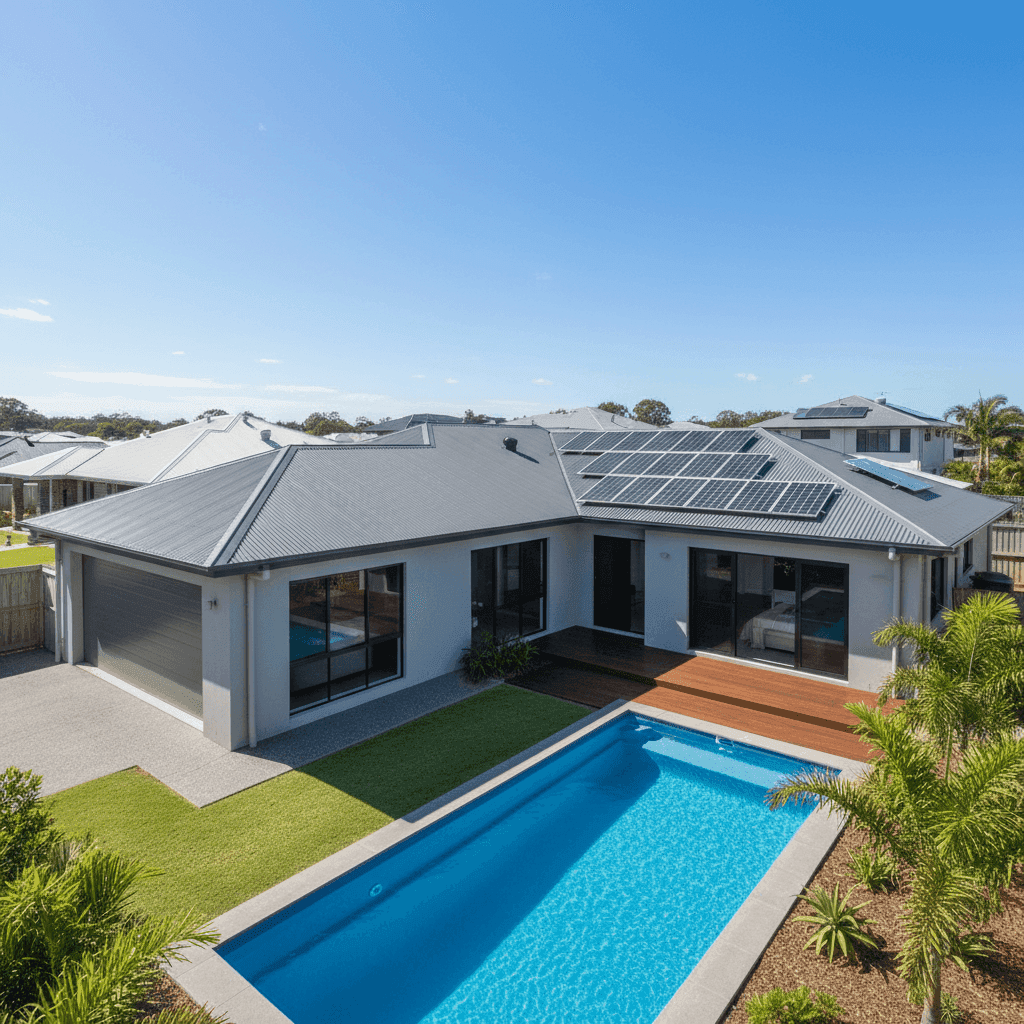
If you own a free standing home in Hay Point, QLD 4740, you already know that insuring a coastal Queensland property comes with its own set of considerations — cyclone risk, proximity to the sea, and the general cost pressures that come with living in regional Australia. This article breaks down a real home and contents insurance quote for a four-bedroom property in Hay Point, compares it against local, state, and national benchmarks, and offers practical tips to help you get the best value on your cover.
---
Is This Quote Fair?
The quote in question comes in at $4,113 per year (or $403/month) for combined home and contents insurance, covering a building sum insured of $1,102,000 and contents valued at $50,000. The building excess is $2,000 and the contents excess is $1,000.
Our price rating for this quote is FAIR — Around Average, and the data backs that up. Based on comparable quotes across Hay Point, the suburb average sits at $3,979/yr and the median at $3,354/yr. This quote lands just above the suburb average and comfortably within the 75th percentile of $4,117/yr — meaning roughly three-quarters of similar properties in the area are paying about the same or less, but only just.
That said, "fair" doesn't mean there's no room to move. It simply means this premium isn't wildly out of step with what others in the same postcode are paying. Given the property's characteristics — which we'll explore below — there are legitimate reasons why this quote sits at the higher end of the local range.
---
How Hay Point Compares
To put this quote in proper context, it helps to zoom out and look at the broader picture.
| Benchmark | Average Premium | Median Premium |
|---|---|---|
| Hay Point (suburb) | $3,979/yr | $3,354/yr |
| Queensland (state) | $4,547/yr | $3,931/yr |
| National | $2,965/yr | $2,716/yr |
| LGA (Mackay) | $8,458/yr | — |
A few things stand out here. First, this quote at $4,113/yr is actually below the Queensland state average of $4,547/yr — a meaningful saving when you consider that QLD is one of the most expensive states in the country for home insurance, largely due to its exposure to cyclones, flooding, and severe storms.
Second, the LGA (Mackay) average of $8,458/yr is striking. This figure likely reflects a broader mix of property types, risk profiles, and coverage levels across the Mackay local government area, but it does illustrate just how variable premiums can be within the same region. By comparison, this quote looks quite competitive.
Nationally, Australian homeowners pay an average of $2,965/yr — well below what Hay Point residents typically face. This gap is almost entirely explained by Queensland's elevated natural hazard risk. You can explore Queensland-wide insurance trends or national benchmarks for more context.
---
Property Features That Affect Your Premium
Insurance premiums aren't calculated in a vacuum — every feature of a property influences the final figure. Here's how the characteristics of this particular home play into the quote.
Cyclone risk area: This is the single biggest pricing factor for properties in Hay Point. Located in coastal central Queensland, the area falls within a designated cyclone risk zone. Insurers price this risk heavily, and it's the primary reason premiums here sit well above the national average.
Construction: Concrete walls, steel/Colorbond roof, slab foundation: Concrete external walls and a Colorbond steel roof are generally viewed favourably by insurers — both materials are durable and perform relatively well in high-wind events. The slab foundation also reduces the risk of underfloor flooding damage. These features may be working in the homeowner's favour and helping to moderate the premium somewhat.
Age of construction (1980): A home built in 1980 predates many of the modern building codes introduced after Cyclone Tracy and subsequent reforms. Older homes can attract slightly higher premiums because they may not meet current cyclone-resilience standards, even if they've been well maintained.
Building size (358 sqm) and sum insured ($1,102,000): At 358 square metres, this is a substantial home, and the high sum insured reflects the cost of rebuilding a large property to current standards. A higher sum insured naturally means a higher premium, as the insurer's maximum liability is greater.
Swimming pool: Pools add a modest amount to home insurance premiums, primarily due to liability considerations and the cost of repair or replacement if damaged.
Solar panels: Solar systems are increasingly common in Queensland, and most insurers now factor them into the building sum insured. If the panels aren't adequately covered under the current policy, it's worth confirming with the insurer.
Tile flooring and standard fittings: These are neutral factors. Tiles are durable and relatively inexpensive to replace, and standard fittings don't attract the premium loading that high-end or bespoke fixtures might.
---
Tips for Homeowners in Hay Point
1. Review your sum insured annually Building costs have risen sharply in recent years, and a sum insured that was accurate two years ago may no longer reflect the true cost of rebuilding your home. Underinsurance is a serious risk — if your home is destroyed and the payout doesn't cover the rebuild, you'll be covering the difference yourself. Use a building cost calculator or speak to a quantity surveyor to validate your figure.
2. Ask about cyclone mitigation discounts Some insurers offer premium discounts for homes that have undergone cyclone-resilience upgrades — things like roof tie-downs, reinforced garage doors, or impact-resistant windows. If you've invested in any of these improvements, make sure your insurer knows about them.
3. Consider your excess strategically This policy carries a $2,000 building excess and a $1,000 contents excess. Opting for a higher excess can reduce your annual premium, but only makes sense if you can comfortably cover that amount out of pocket in the event of a claim. Conversely, a lower excess might be worth the additional premium if your cash reserves are limited.
4. Compare quotes at renewal time Even if you're happy with your current insurer, it's worth shopping around every year. Premiums can shift significantly between providers, and loyalty doesn't always translate to the best deal. Get a fresh quote at CoverClub to see how your current premium stacks up against the market.
---
Ready to Compare?
Whether you're renewing your policy or insuring a property for the first time, CoverClub makes it easy to see how your quote compares to real data from your suburb and beyond. Visit coverclub.com.au to get started — it takes just a few minutes and could save you hundreds of dollars a year.