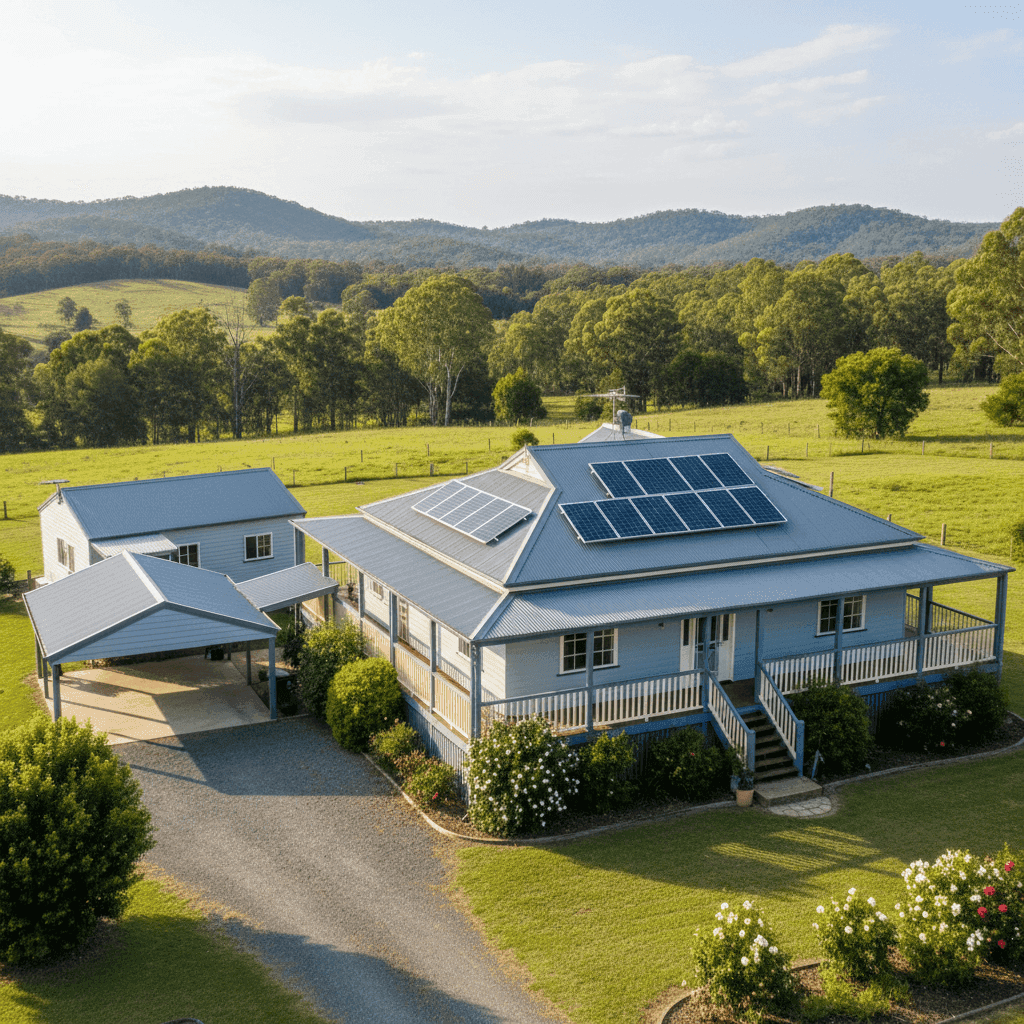
Hazeldean is a quiet semi-rural locality in Queensland's Somerset region, and like much of regional QLD, home insurance costs here can vary significantly depending on your property's features and the insurer you choose. This article takes a close look at a real home and contents insurance quote for a five-bedroom, free-standing home in Hazeldean (postcode 4515) — breaking down whether the price stacks up, how it compares to broader benchmarks, and what homeowners in the area can do to keep premiums manageable.
---
Is This Quote Fair?
The quote in question comes in at $2,612 per year (or $256 per month) for combined home and contents cover, with a building sum insured of $1,000,000 and contents valued at $90,000. The building excess sits at $3,000 and the contents excess at $1,000.
Our price rating for this quote is Expensive (Above Average) — and the data backs that up. Compared to other quotes we've collected for properties in Hazeldean, this premium is noticeably higher than both the suburb average ($2,271/yr) and the suburb median ($2,057/yr). It does, however, fall just below the suburb's 75th percentile of $2,570/yr — meaning roughly a quarter of comparable quotes in the area are actually higher still.
That said, "above average for the suburb" doesn't necessarily mean you're being overcharged. A $1,000,000 building sum insured is quite high, and several property features — including weatherboard timber walls and a granny flat — can push premiums upward. We'll explore those factors in more detail below.
The encouraging news? When you zoom out to the state and national level, this quote looks considerably more reasonable.
---
How Hazeldean Compares
One of the most striking takeaways from the data is just how much cheaper Hazeldean is compared to the broader Queensland market. Here's how the numbers line up:
| Benchmark | Average Premium | Median Premium |
|---|---|---|
| Hazeldean (suburb) | $2,271/yr | $2,057/yr |
| Somerset LGA | $3,227/yr | — |
| Queensland (state) | $4,547/yr | $3,931/yr |
| National | $2,965/yr | $2,716/yr |
Queensland is one of the most expensive states in Australia for home insurance, largely due to the prevalence of severe weather events — cyclones, flooding, and hailstorms. Hazeldean sits outside the designated cyclone risk zone, which is a meaningful advantage. At $2,612/yr, this quote is 43% below the Queensland state average and also sits below the national average of $2,965/yr.
For full suburb-level data, visit our Hazeldean insurance stats page. You can also explore Queensland-wide insurance trends or browse national home insurance benchmarks for broader context.
It's worth noting that our Hazeldean sample size is 10 quotes, so while directionally useful, the suburb averages may shift as more data comes in.
---
Property Features That Affect Your Premium
Several characteristics of this particular property have a direct bearing on what insurers charge. Here's what stands out:
Weatherboard Timber Walls
Weatherboard timber construction is charming and common in Queensland, but it carries a higher fire and storm damage risk compared to brick or rendered masonry. Insurers typically apply a loading to timber-clad homes, which contributes to a higher base premium.
Steel/Colorbond Roof
On the positive side, a Colorbond steel roof is generally viewed favourably by insurers. It's durable, resistant to ember attack, and performs well in high winds — all of which can help moderate the premium compared to older tile or fibrous cement roofing.
Slab Foundation
A concrete slab foundation is considered low-risk for subsidence and termite ingress, which is a small but positive factor for underwriters assessing structural integrity.
Solar Panels
The property has solar panels installed on the roof. These add replacement value to the structure and some insurers may factor this into their building sum insured assessment. It's important to confirm that your policy explicitly covers solar panels — not all standard policies do without an endorsement.
Granny Flat
The presence of a granny flat meaningfully increases the replacement cost of the property and adds complexity to the risk profile. Whether it's used for family or as a rental, insurers need to be informed — failing to disclose a secondary dwelling can result in a claim being reduced or denied.
Timber/Laminate Flooring
Timber and laminate floors can be costly to replace following water damage or flooding. This is worth keeping in mind when setting your building sum insured, as underinsurance is a common and costly mistake.
Building Size: 286 sqm
At 286 square metres, this is a generously sized home. Combined with the granny flat, the $1,000,000 building sum insured may be justified — though it's always worth getting a professional building replacement cost assessment to ensure you're neither over- nor under-insured.
---
Tips for Homeowners in Hazeldean
1. Review Your Building Sum Insured Carefully
A $1,000,000 sum insured is substantial. While it may be appropriate given the size of the home and granny flat, it's worth having a licensed quantity surveyor or using an online building calculator to verify this figure. Overinsuring inflates your premium unnecessarily, while underinsuring leaves you exposed at claim time.
2. Disclose the Granny Flat — Every Time
When comparing quotes or renewing your policy, always declare the granny flat upfront. Insurers treat secondary dwellings differently, and non-disclosure is one of the most common reasons claims are disputed. Make sure both structures are clearly covered under your policy.
3. Ask About Solar Panel Coverage
Solar systems can be worth tens of thousands of dollars. Check whether your policy covers panels as part of the building, as a separate listed item, or not at all. Some insurers include them automatically; others require you to list them specifically.
4. Shop Around at Renewal
Given that this quote is rated above average for the suburb, it's well worth comparing alternatives before renewing. Premiums for the same property can vary by hundreds — sometimes thousands — of dollars between insurers. A 15-minute comparison exercise could pay for itself many times over.
---
Ready to Find a Better Deal?
Whether you're happy with your current cover or suspect you might be paying too much, it pays to compare. At CoverClub, you can get a home and contents insurance quote tailored to your property in minutes — and see how it stacks up against real data from your suburb and across Australia. Enter your address to get started.