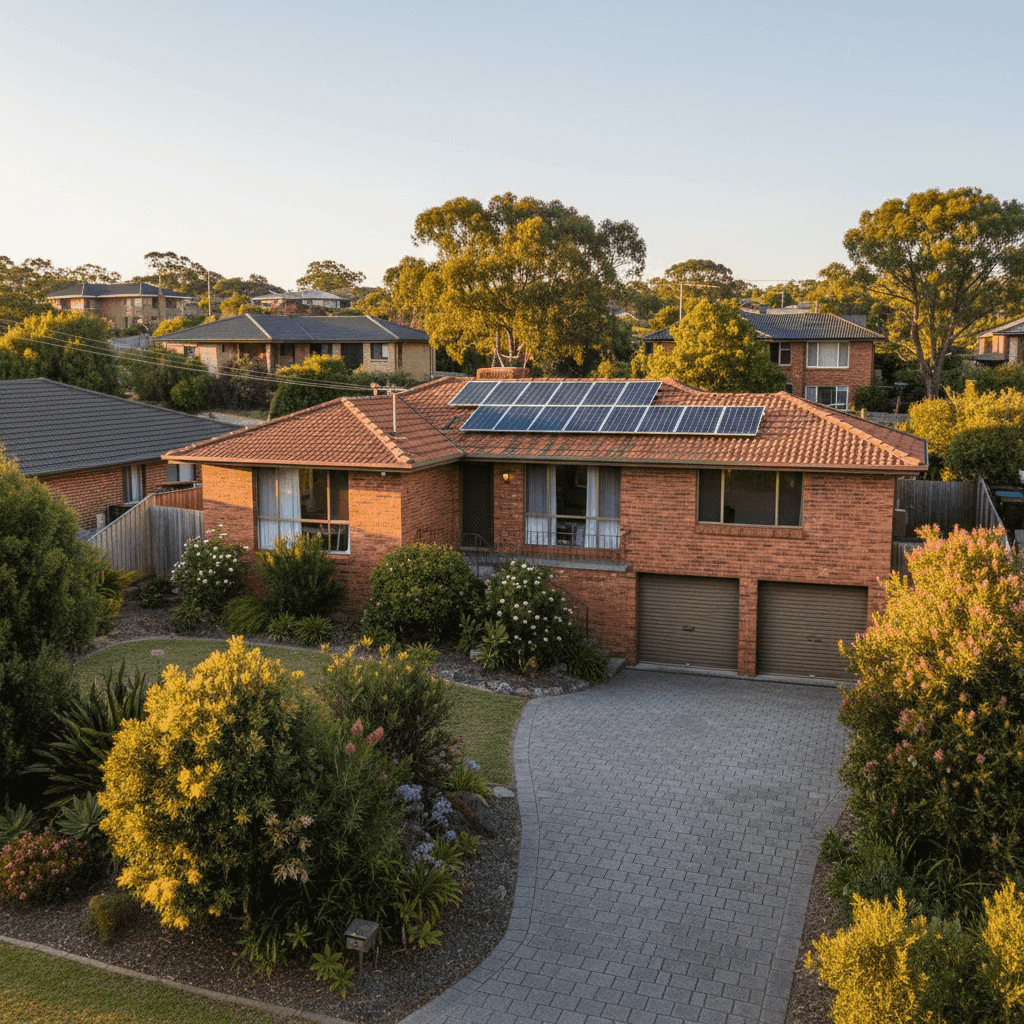
Heathcote is a leafy, semi-rural suburb tucked into the southern reaches of the Sutherland Shire, about 45 kilometres south of the Sydney CBD. Known for its bushland surrounds, relaxed lifestyle, and solid family homes, it's the kind of suburb where a well-built four-bedroom free standing home is very much the norm. But what does it actually cost to insure one of these properties — and is the quote on the table a good deal?
This article breaks down a real home and contents insurance quote for a four-bedroom, two-bathroom free standing home in Heathcote, comparing it against local, state, and national benchmarks to help you understand what you're paying for — and whether there's room to do better.
---
Is This Quote Fair?
The annual premium for this property came in at $2,260 per year (or $229 per month), covering both building (insured for $882,000) and contents ($30,000). Our pricing engine rates this quote as CHEAP — below average for the area.
That's a meaningful result. In a suburb where the average premium sits at $3,322 per year and the median is $3,187, this quote lands well beneath both benchmarks. Even compared to the 25th percentile — meaning 75% of quotes in the area are more expensive — the suburb's lower boundary sits at $2,540 per year. This quote beats even that threshold, suggesting it represents genuinely strong value for Heathcote.
In practical terms, a homeowner accepting this quote would be paying roughly $1,062 less per year than the suburb average. Over a five-year period, that's more than $5,000 in savings — not insignificant.
The building excess is set at $3,000 and the contents excess at $1,000, which are on the higher end of standard. Higher excesses typically contribute to lower premiums, so it's worth factoring in that trade-off: you'll pay less each year, but more out of pocket if you need to make a claim.
---
How Heathcote Compares
To put this quote in proper context, it helps to zoom out and look at Heathcote's suburb-level insurance data alongside broader benchmarks.
| Benchmark | Annual Premium |
|---|---|
| This Quote | $2,260 |
| Heathcote Suburb Average | $3,322 |
| Heathcote Suburb Median | $3,187 |
| Heathcote 25th Percentile | $2,540 |
| Heathcote 75th Percentile | $4,116 |
| NSW State Median | $3,770 |
| National Median | $2,764 |
Interestingly, this quote also sits below the national median of $2,764 — which is notable given that Heathcote is located within the Sutherland LGA, where the average premium is a staggering $23,423 per year. That LGA figure is heavily skewed by high-risk or high-value properties (likely including waterfront and bushfire-prone homes), which underscores why comparing at the suburb level gives a more grounded picture.
At the NSW state level, the average premium is $9,528 — though the median of $3,770 is a more reliable indicator of what most NSW homeowners pay. Either way, this quote comes in comfortably below both figures.
It's worth noting that the suburb sample size here is 14 quotes, which is a reasonable but modest dataset. Averages can shift as more data comes in, so it's always wise to treat these figures as directional rather than definitive.
---
Property Features That Affect Your Premium
Several characteristics of this property play a role in shaping the premium — some working in the homeowner's favour, others adding complexity.
Brick veneer construction is generally viewed favourably by insurers. It offers solid fire resistance and structural durability compared to weatherboard or lightweight cladding, which can translate into more competitive premiums. Combined with a tiled roof, the property presents a conventional risk profile that most insurers are comfortable pricing.
The slab foundation is standard for Australian homes of this era and doesn't typically attract loading from insurers. However, properties built in 1960 are now over 60 years old, and age can be a factor — older homes may have outdated plumbing, wiring, or roofing materials that increase the likelihood of a claim. Insurers often account for this in their pricing, so it's worth ensuring the property has been well maintained and that any significant upgrades (like rewiring or re-roofing) are documented.
The presence of solar panels is worth flagging. Most standard home insurance policies cover solar panels as part of the building, but coverage limits and conditions vary. It's important to confirm that the insured building sum of $882,000 adequately accounts for the replacement cost of the solar system, and to check whether storm or accidental damage to panels is explicitly covered.
At 305 square metres, this is a generously sized home, which naturally influences the replacement cost and therefore the building sum insured. Getting the sum insured right is critical — underinsurance is one of the most common and costly mistakes Australian homeowners make.
On the positive side, the absence of a pool removes one liability and maintenance risk that insurers sometimes price in. And being outside a designated cyclone risk area means this property avoids the significant premium loadings that affect many Queensland and northern Australian homes.
---
Tips for Homeowners in Heathcote
1. Review your sum insured regularly Construction costs have risen sharply in recent years. A building sum insured of $882,000 for a 305 sqm home works out to roughly $2,892 per square metre — which is within a reasonable range for Sydney's south, but worth validating against current builder rates in your area. Consider using an independent building cost calculator or speaking with a quantity surveyor.
2. Confirm solar panel coverage in your policy Don't assume your panels are covered — or covered adequately. Ask your insurer specifically whether solar panels are included in the building sum insured, and whether accidental damage, power surge, and storm damage are all covered events. Some policies treat panels as optional extras.
3. Understand the bushfire risk context Heathcote borders national park and bushland, and parts of the suburb carry elevated bushfire risk. Check whether your property falls within a designated bushfire-prone area on the NSW Rural Fire Service map, and ensure your policy covers bushfire damage. Some insurers apply loadings for properties in these zones — others don't, so shopping around is worthwhile.
4. Weigh up your excess carefully The $3,000 building excess on this policy is higher than many standard policies. If you have the financial buffer to cover that cost in the event of a claim, a higher excess in exchange for a lower premium can make good sense. If not, it may be worth comparing policies with a lower excess — even if the annual premium is slightly higher.
---
Compare Your Options with CoverClub
Whether you're renewing an existing policy or insuring a new purchase, it pays to know where your quote sits relative to the market. CoverClub makes it easy to benchmark your premium against real data from your suburb and beyond. Get a home insurance quote today and see how your options stack up — you might be surprised at the difference a comparison can make.